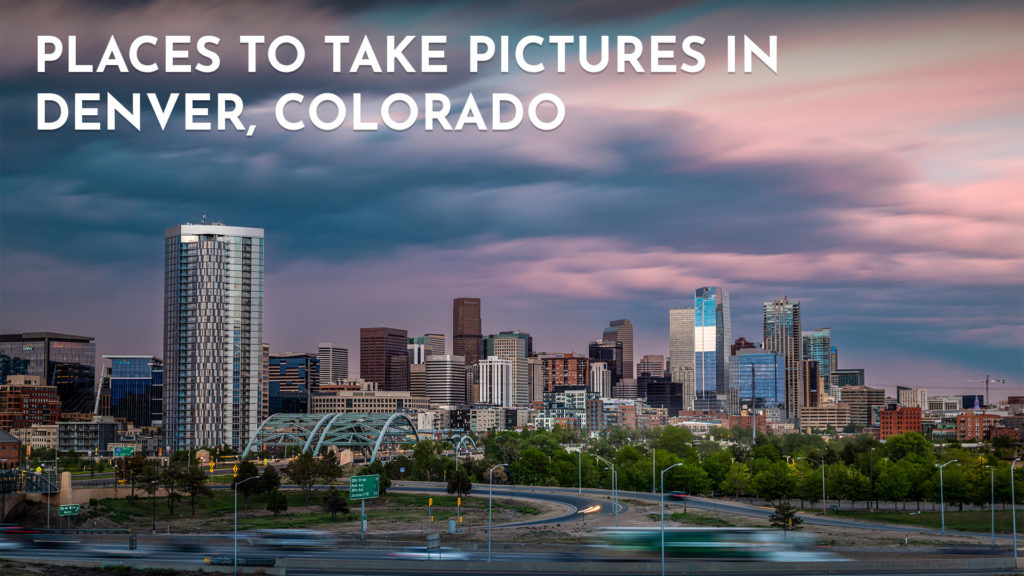
Denver is full of Instagrammable spots, from beautiful mountain ranges to colorful murals there’s just about something for everyone to photograph. Denver is also known as the Mile High City and can be found about an hour east of the Rocky Mountains in Colorado.
Since I’ve visited Denver multiple times I figured I would share my favorite photo spots in the city.
- 1. Union Station
- 2. Denver Botanic Gardens
- 3. Colorado State Capitol
- 4. The International Church of Cannabis
- 5. Downtown Denver Lookout
- 6. Big Blue Bear
- 7. Red Rocks Park & Amphitheatre
- 8. Dairy Block
- 9. Millennium Bridge
- 10. Denver Art Museum
- 11. Chautauqua Park
- 12. Clyfford Still Museum
- 13. Greetings from Denver Mural
- 14. Denver Love This City Mural
Here are the best places to take pictures in Denver:
1. Union Station
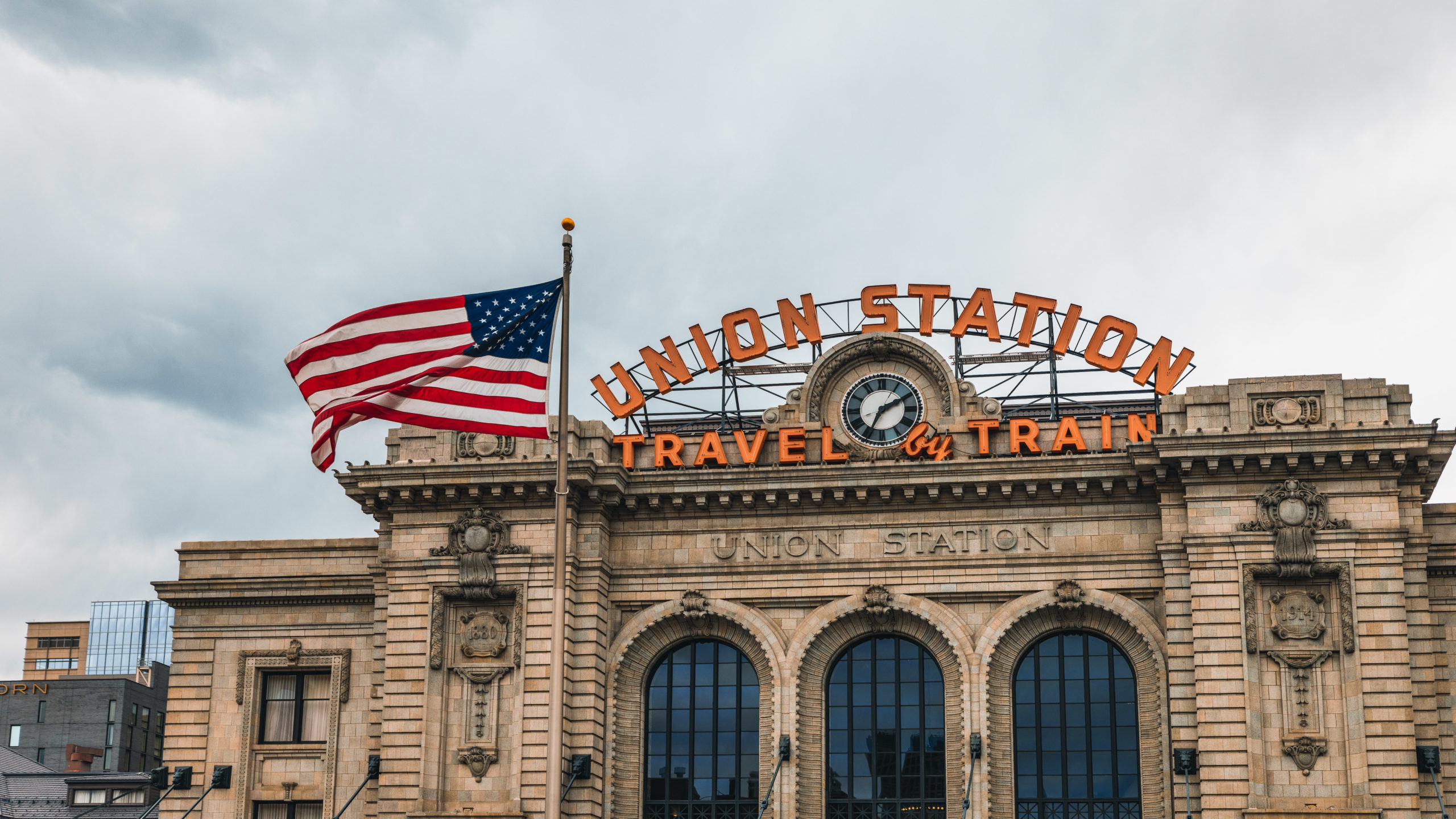
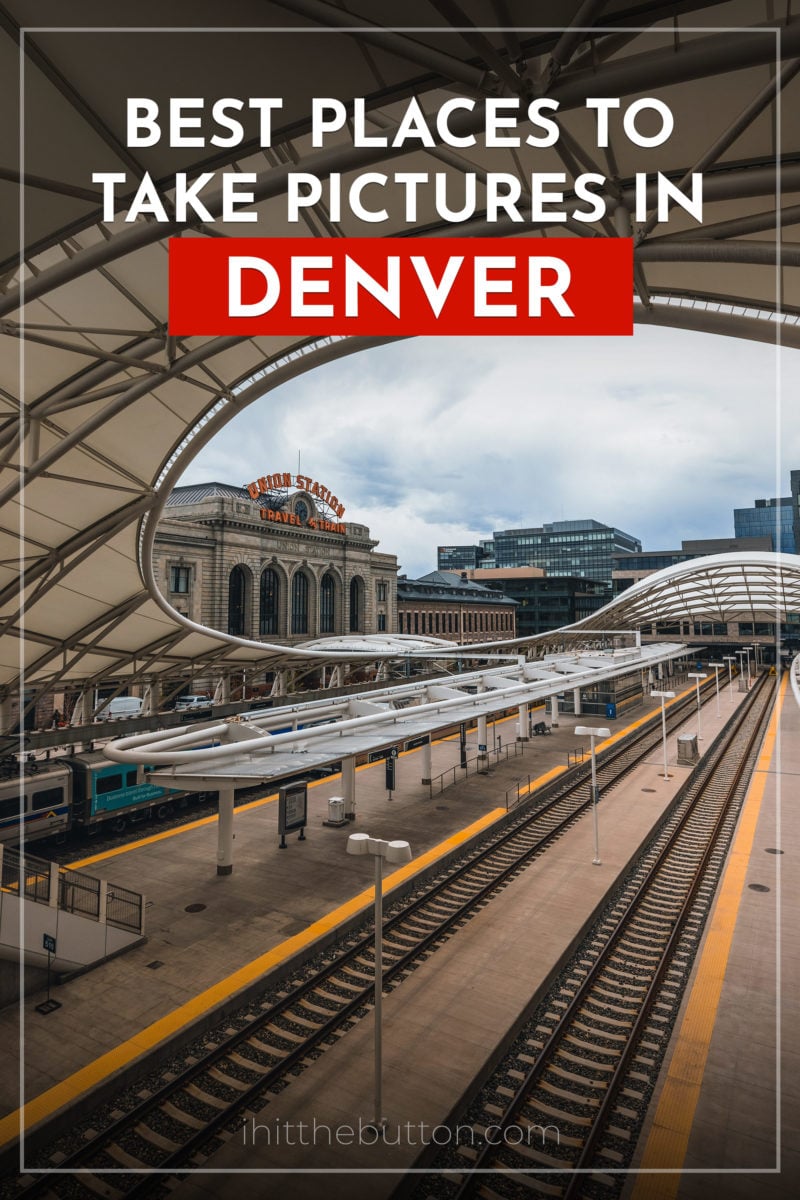
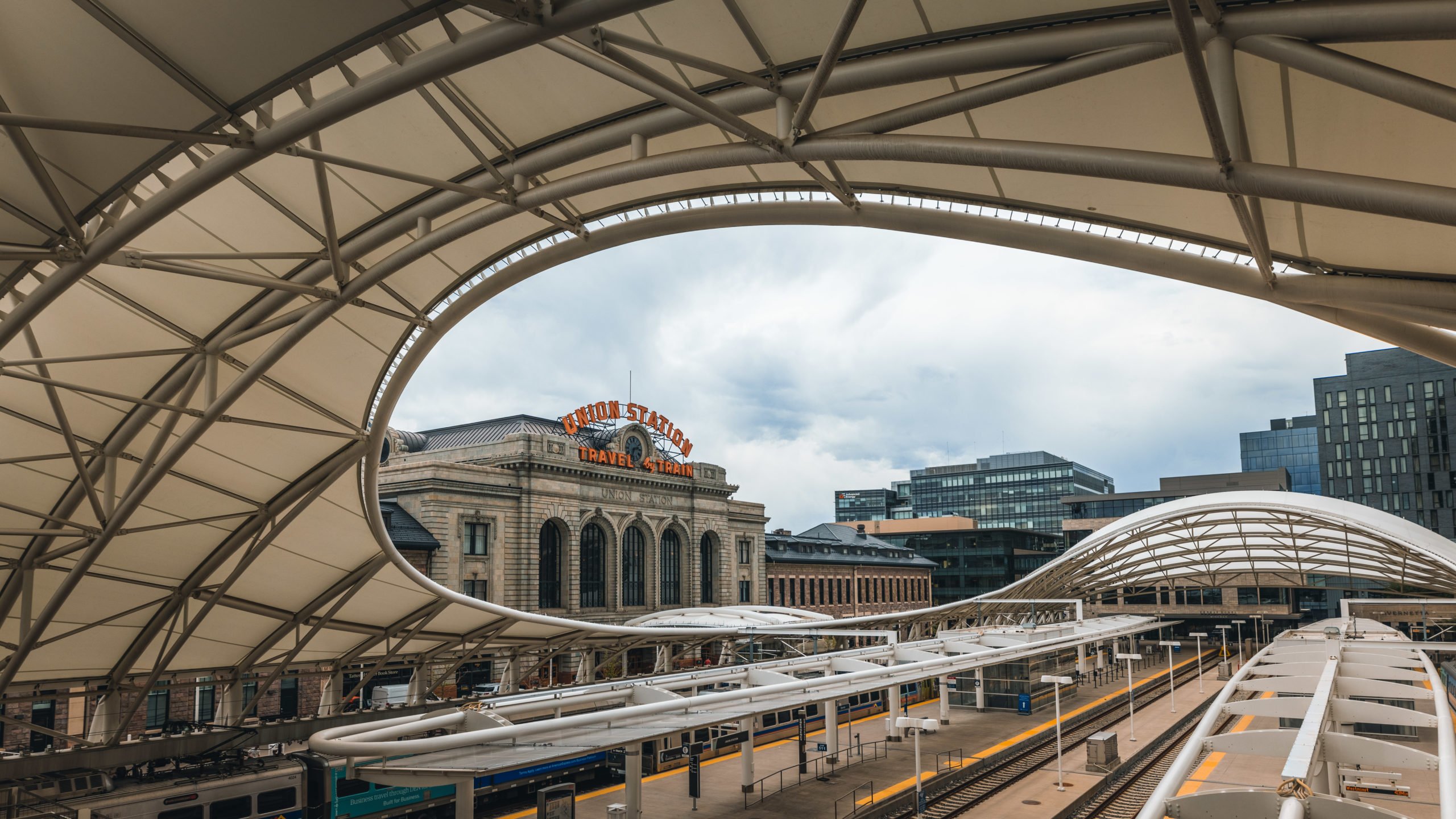
Located in the heart of Downtown Denver is Union Station, hard to miss with its massive backlit “Union Station Travel by Train” sign. The original station opened in 1881, was rebuilt after an 1894 fire, and the Beaux-Arts Great Hall you see today dates to 1914. A full $54-million renovation reopened the building in 2014 as a hotel, restaurant hall, and active rail terminal. My favorite spot is the north side of the station where the unique pavilion roof lines frame the building for symmetrical compositions, and the Great Hall interior is photogenic at any time of day.
2. Denver Botanic Gardens
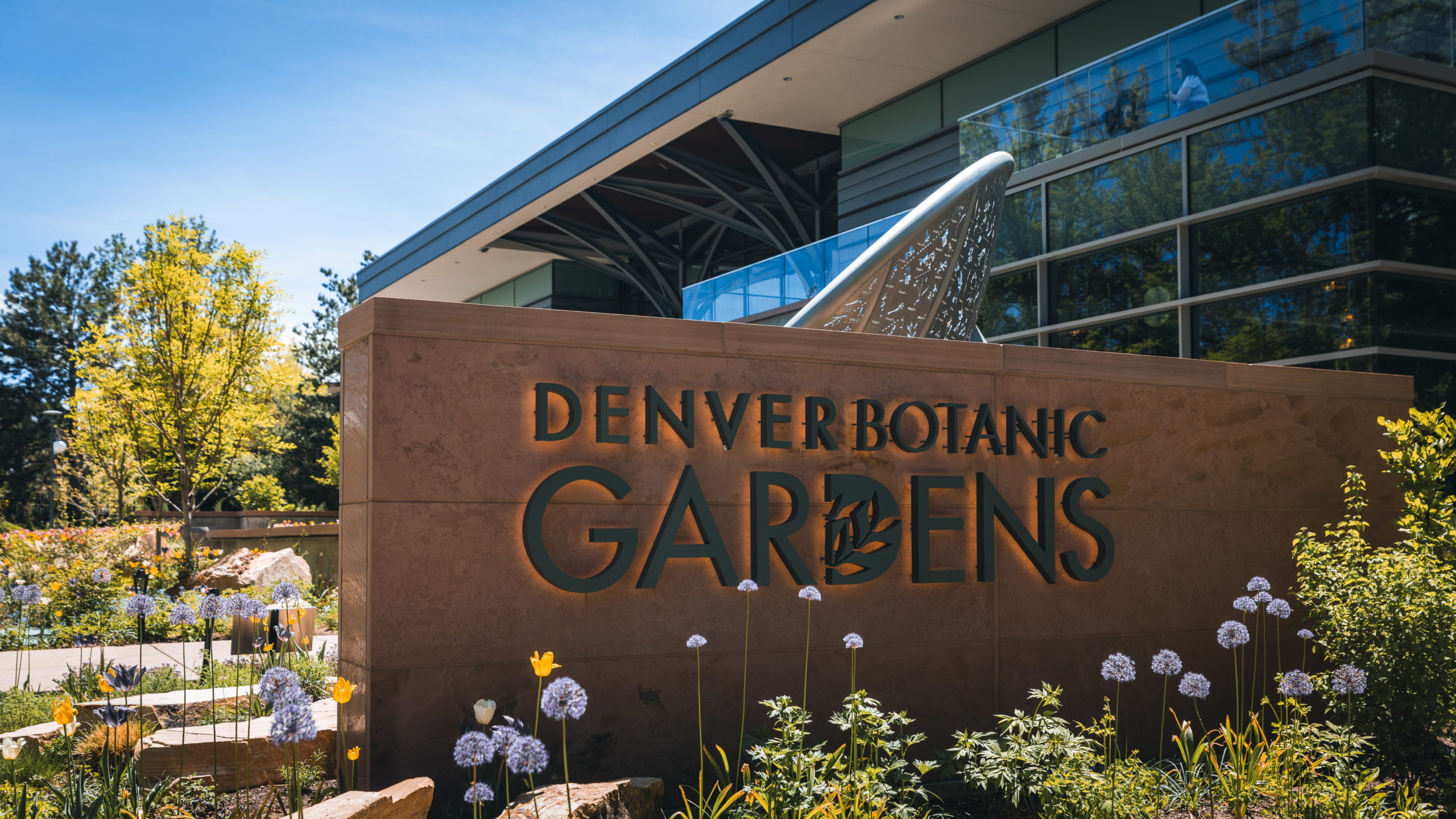
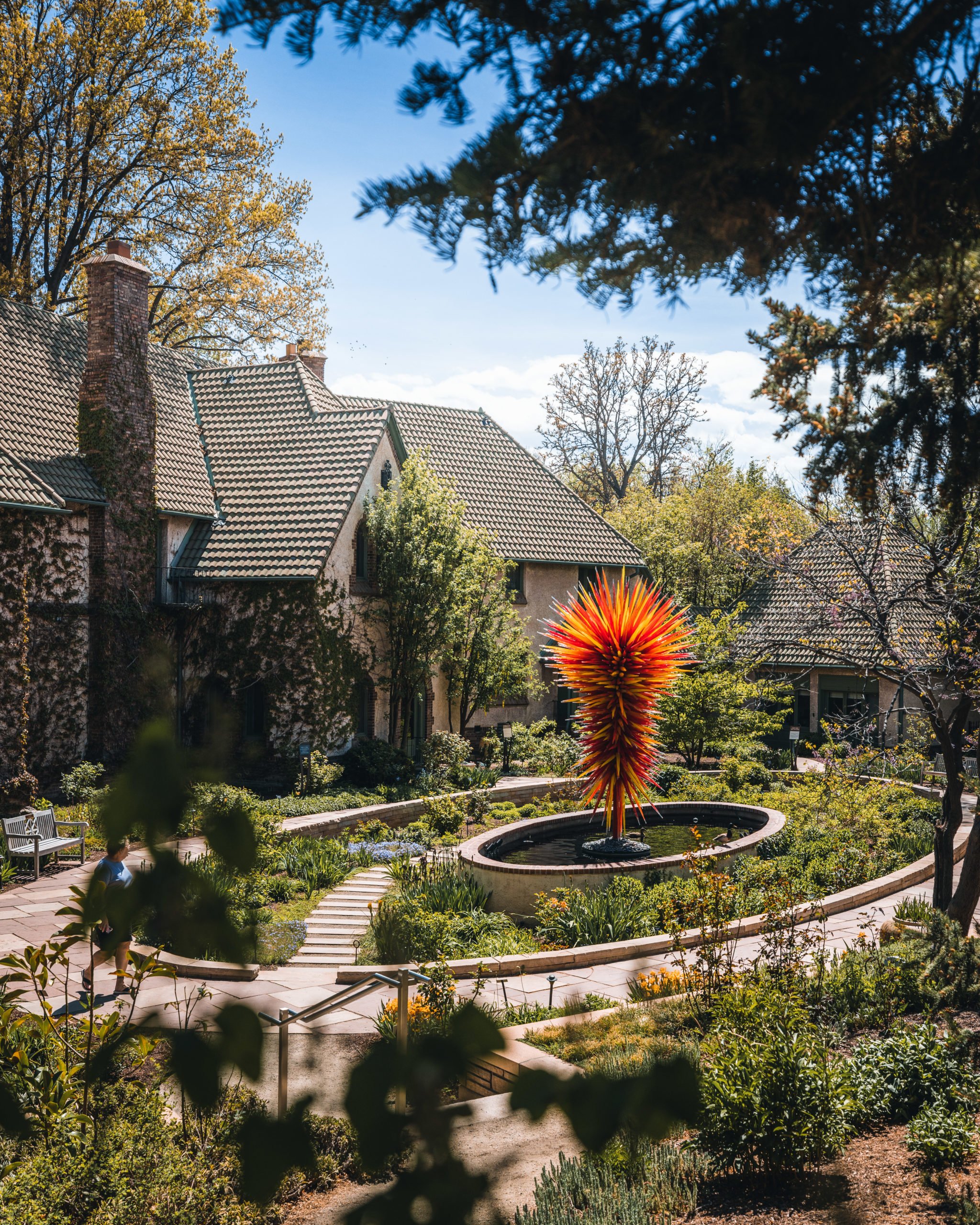
With 24 acres of themed gardens, the York Street Denver Botanic Gardens is one of the best photo stops in the city. The Boettcher Memorial Tropical Conservatory (the iconic geodesic greenhouse) is great for backlit foliage shots, and Shofu-En, the Japanese garden, is the most photogenic section in fall when the Japanese maples turn red. Plan around 2 hours to walk the full grounds, and check the schedule for the summer Chihuly-style art installations.

3. Colorado State Capitol
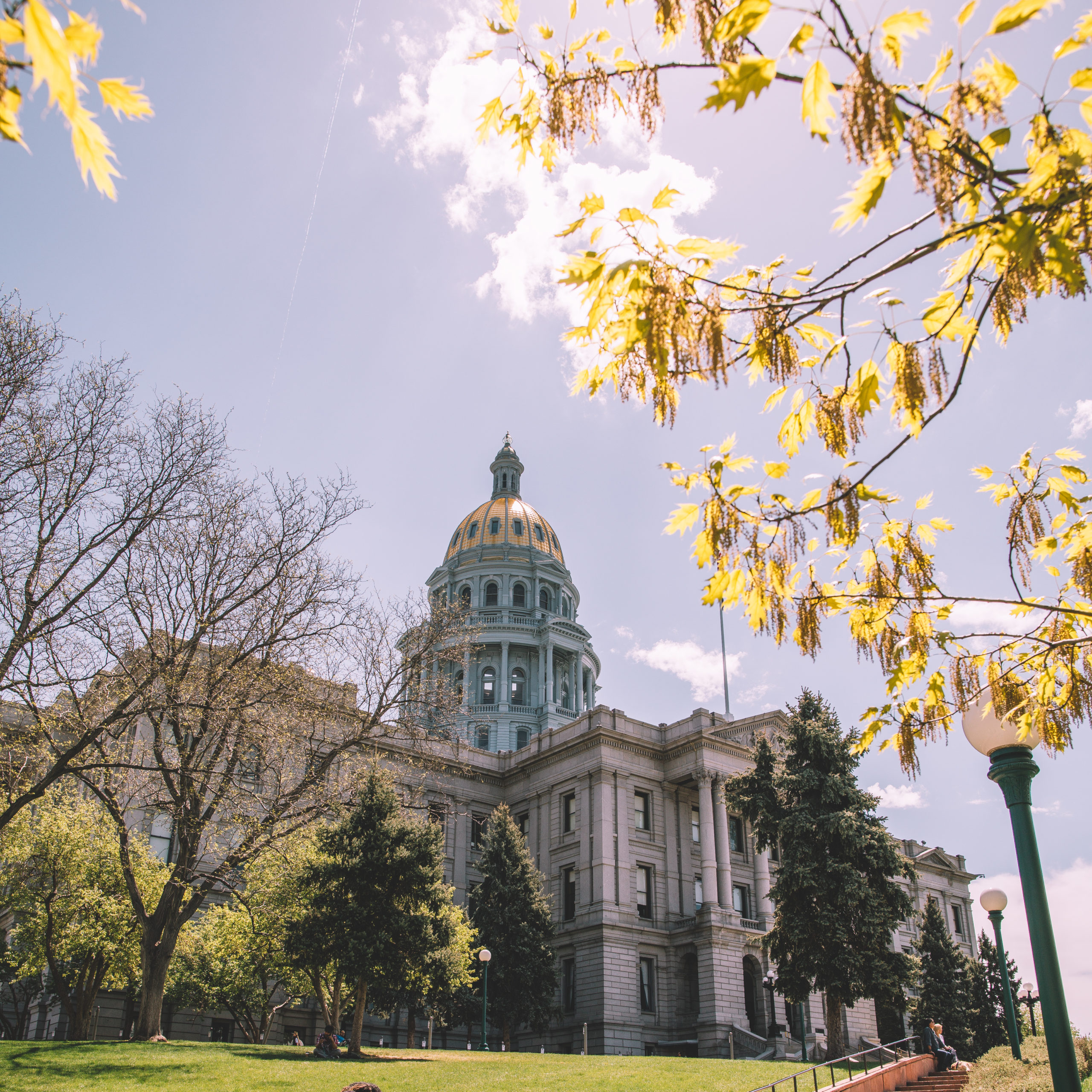

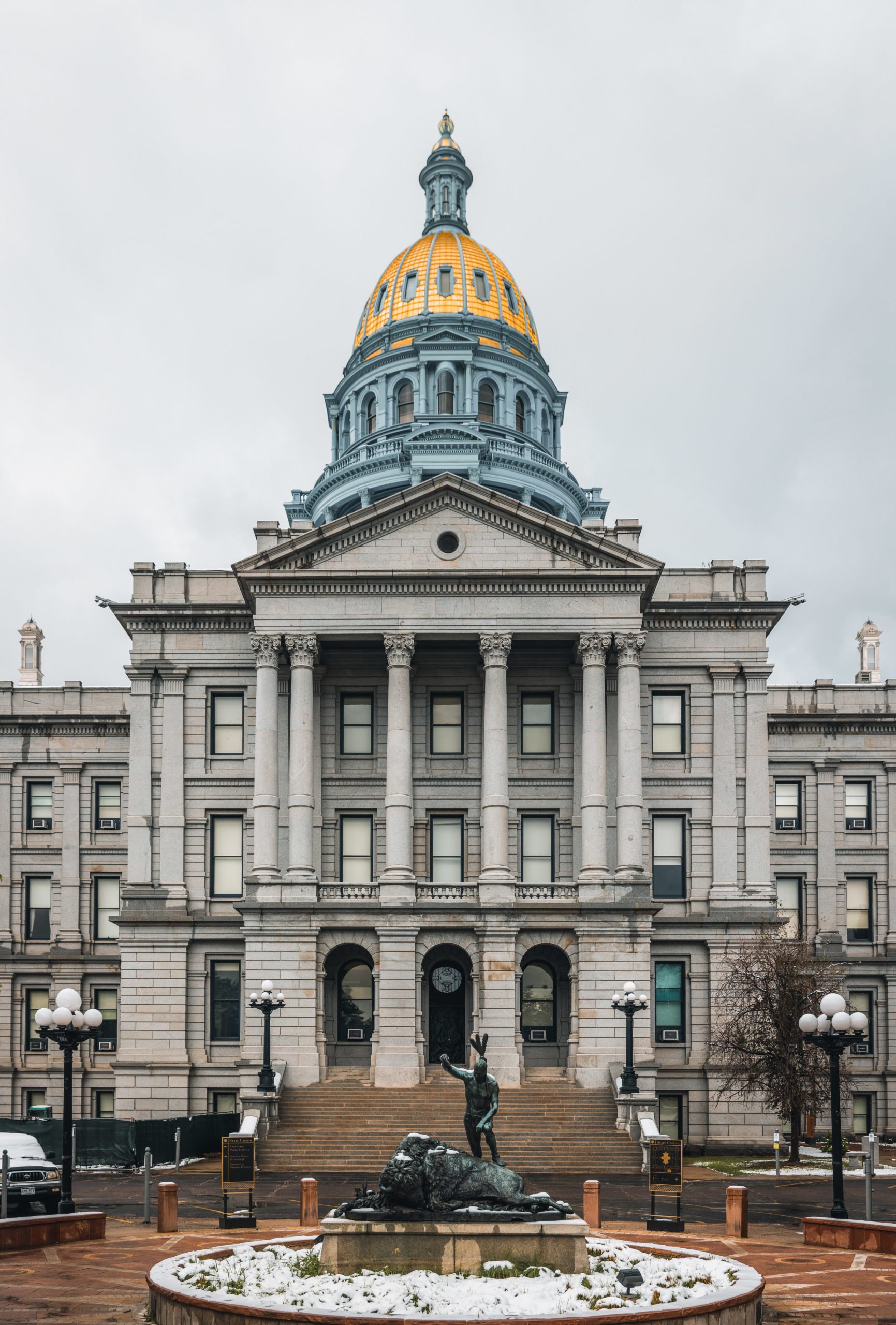
I am a sucker for Capitol buildings, and the Colorado State Capitol is no exception. Completed in 1908 and modeled after the U.S. Capitol, its dome is plated in real 24-karat Colorado gold leaf, which is most photogenic at sunrise and sunset when it catches warm light. Out front on the west steps, the famous Mile High Marker shows the point exactly one mile (5,280 feet) above sea level. Fun trivia: the marker has moved as surveying has gotten more accurate. The original 1909 brass plaque sat on the 15th step; a 1969 resurvey moved it to the 18th; the current marker, placed in 2003, sits on the 13th step. All three are still visible.
4. The International Church of Cannabis
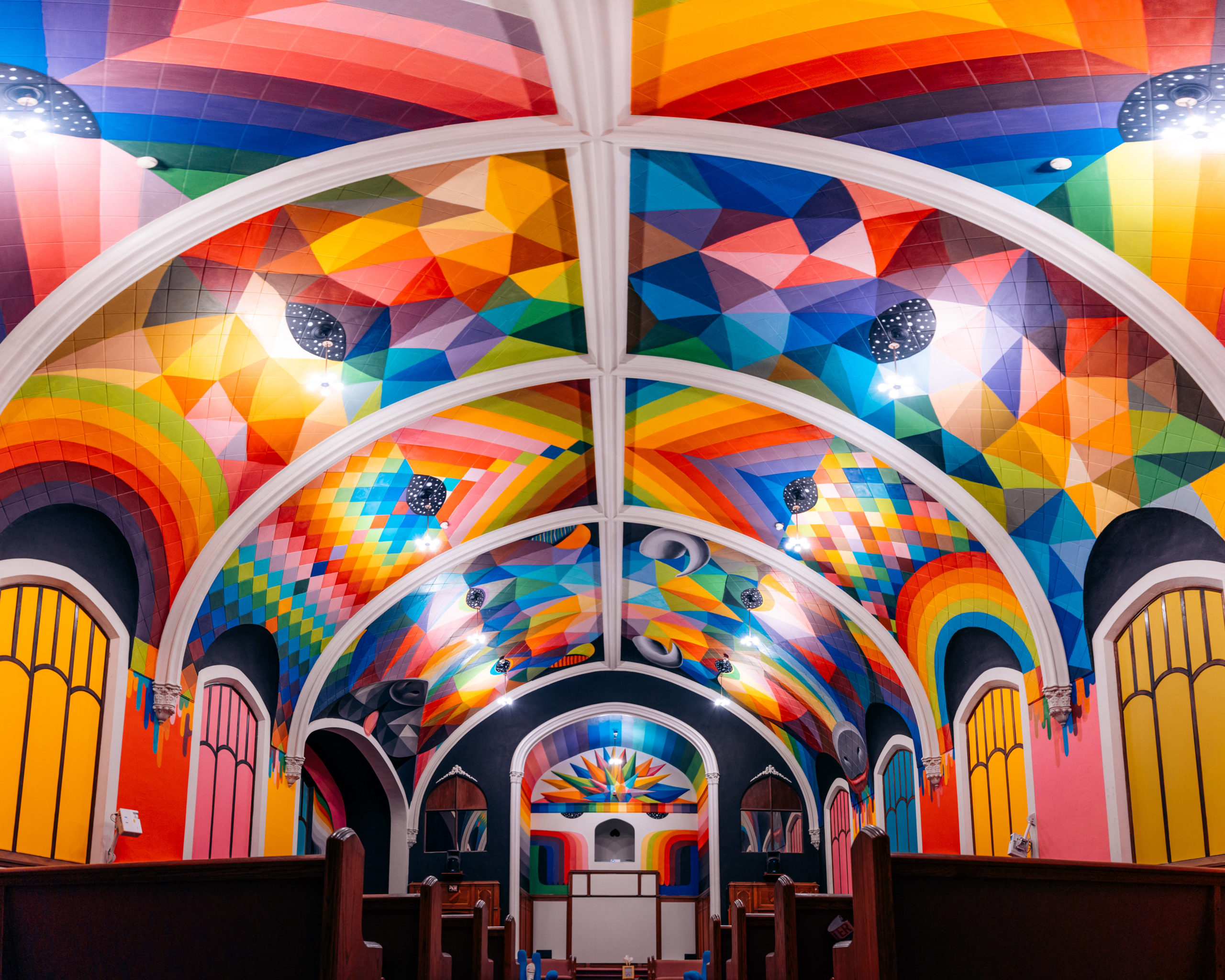
The International Church of Cannabis, in the Washington Park neighborhood, occupies a 100-year-old former Lutheran church that Spanish street artist Okuda San Miguel transformed in 2017 with a prismatic ceiling mural of geometric animals and mythological figures. The trippy interior is sure to brighten up your Instagram feed. Visits are free (donations encouraged), and they run a 20-minute light show called “BEYOND” every hour with guided meditation and a laser-and-rock-music projection over the murals.
The International Church of Cannabis on Google Maps5. Downtown Denver Lookout
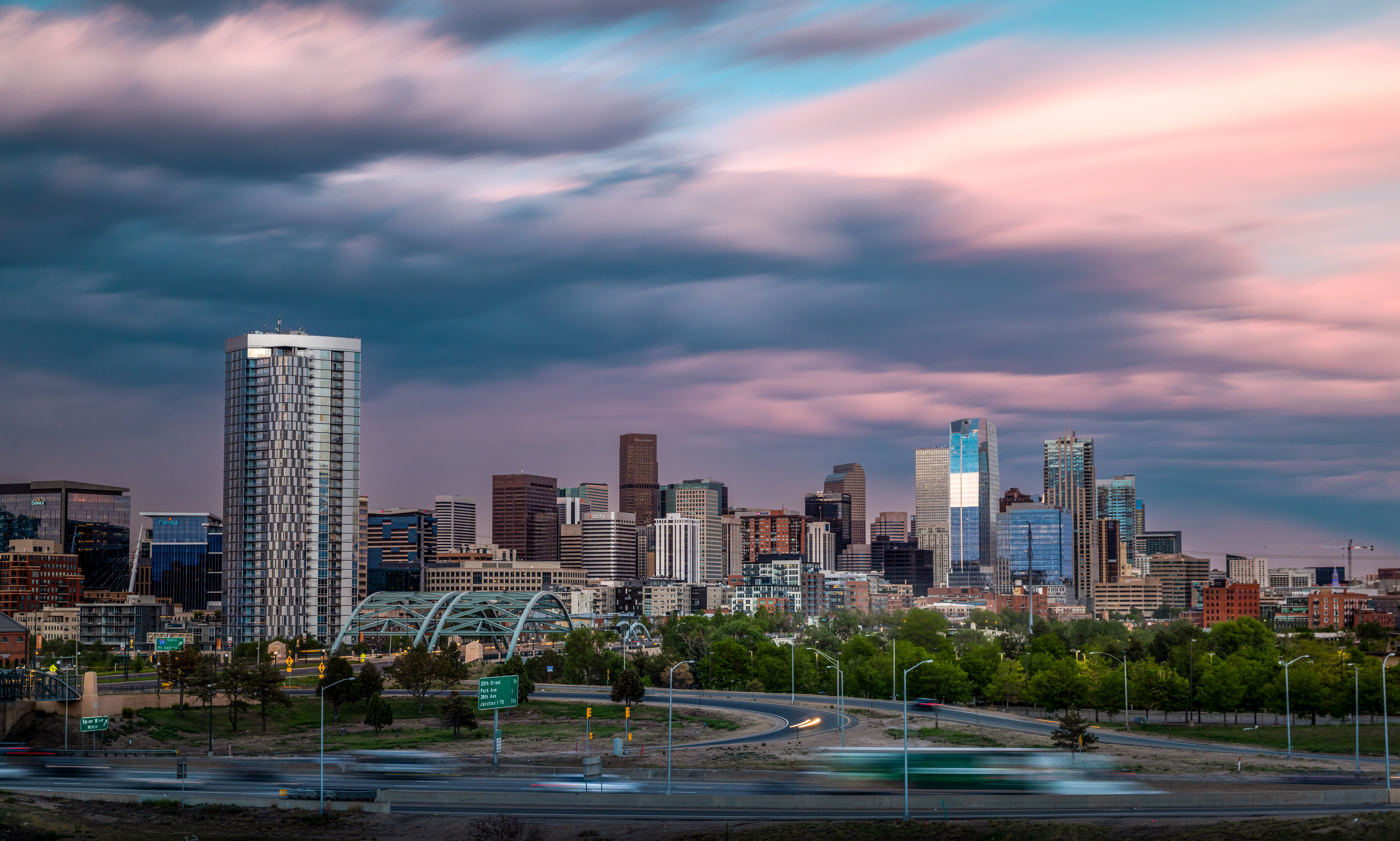
One of the classic skyline views of Denver is from the Downtown Denver Lookout on Zuni Street, where I-25 cuts a sweeping curve in front of the downtown towers and the Speer Boulevard Bridge. A telephoto in the 70-200mm range compresses the skyline against the foothills behind it, and the spot is especially good at blue hour when the freeway light trails light up.
Note: the private parking lot next to this spot shouldn’t be used. You can usually find street parking about a block away on Zuni.
Downtown Denver Lookout on Google Maps6. Big Blue Bear

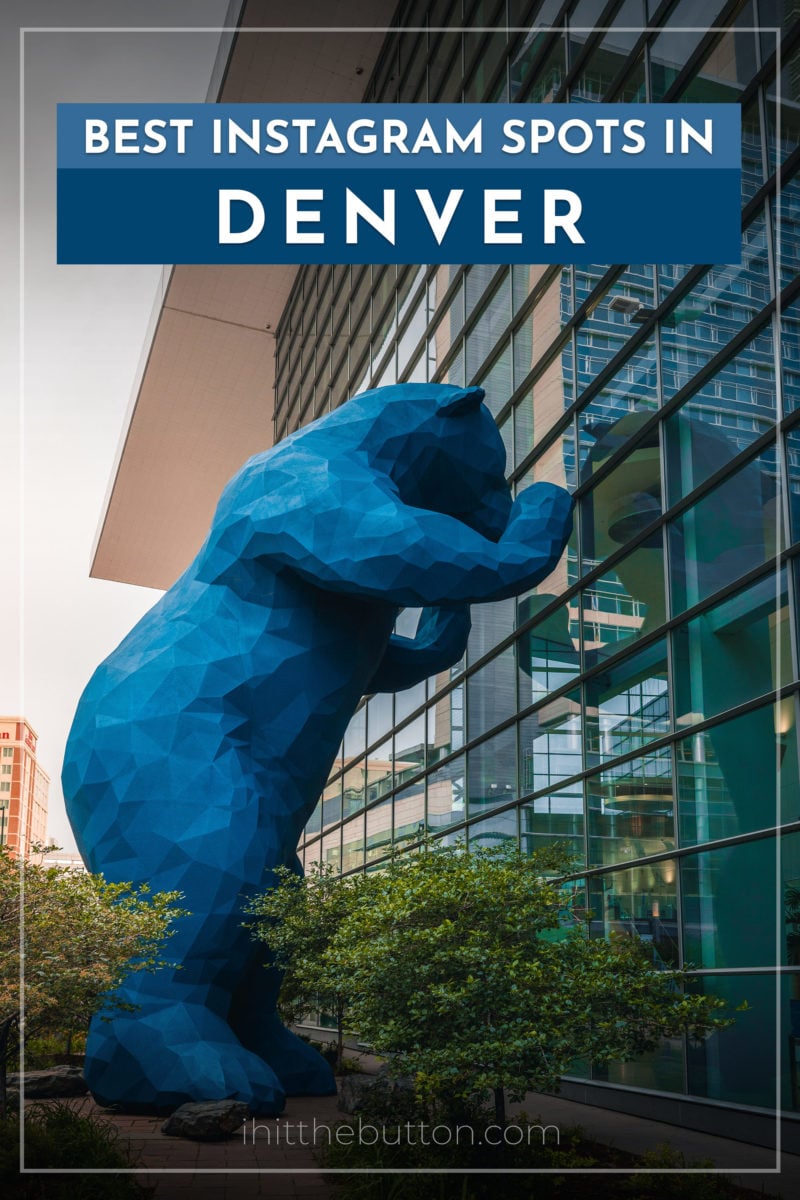
Downtown at the Colorado Convention Center you’ll spot a massive big blue bear peering into the windows. Installed in 2005 by Denver artist Lawrence Argent, the 40-foot polymer-concrete sculpture is officially titled “I See What You Mean” and was inspired by a newspaper photo of a bear peeking through someone’s window. Walk inside the convention center for the reverse shot from the bear’s point of view through the glass, then back out for the wide street-level shot.
Big Blue Bear on Google Maps7. Red Rocks Park & Amphitheatre
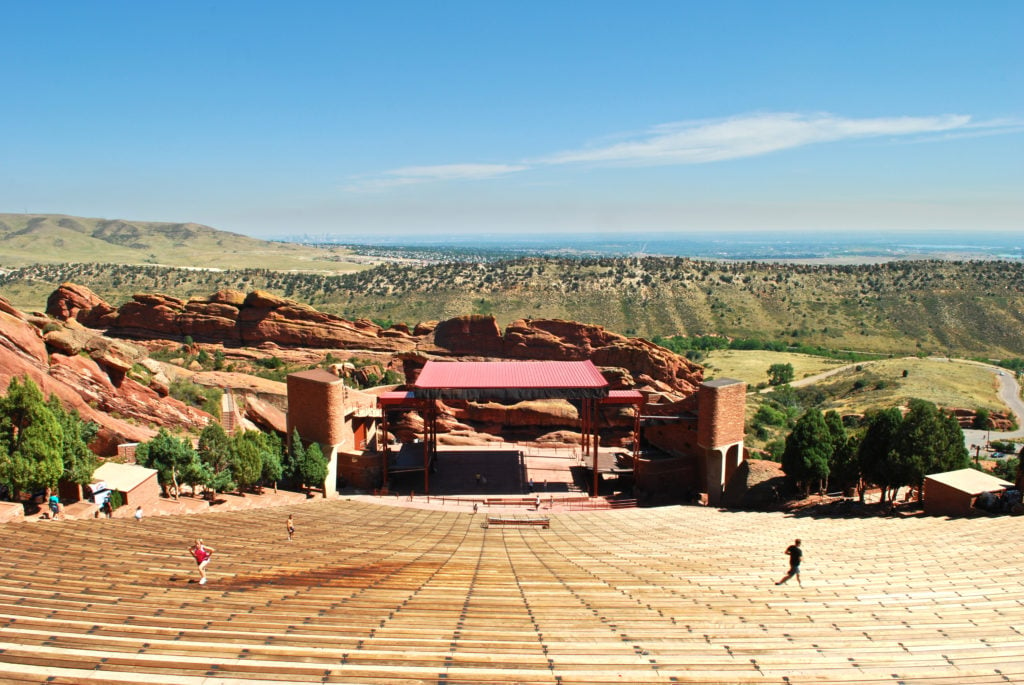
Denver’s iconic concert venue Red Rocks Park & Amphitheatre sits 15 miles west of downtown in Morrison, where 300-foot sandstone monoliths form the natural walls of the amphitheater. It’s free to walk in on non-event days, and many locals come at sunrise for the workout-and-skyline view from the top row of seats looking east. Bring a wide lens for the venue itself, and a longer lens for the Denver skyline visible on clear mornings 15 miles in the distance.
Red Rocks on Google Maps8. Dairy Block
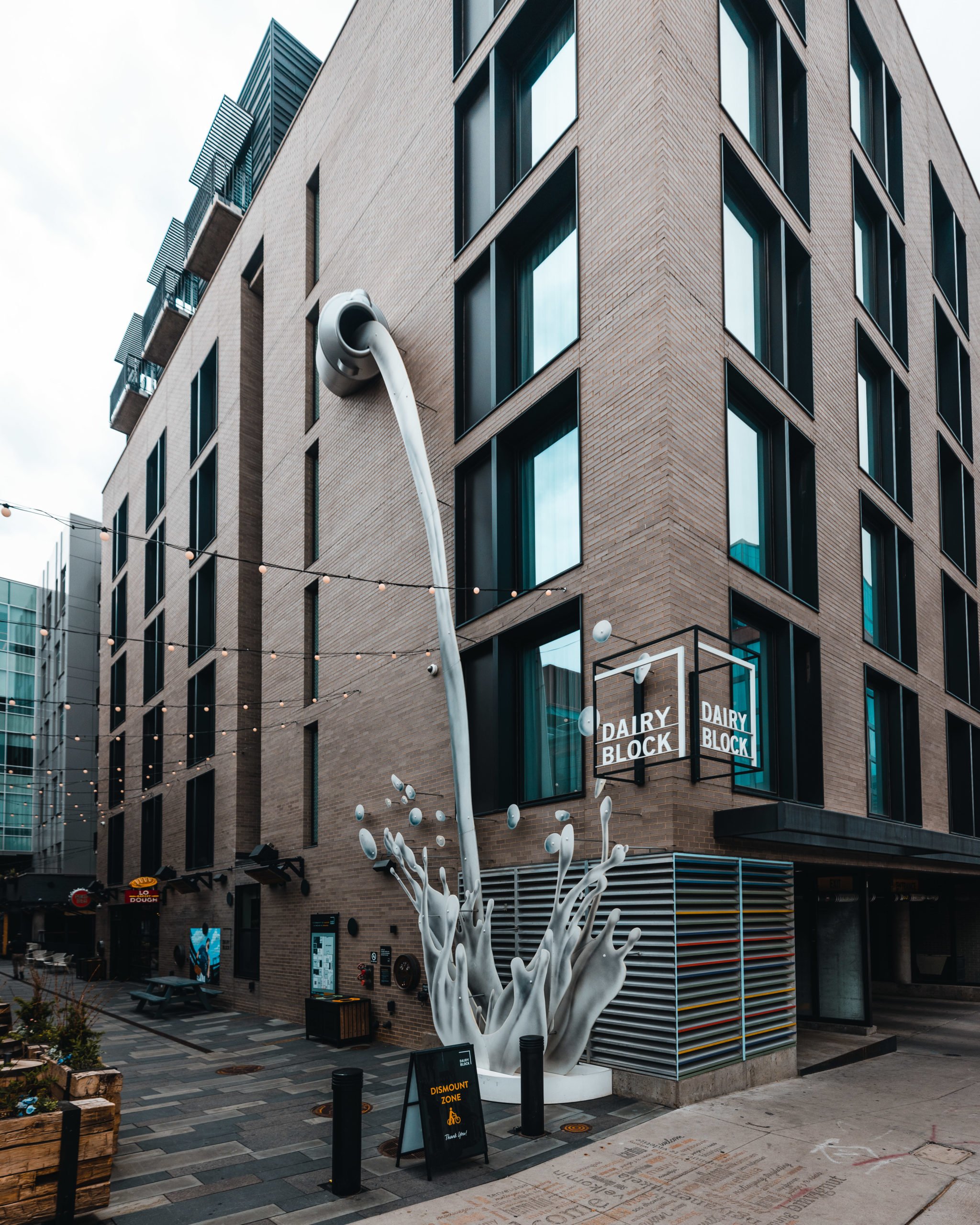
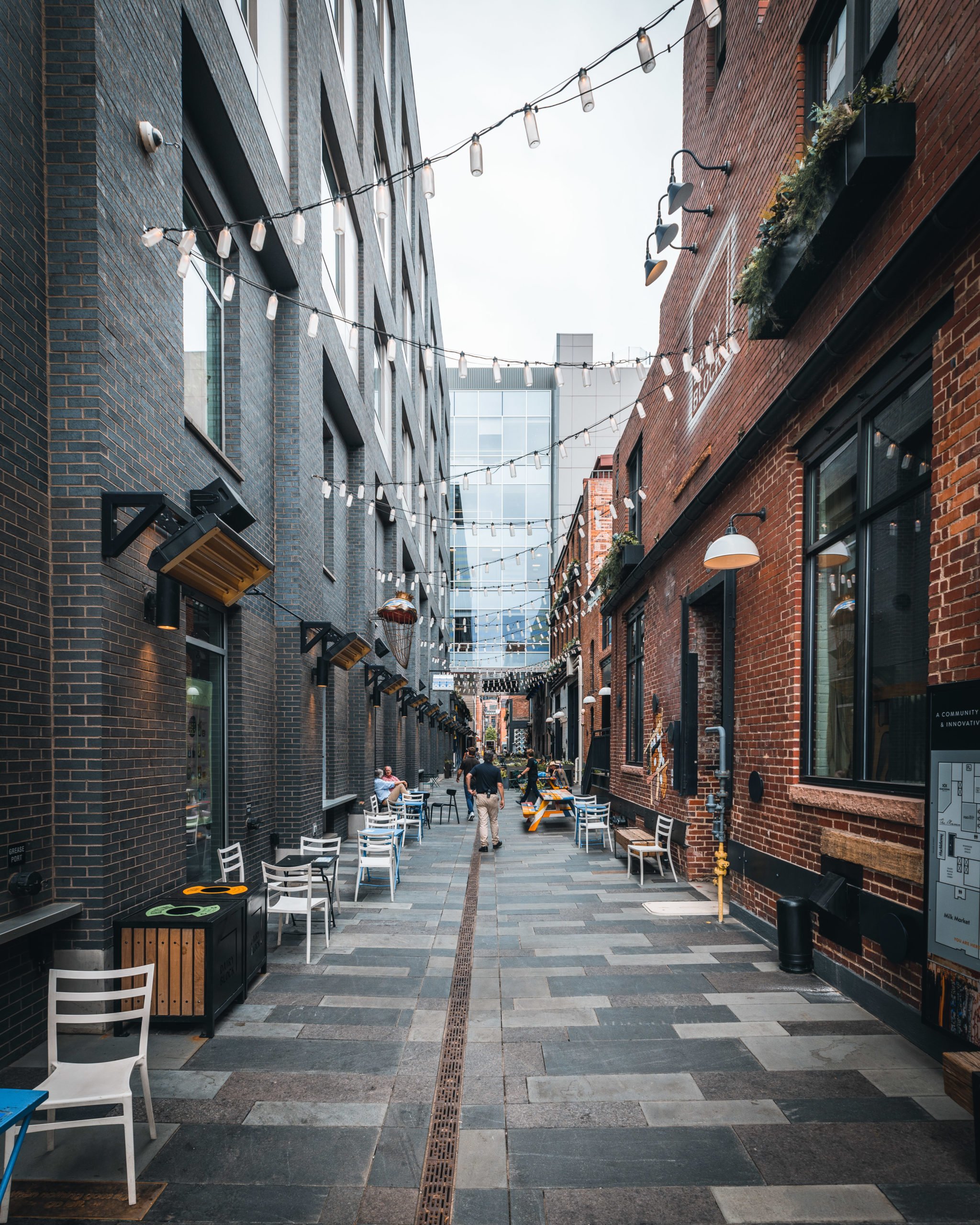
The Alley at the Dairy Block is a one-block pedestrian passage in LoDo, a short walk from Union Station. The walls are packed with rotating murals, neon signs, and string lights overhead. It’s a great evening stop. The lights turn on at dusk, the bars at either end fill the alley with people, and the layered lighting makes for moody portrait backdrops.
Dairy Block on Google Maps9. Millennium Bridge

Opened in April 2002 by Mayor Wellington Webb, the Millennium Bridge in Riverfront Park was the world’s first cable-stayed bridge built using post-tensioned structural construction. Designed by Ove Arup & Partners and ArchitectureDenver, its single tilted white mast carries the pedestrian deck connecting the 16th Street Mall to Commons Park. Shoot from below at night for the symmetric cable-fan composition, or from the deck for leading lines into the skyline.
Millennium Bridge on Google Maps10. Denver Art Museum
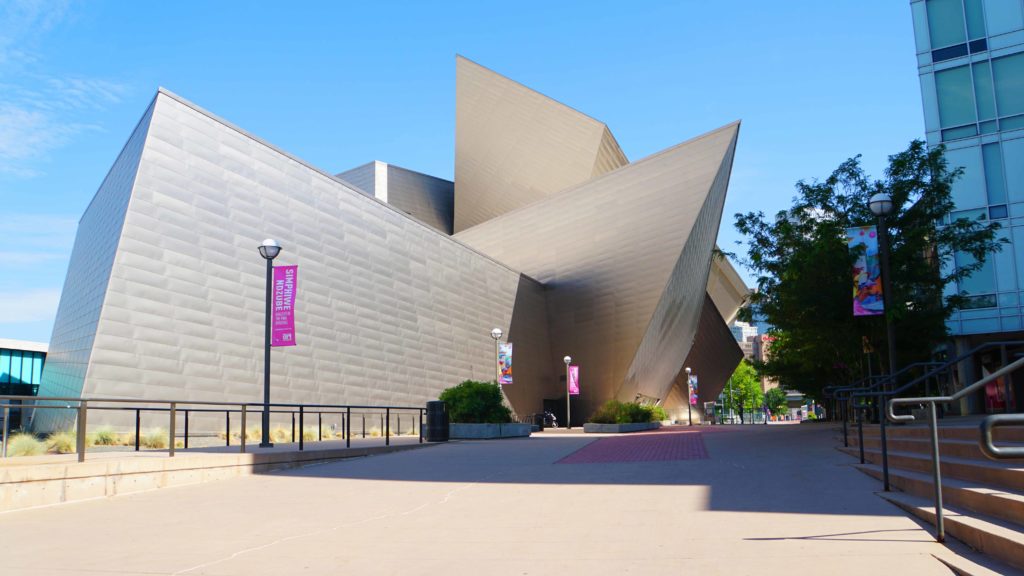
The Denver Art Museum is located in the Denver Civic Center downtown and holds over 70,000 works in its collection. The exterior is the real photo subject. The angular, 9,000-titanium-panel Frederic C. Hamilton Building (the donor it’s named after) was designed by Daniel Libeskind and opened in 2006, with sharp geometric forms inspired by the Rocky Mountains. The adjacent North Building, a seven-sided 1971 design by Italian architect Gio Ponti, was renovated in 2021 and is photogenic in its own right. Shoot the Libeskind building with a wide lens to exaggerate its angles against the sky.
Denver Art Museum on Google Maps11. Chautauqua Park
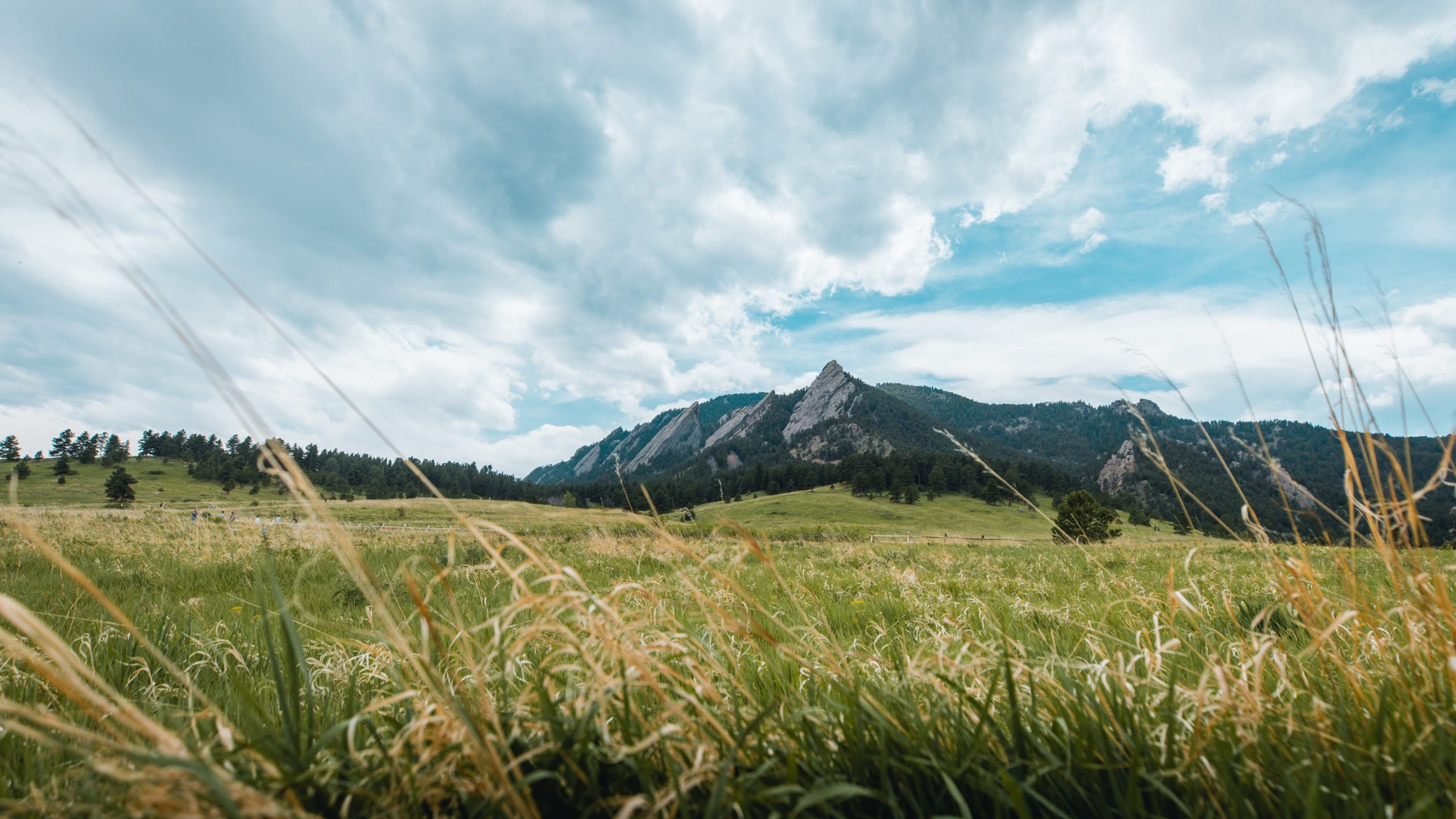
Chautauqua Park sits about 40 minutes northwest of Denver in Boulder, at the base of the Flatirons (the iconic slanted sandstone slabs rising over the city). The Chautauqua Trail is an easy 3.6-mile loop with the Flatirons in nearly every frame, and the parking lot fills up by 8am on weekends. There’s a free shuttle from downtown Boulder on summer weekends. The classic shot is from the meadow below the rocks, with the historic 1898 Chautauqua Auditorium in the foreground.
Chautauqua Park on Google Maps12. Clyfford Still Museum
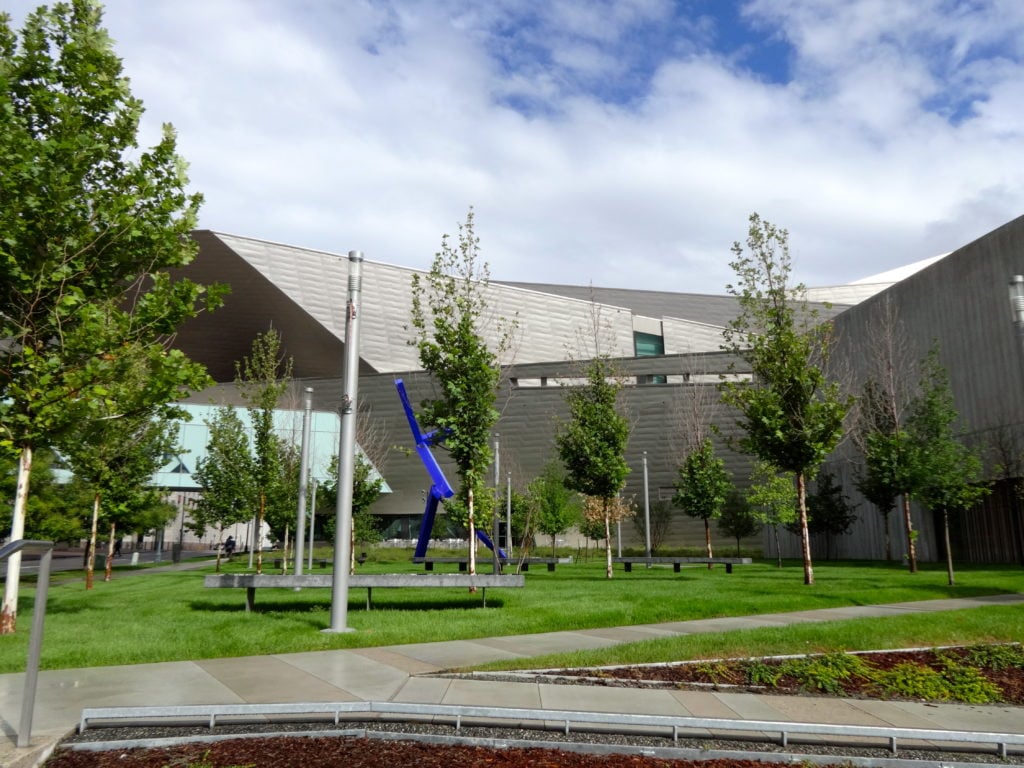
The Clyfford Still Museum, right next to the Denver Art Museum, is dedicated entirely to one artist (rare for a major museum) and holds about 95 percent of Still’s lifetime output. Brad Cloepfil’s concrete building is the photo subject from the outside: ribbed ceilings, narrow slot windows, and textured cast walls make for moody architectural compositions. Inside, no flash and tripod permits are required, but the galleries themselves are well-lit if you’re shooting handheld.
Clyfford Still Museum on Google Maps13. Greetings from Denver Mural
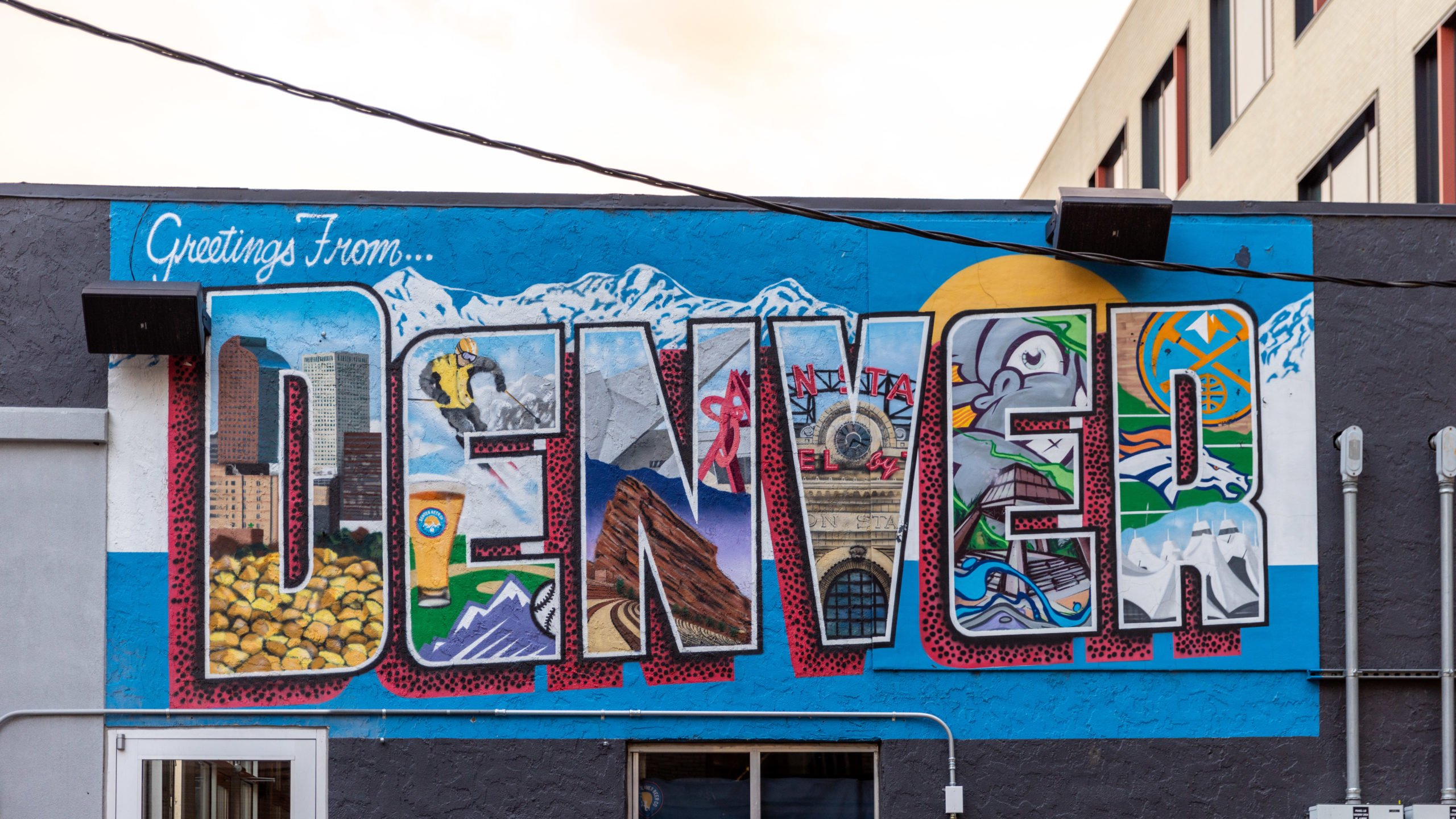
You can find the Greetings from Denver mural in the Highlands on the side of Denver Beer Co at 1695 Platte Street. Painted in the classic vintage-postcard style, the giant letters of “Denver” are filled with iconic city sights (the Capitol dome, Rocky Mountains, Red Rocks, Union Station). Stand directly across the street with a wide lens to fit the whole mural in frame. Morning light is best since the wall faces roughly east.
Greetings from Denver Mural on Google Maps14. Denver Love This City Mural
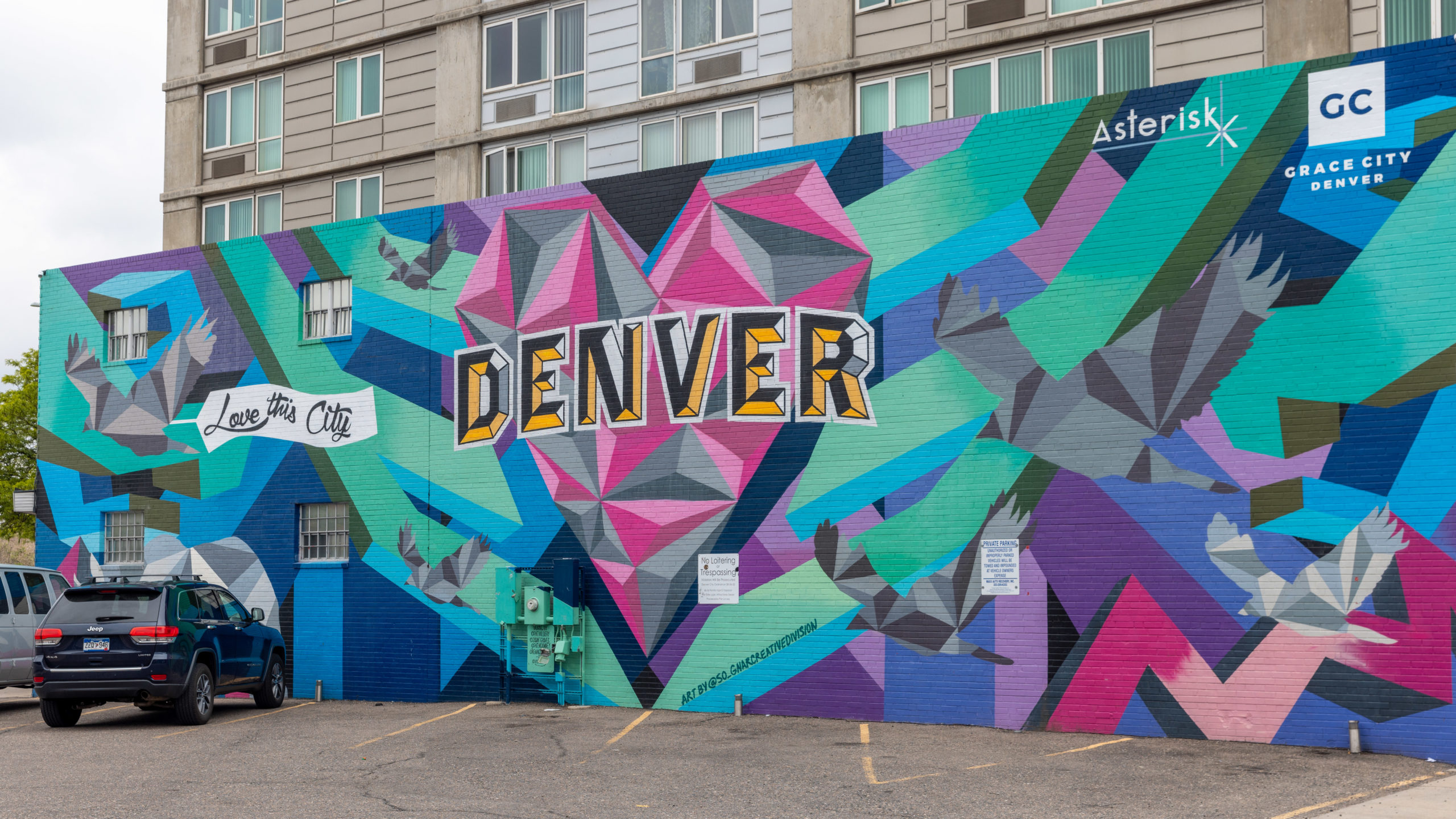
On the corner of North Broadway and Arapahoe Street you’ll find the “Love This City” mural, part of a Visit Denver campaign by local artists. The colorful design features “Denver” inside a giant heart. The wall sits along a busy street with cars usually parked in front, so early Sunday morning is the easiest time to get a clean shot.
Denver Love This City Mural on Google MapsDenver Photography FAQ
When is the best time of year to photograph Denver?
Late September through October is the city’s best month for photography. Cottonwoods and aspens turn yellow, the air clears after summer haze, and the light is golden and crisp at altitude. Winter brings dramatic skylines with snow-capped Rockies behind the downtown towers. Summer afternoons in July and August often bring thunderstorms that build over the Front Range. They make for incredible dramatic skies if you can shoot from a safe vantage point.
What’s the best skyline view of Denver?
The Downtown Denver Lookout on Zuni Street is the classic photographer angle, with I-25 sweeping in front of the towers and the Front Range behind them. Other strong options are Sloan’s Lake at sunset (reflections and the mountains behind the city), Ruby Hill Park for a south-facing wide angle, and Red Rocks at sunrise where you can pick out the skyline 15 miles east on clear days.
Can you fly a drone in Denver?
Most of downtown Denver sits inside Denver International Airport’s controlled airspace, and many of the iconic spots (the Capitol grounds, Civic Center parks, Red Rocks) prohibit drones outright. You’ll need an FAA Part 107 cert and LAANC authorization to fly downtown legally. For the iconic mountain shots outside the city, Rocky Mountain National Park is also a no-fly zone. Stick with ground-based photography unless you have all your paperwork in order.
Do I need to worry about altitude when photographing Denver?
Yes, especially if you’re hiking the Flatirons at Chautauqua or visiting Red Rocks. Denver sits at 5,280 feet and Boulder is even higher. Drink more water than you think you need, take it slower than you would at sea level, and skip alcohol the first night if you’re sensitive. Sunscreen matters more here too. UV is 25 percent stronger at this elevation.
How long do you need to photograph the main Denver spots?
Two days lets you cover the downtown core and a day trip to Red Rocks and Chautauqua. One day works if you focus on a tight loop in LoDo: Union Station, the Dairy Block alley, Millennium Bridge, the Capitol, the Big Blue Bear, and the Downtown Denver Lookout at blue hour. Add a third day if you want to include Rocky Mountain National Park.
If you’re planning a one-day Denver photo route, hit Union Station and the Dairy Block in the morning, the Capitol and Civic Center museums midday, the Big Blue Bear and Millennium Bridge in the afternoon, and the Downtown Denver Lookout at blue hour. Two days lets you add Red Rocks at sunrise and Chautauqua Park in Boulder.
If you have a rental car and an extra day, the day trips around Denver are some of the best in the country. My favorites are Rocky Mountain National Park (about 90 minutes northwest), Maroon Bells near Aspen, and Garden of the Gods in Colorado Springs.
If you found this post useful
Share a pin below on Pinterest!