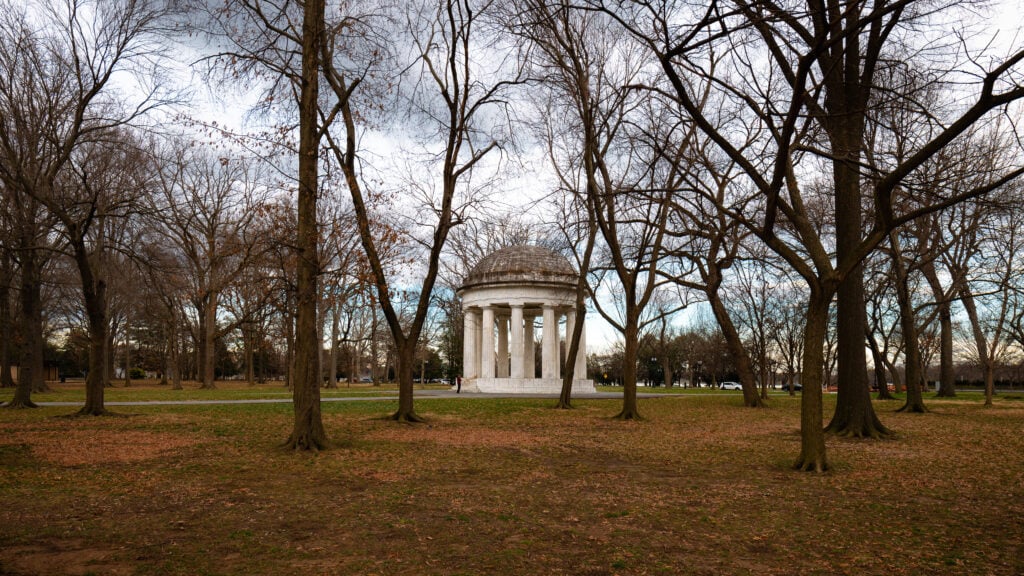
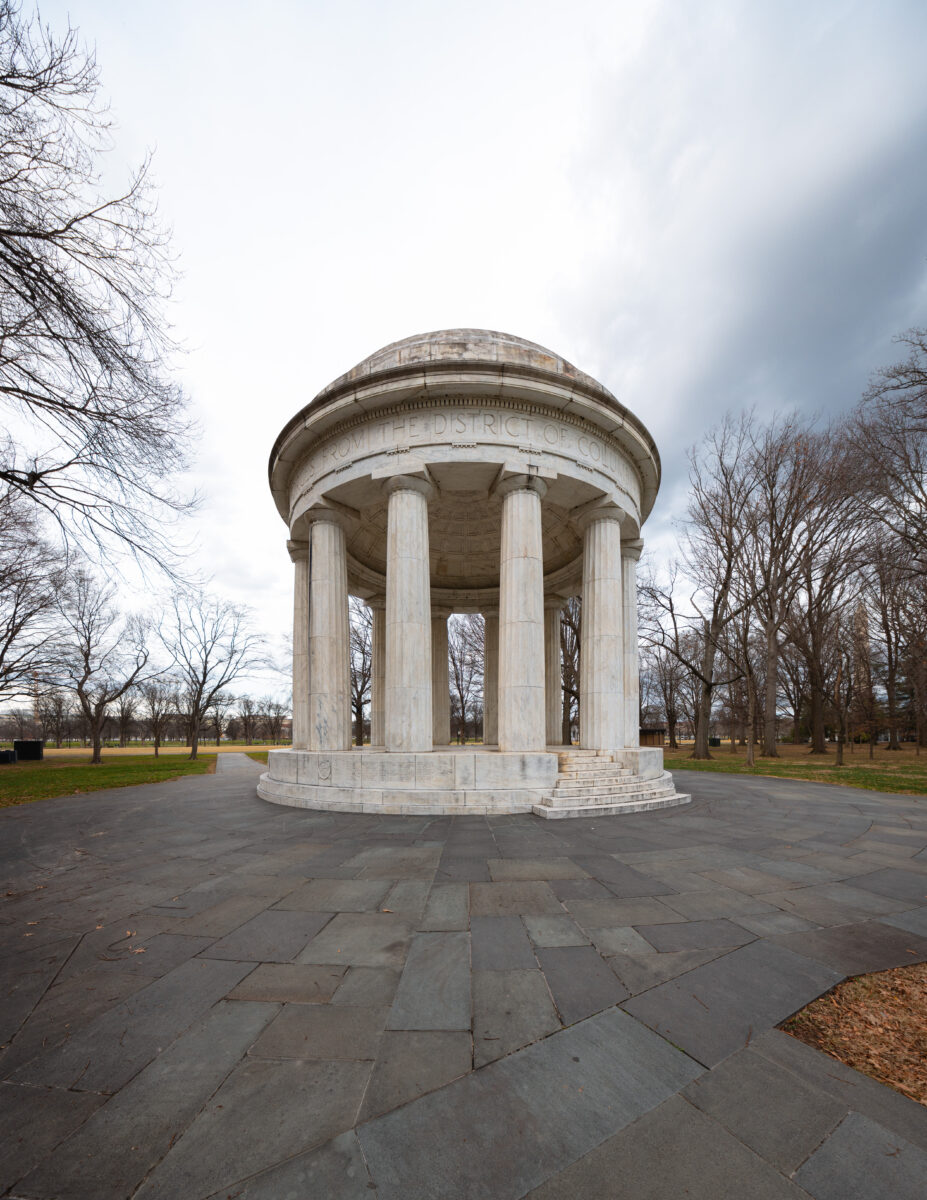
The District of Columbia War Memorial is a small, domed marble pavilion on the National Mall in Washington DC. It honors the 26,000 District residents who served in World War I and the 499 who died in that service. It is unusual on the Mall: most monuments here commemorate national figures or events, while this one is the only local memorial dedicated specifically to the citizens of a single city.
Table of contents
How to Get to the District of Columbia War Memorial
Nestled between the World War II Memorial and the Martin Luther King Jr. Memorial, it’s easily accessible on foot from nearby Metro stations, such as Smithsonian or Foggy Bottom. If you are visiting the Lincoln Memorial Reflecting Pool it’s a quick stop to visit the District of Columbia War Memorial.
History of the DC War Memorial
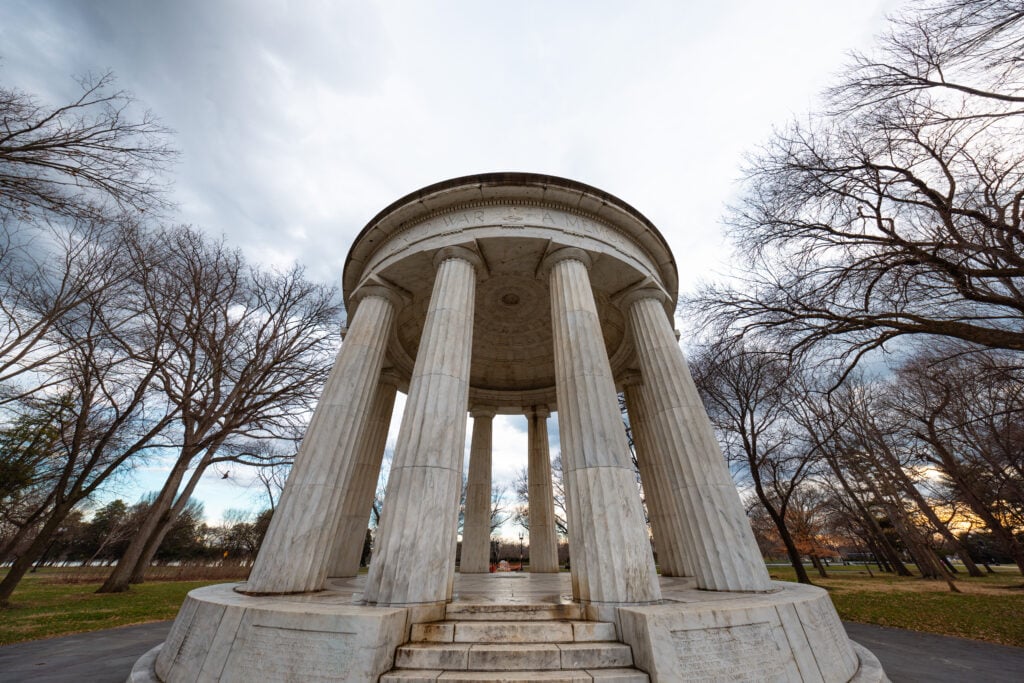
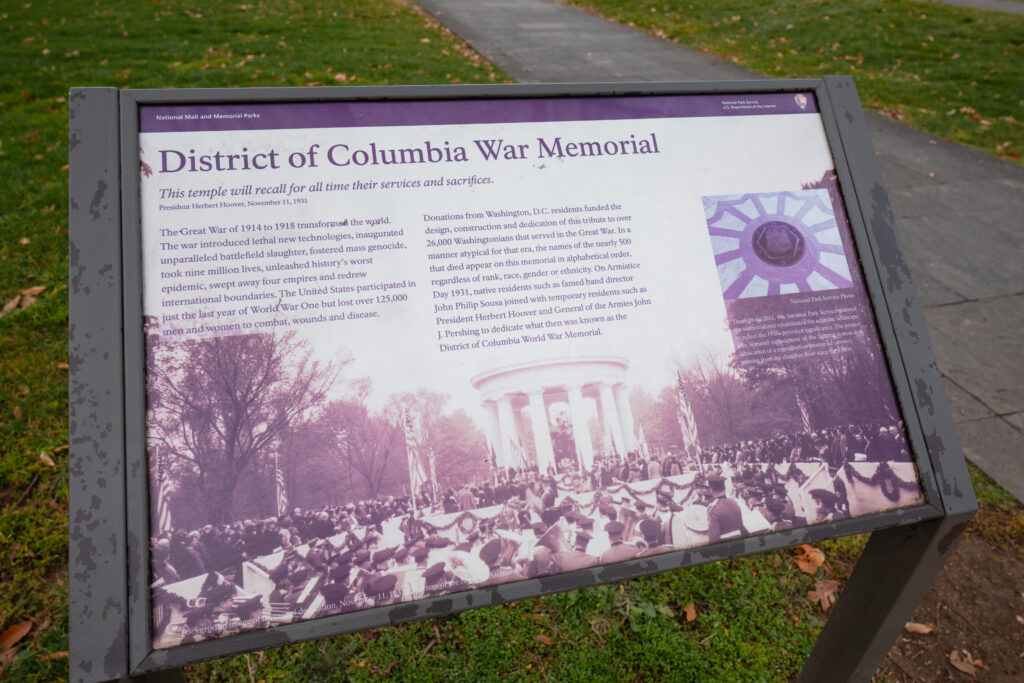
Designed by Washington architect Frederick H. Brooke (with associate architects Horace Peaslee and Nathan C. Wyeth), the memorial was built between 1929 and 1931 and dedicated on November 11, 1931 (Armistice Day) by President Herbert Hoover. It was the first war memorial built on the National Mall.
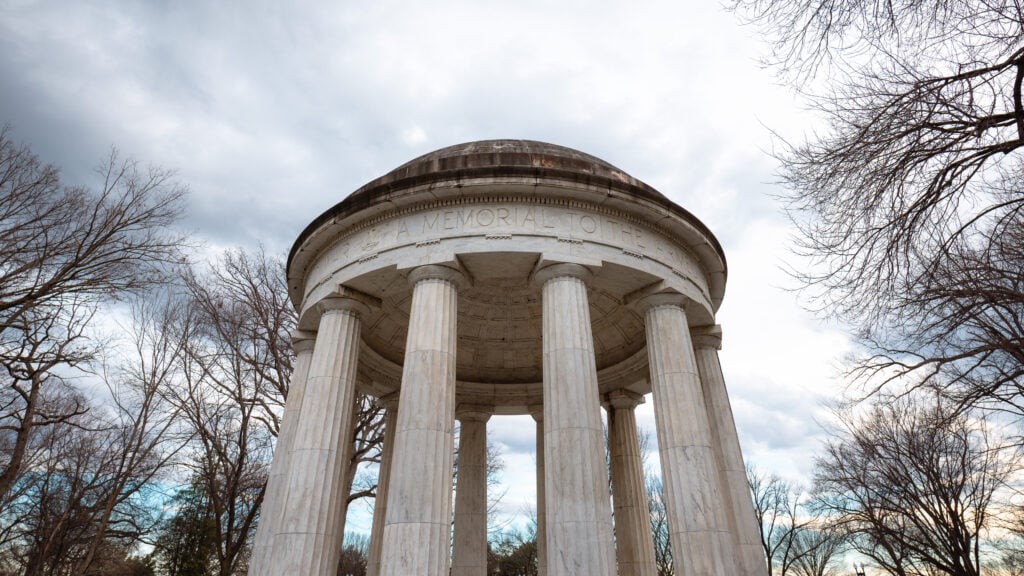
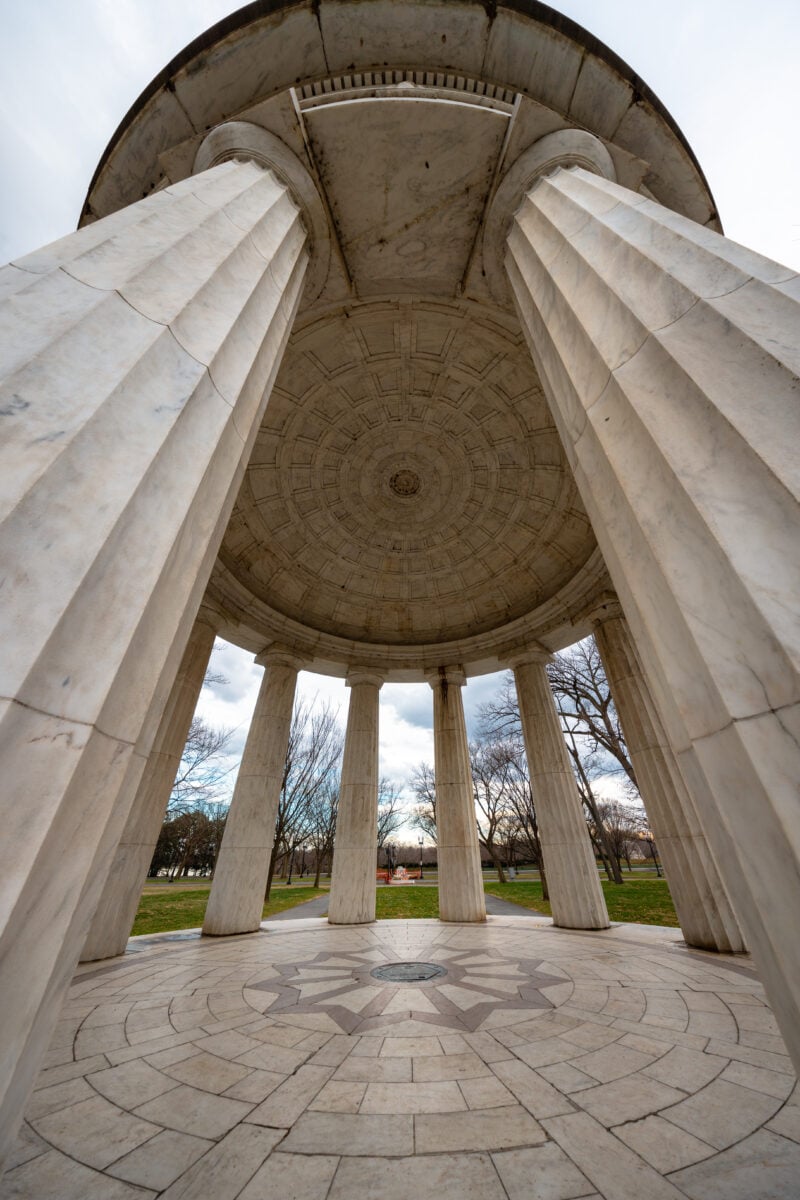
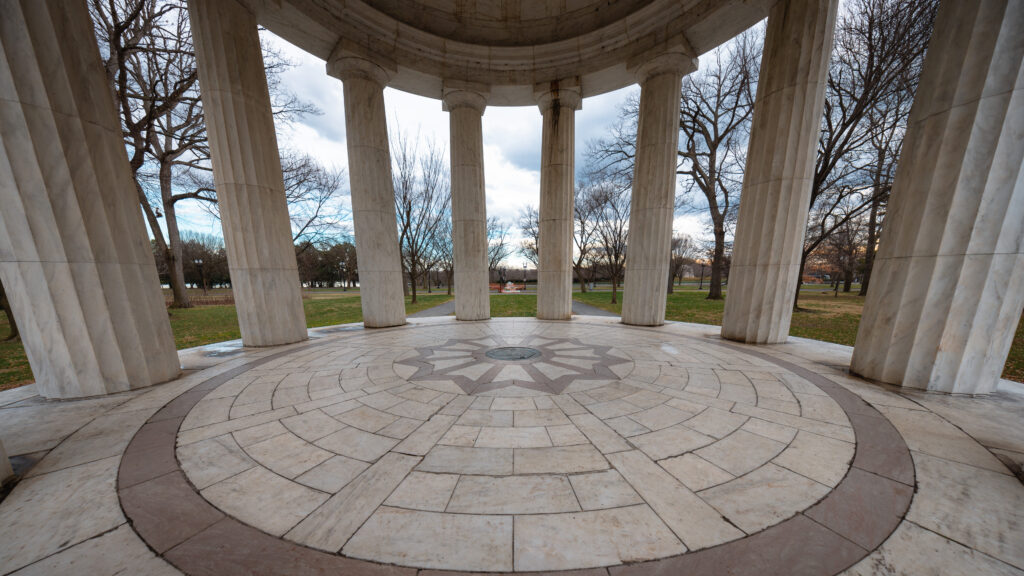
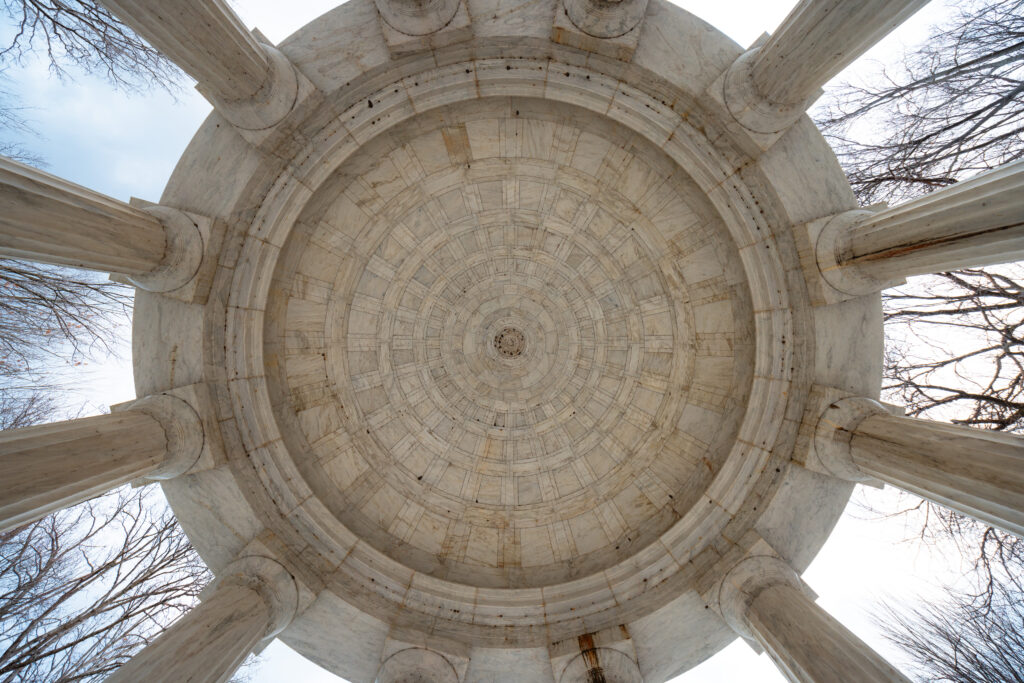
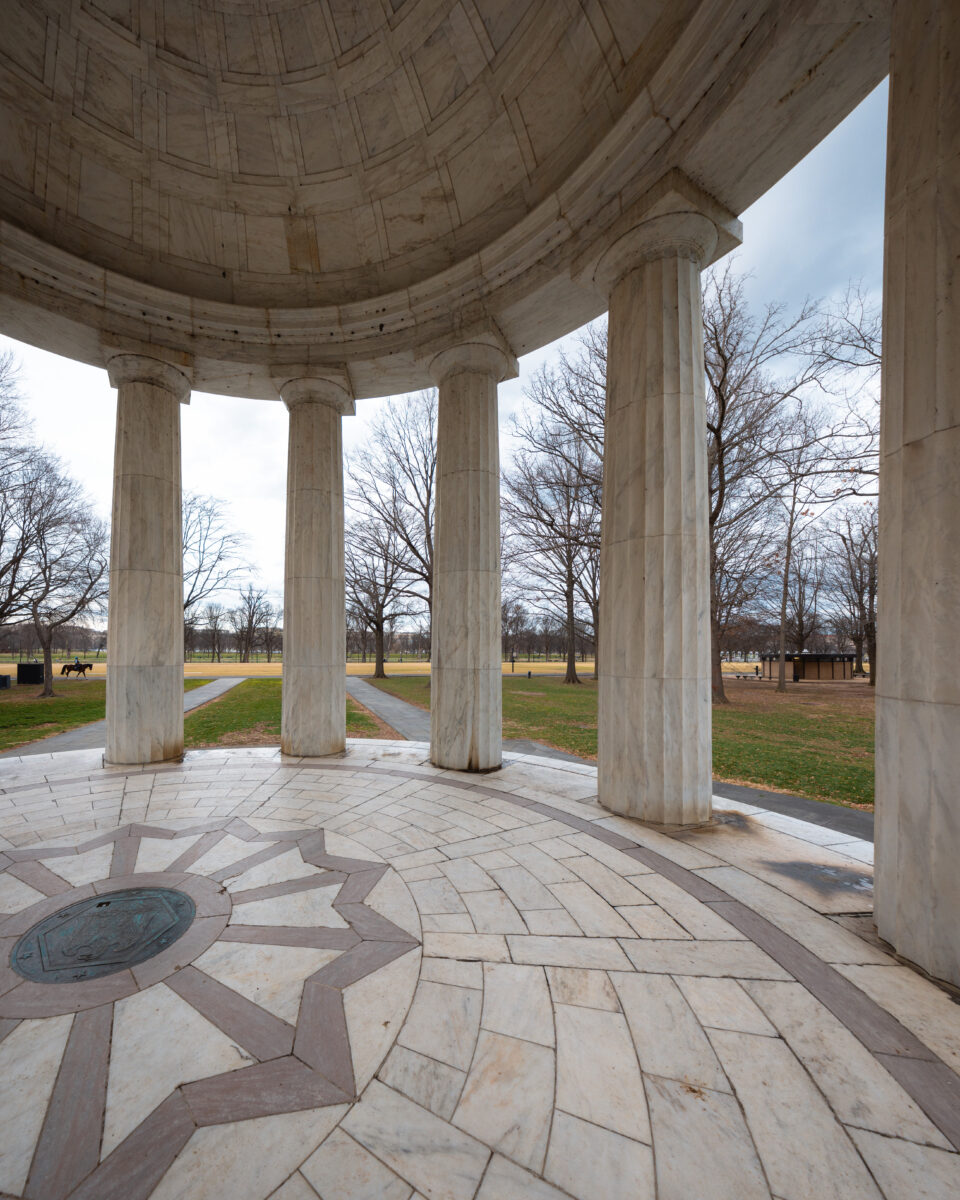
The structure is a circular open-air peristyle of 12 Doric columns supporting a marble dome about 47 feet tall. The 4-foot marble base is 43 feet 5 inches across and was designed to function as a bandstand; the platform inside the columns is meant for live music. The names of the 499 DC residents who died in WWI are inscribed on the base, listed alphabetically without regard to rank, race, or gender, which was notable for a 1931 monument in a still-segregated city.
John Philip Sousa Conducted at the Dedication
At the dedication ceremony on November 11, 1931, the United States Marine Band performed under the baton of John Philip Sousa, the longtime Marine Band conductor and DC resident. The program included his own “Stars and Stripes Forever” and “The Star-Spangled Banner,” which had been officially designated the national anthem of the United States just eight months earlier in March 1931.
The 2010-2011 Restoration
By the 2000s the memorial had fallen into disrepair (cracked marble, drainage problems, faded inscriptions). It was restored in 2010-2011 using roughly $7 million from the American Recovery and Reinvestment Act of 2009. The restoration rededication took place on November 10, 2011, the day before the 80th anniversary of the original dedication.
District of Columbia War Memorial Pictures
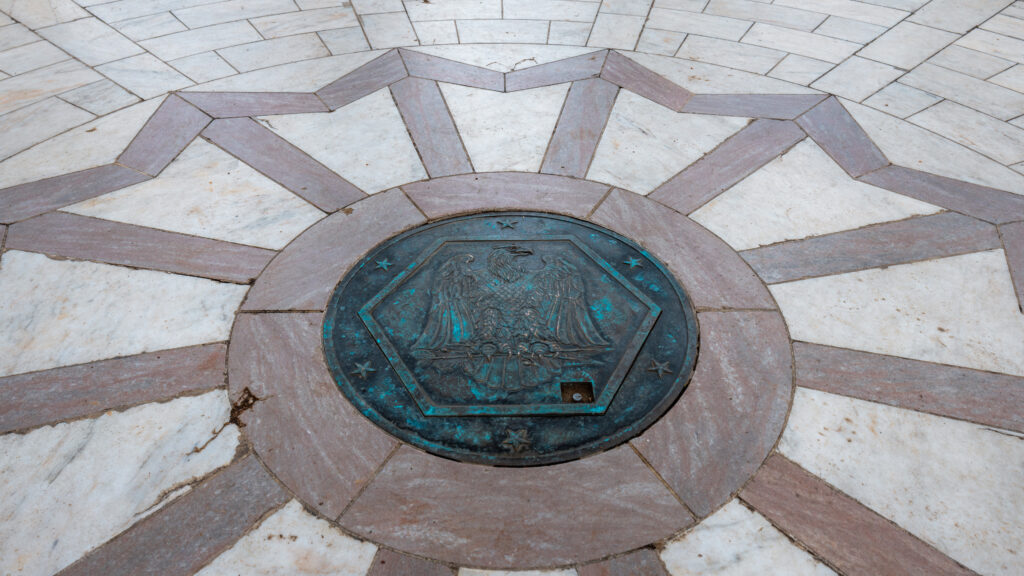
Here are photos from my visits to the District of Columbia War Memorial on the National Mall.
District of Columbia War Memorial FAQ
What does the DC War Memorial commemorate?
It honors the 26,000 District of Columbia residents who served in World War I and the 499 who died in that service. It is the only memorial on the National Mall dedicated specifically to the residents of a single city, rather than a national figure or event.
When was the DC War Memorial built?
Construction took place between 1929 and 1931. The memorial was dedicated on Armistice Day, November 11, 1931 by President Herbert Hoover. It was the first war memorial built on the National Mall.
Who designed the DC War Memorial?
Washington architect Frederick H. Brooke designed the memorial, with Horace Peaslee and Nathan C. Wyeth as associate architects. It was built in a Doric peristyle style chosen to harmonize with the classical buildings on the Mall.
Can you have a wedding at the DC War Memorial?
Yes, with a permit. The memorial is one of the most popular small-wedding venues on the National Mall thanks to its open-air dome and quieter foot traffic. You will need a National Park Service Special Use Permit, which you can request through the NPS National Mall and Memorial Parks office. Receptions are not allowed, only ceremonies, and the permit process typically takes several weeks.
Can you visit the War Memorial at night?
Yes. The memorial is open 24 hours a day and well-lit at night. It is one of the quieter Mall locations after dark and is a favorite for night photography of the columns and dome against the sky.
What is the DC War Memorial made of?
The structure is built of Vermont Imperial Danby marble. It is a circular peristyle of 12 Doric columns supporting a domed roof about 47 feet tall, set on a 4-foot marble base 43 feet 5 inches across. The base was designed to function as a bandstand for live music.
Is photography allowed at the DC War Memorial?
Yes. Personal photography is welcome at any hour. Commercial or wedding photography requires the same NPS Special Use Permit as a ceremony. The structure’s columns work well with a wide-angle lens, while a longer focal length is useful for the carved inscriptions and detail on the dome.
For more on the rest of the Mall, see my National Mall travel guide.