The Dwight D. Eisenhower Memorial is one of the newest memorials in Washington DC, dedicated on September 17, 2020 (Constitution Day). The 4-acre site sits on Independence Avenue SW, just south of the National Mall between the National Air and Space Museum and the U.S. Department of Education. It honors Eisenhower in both of his major roles: the 34th President of the United States and the Supreme Commander of the Allied Forces during World War II.
Table of contents
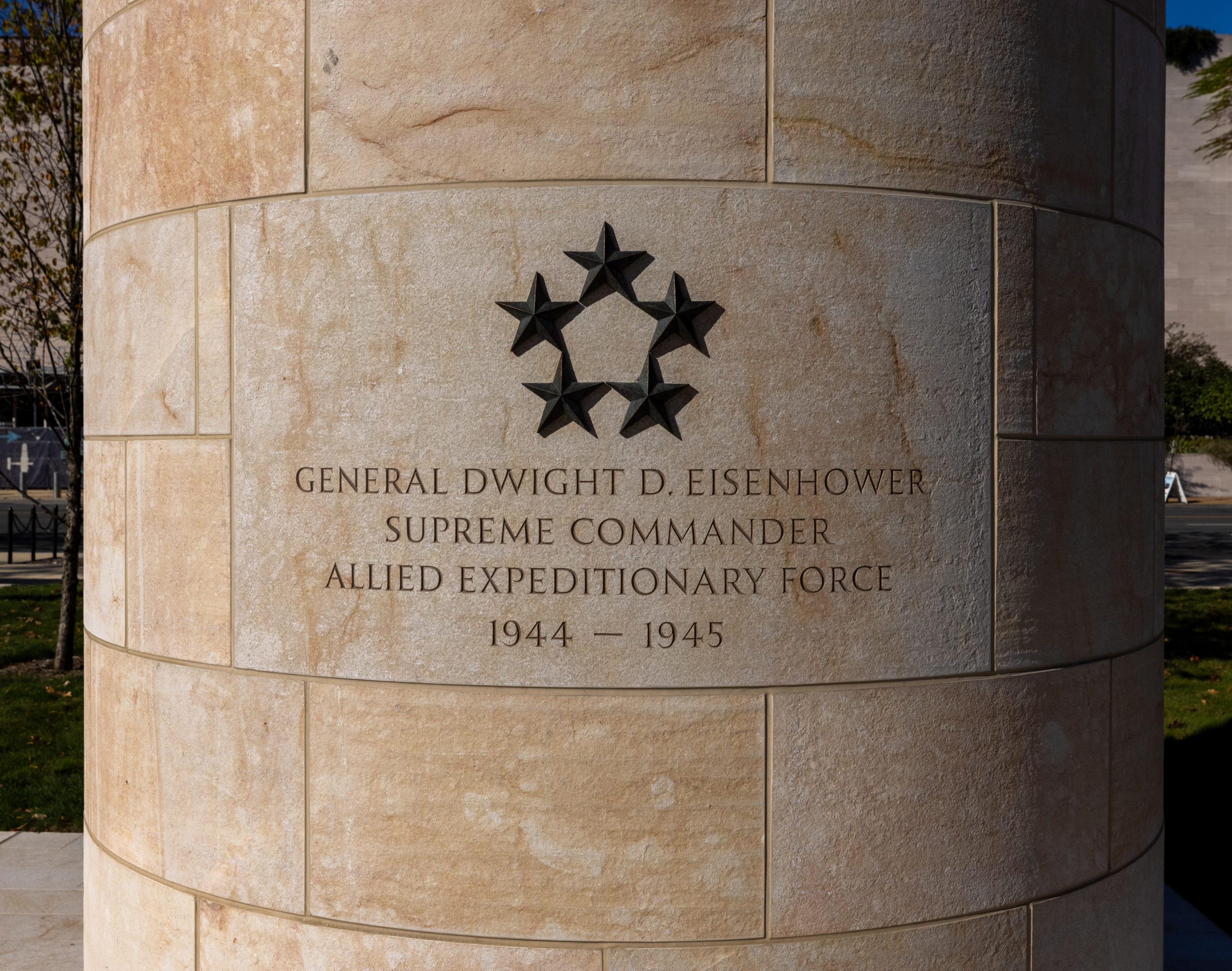

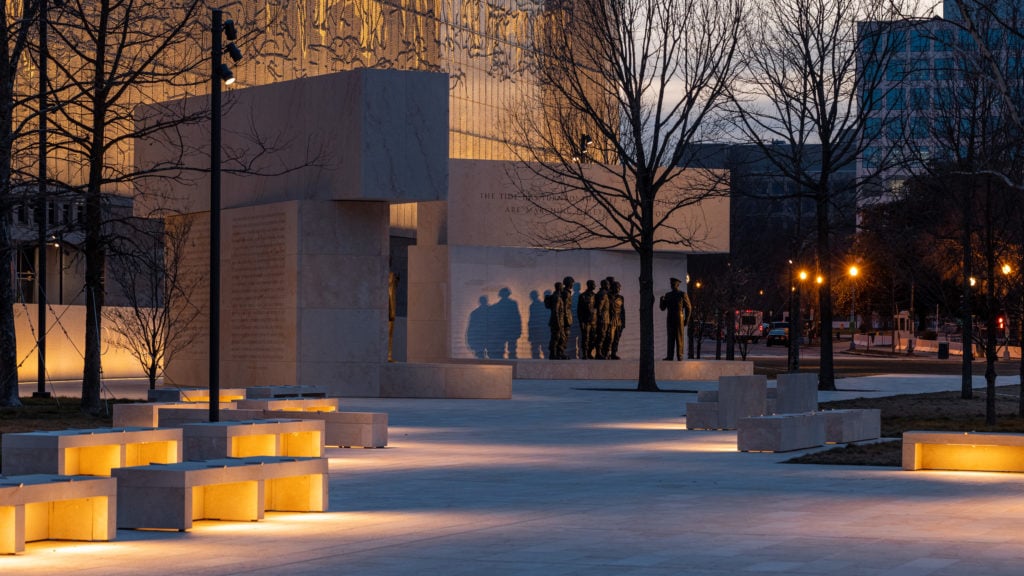
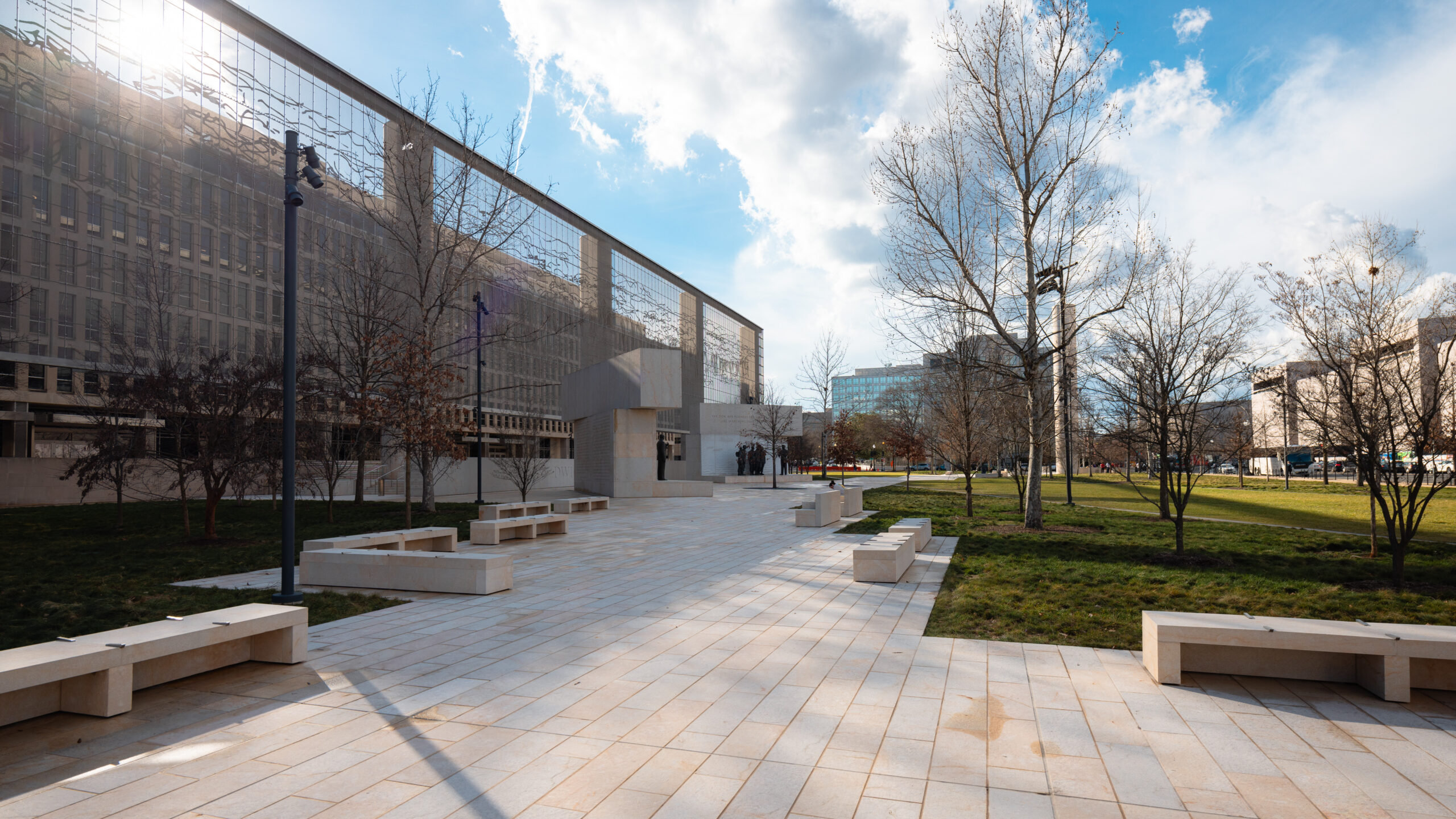
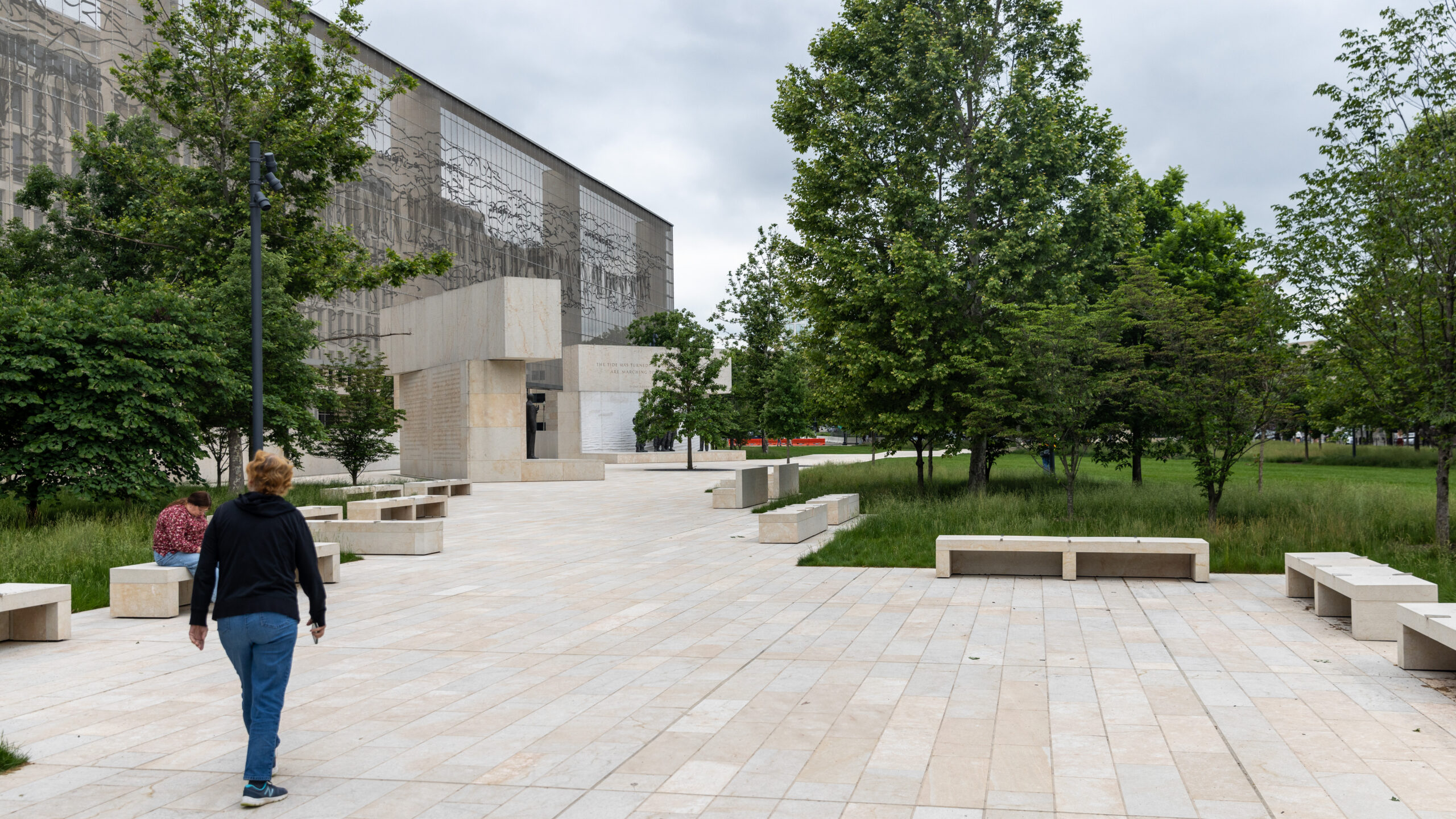
The memorial combines a tree-lined urban park with two bronze sculpture groupings depicting Eisenhower’s two careers, all set against a 447-foot stainless steel mesh tapestry that forms the back of the site.
About the Memorial Design
The Stainless Steel Tapestry
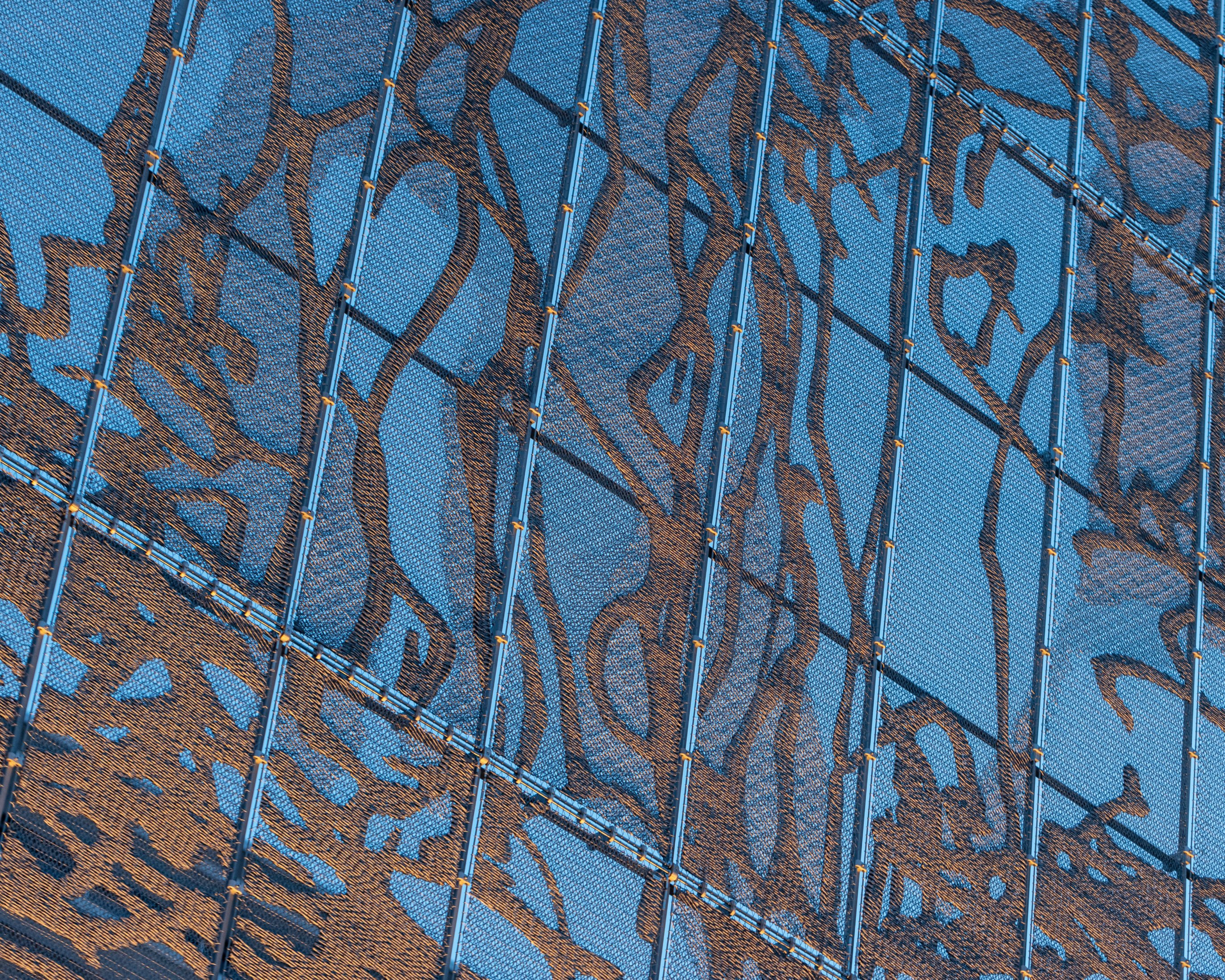
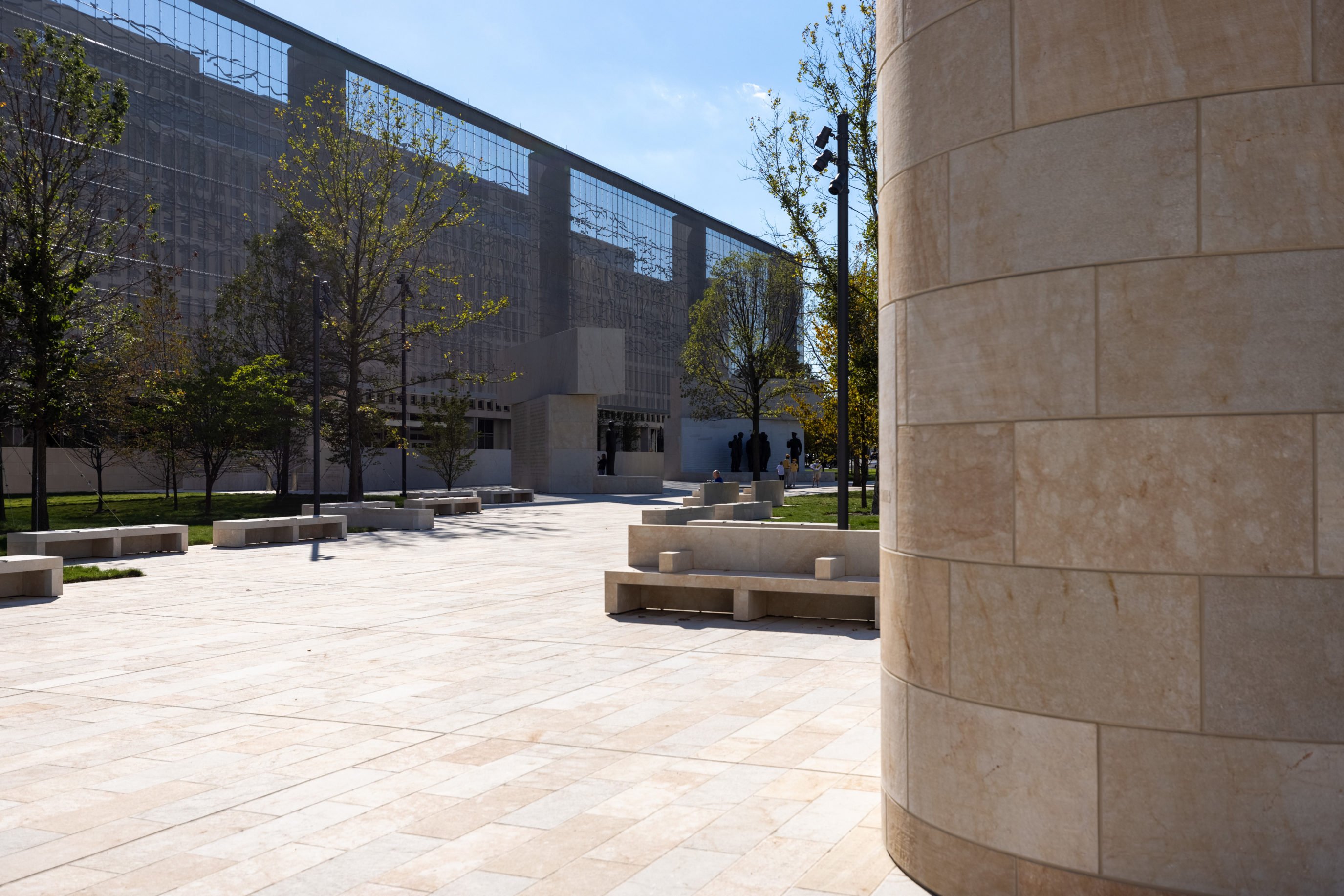
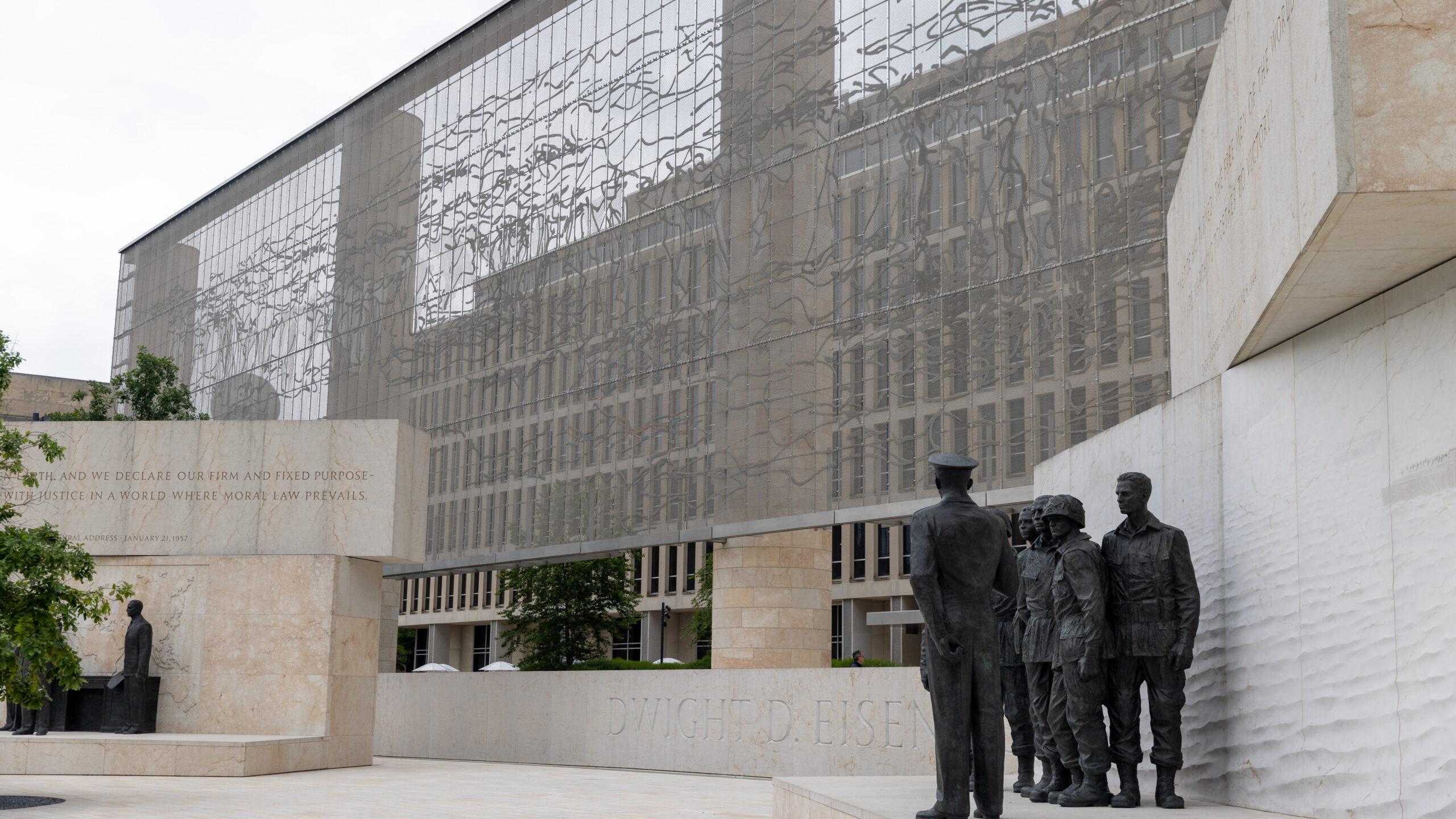
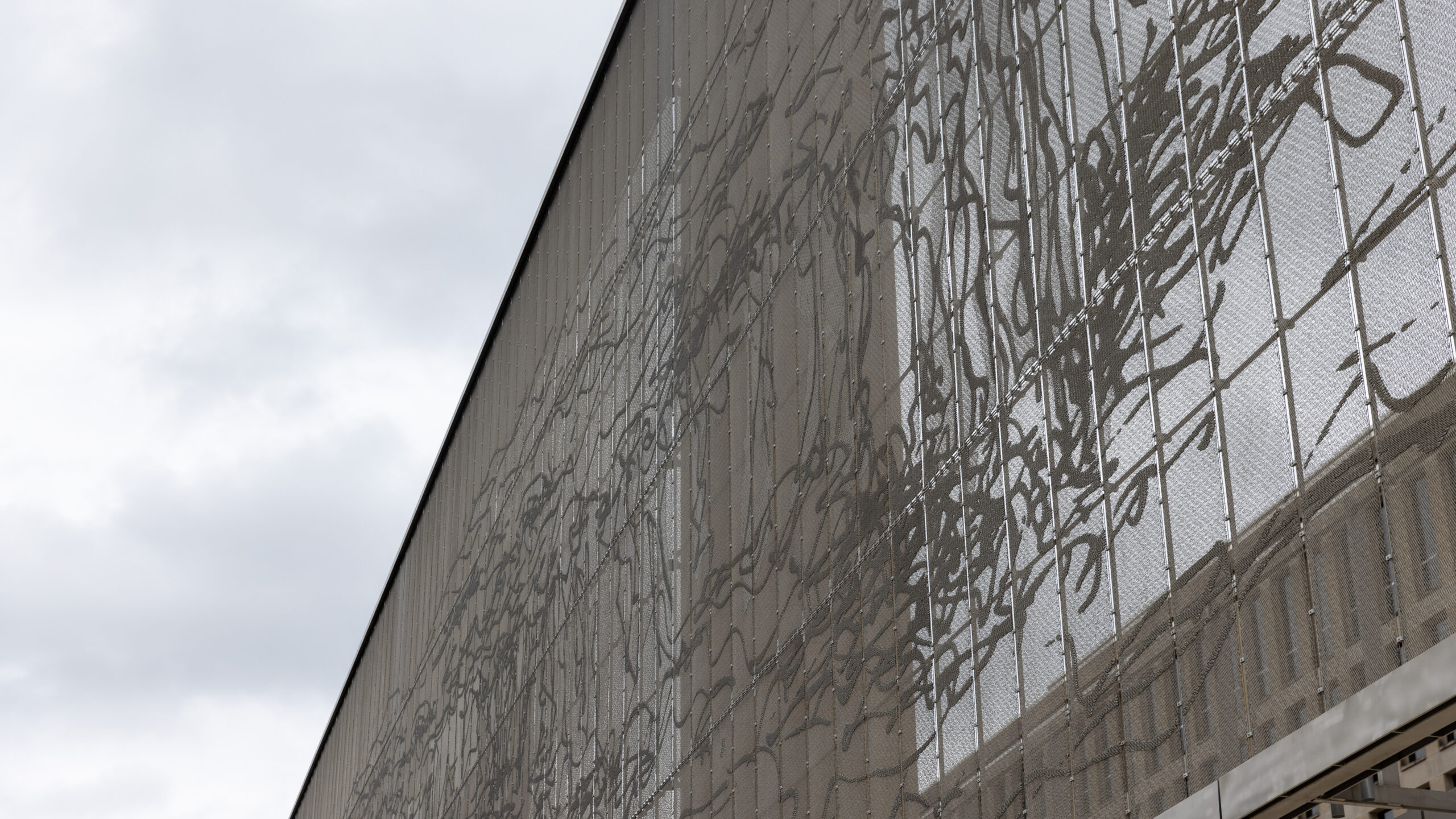
The memorial was designed by architect Frank Gehry of Gehry Partners. Its signature feature is the woven stainless steel mesh tapestry that forms the back wall of the site, depicting the cliffs of Pointe du Hoc on the Normandy coast at peacetime. The image is a reminder of the price of the D-Day landings on June 6, 1944 and of the peace Eisenhower helped secure after the war.
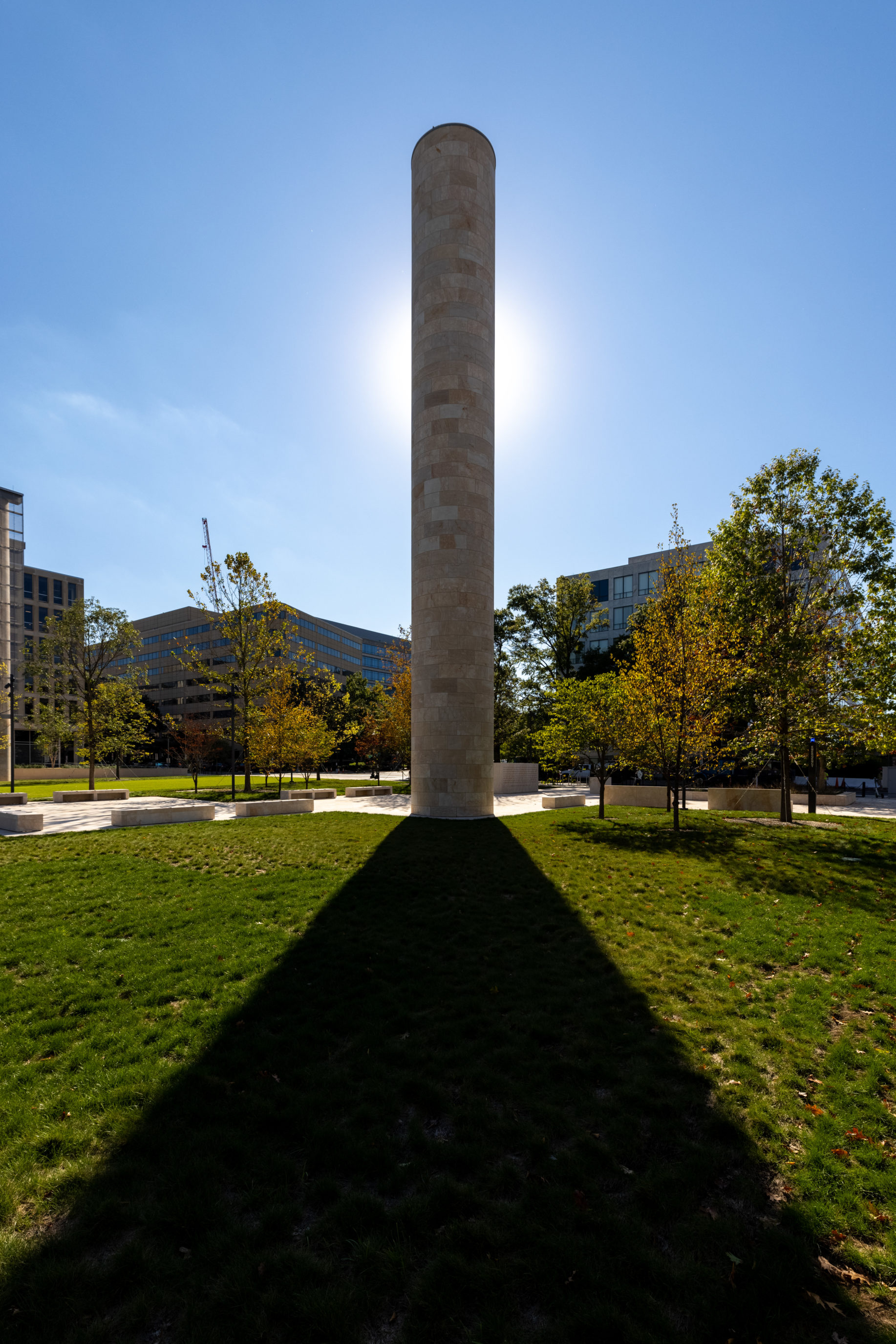
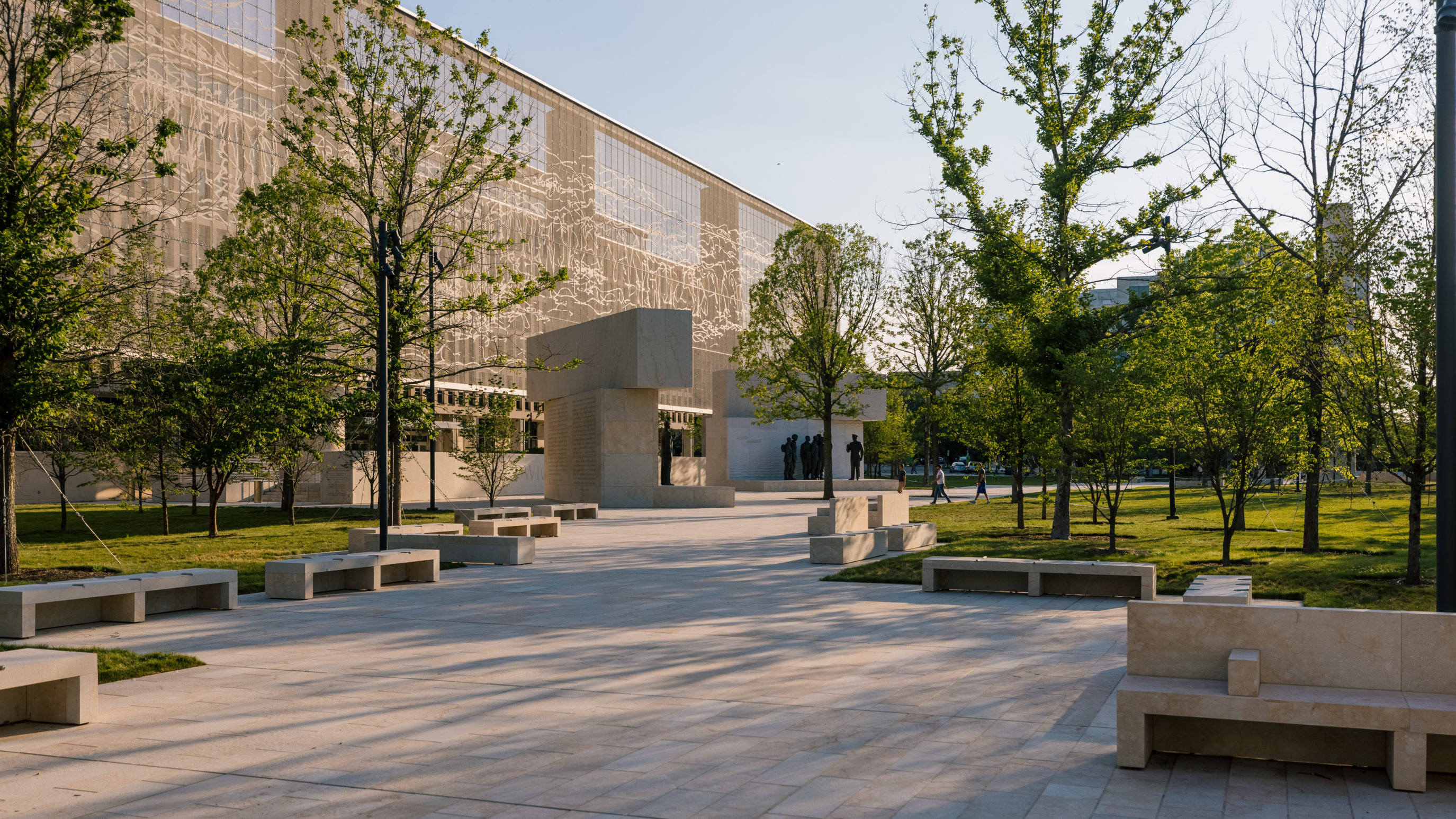
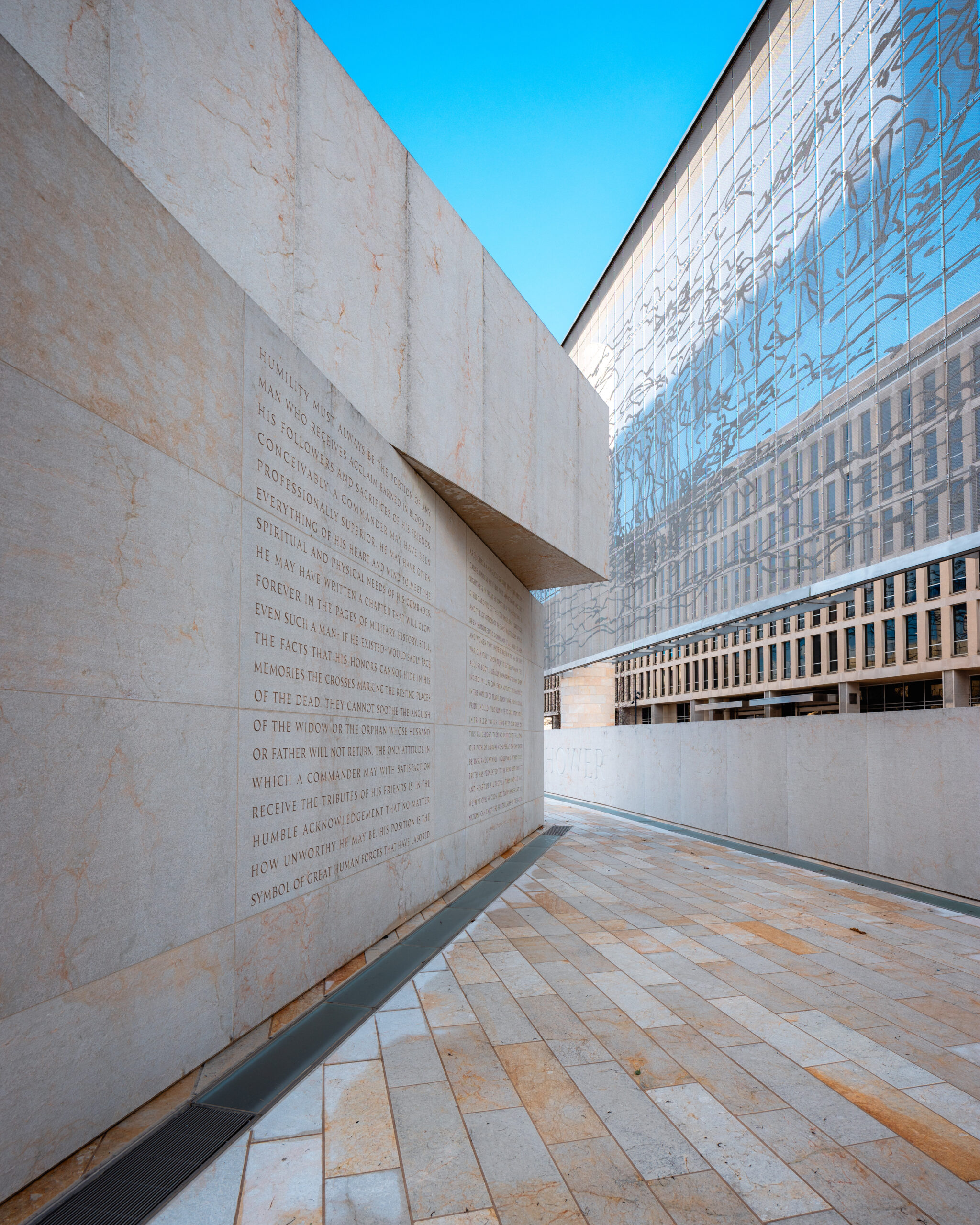
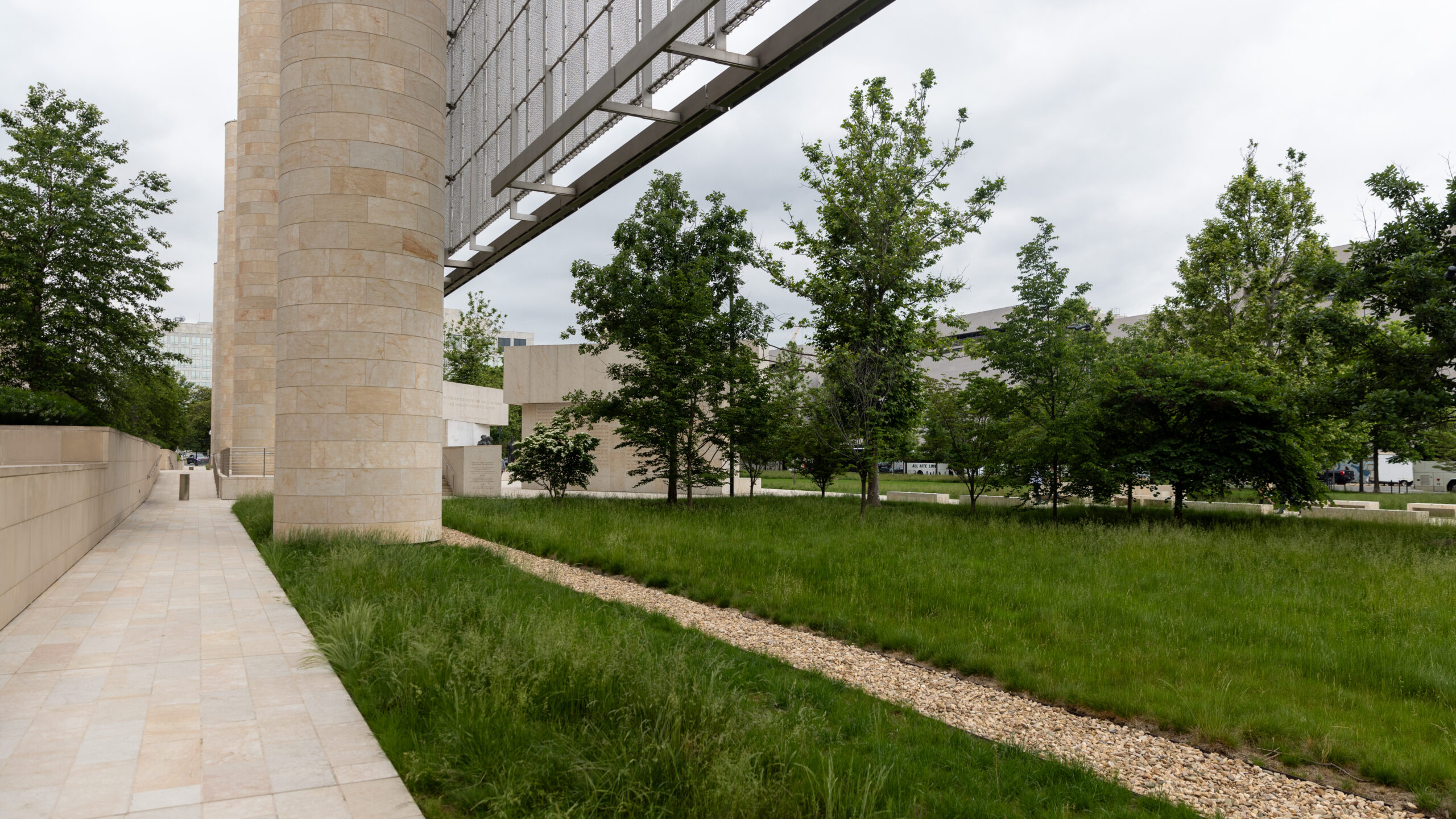
The tapestry is 447 feet long and is suspended between stone-clad columns that stand 80 feet tall. It is the first architectural-scale woven stainless steel tapestry in the world, fabricated by Polish-American artist Tomas Osinski. The image is visible from both sides of the memorial and changes throughout the day as the sun moves across it.
The Bronze Sculptures
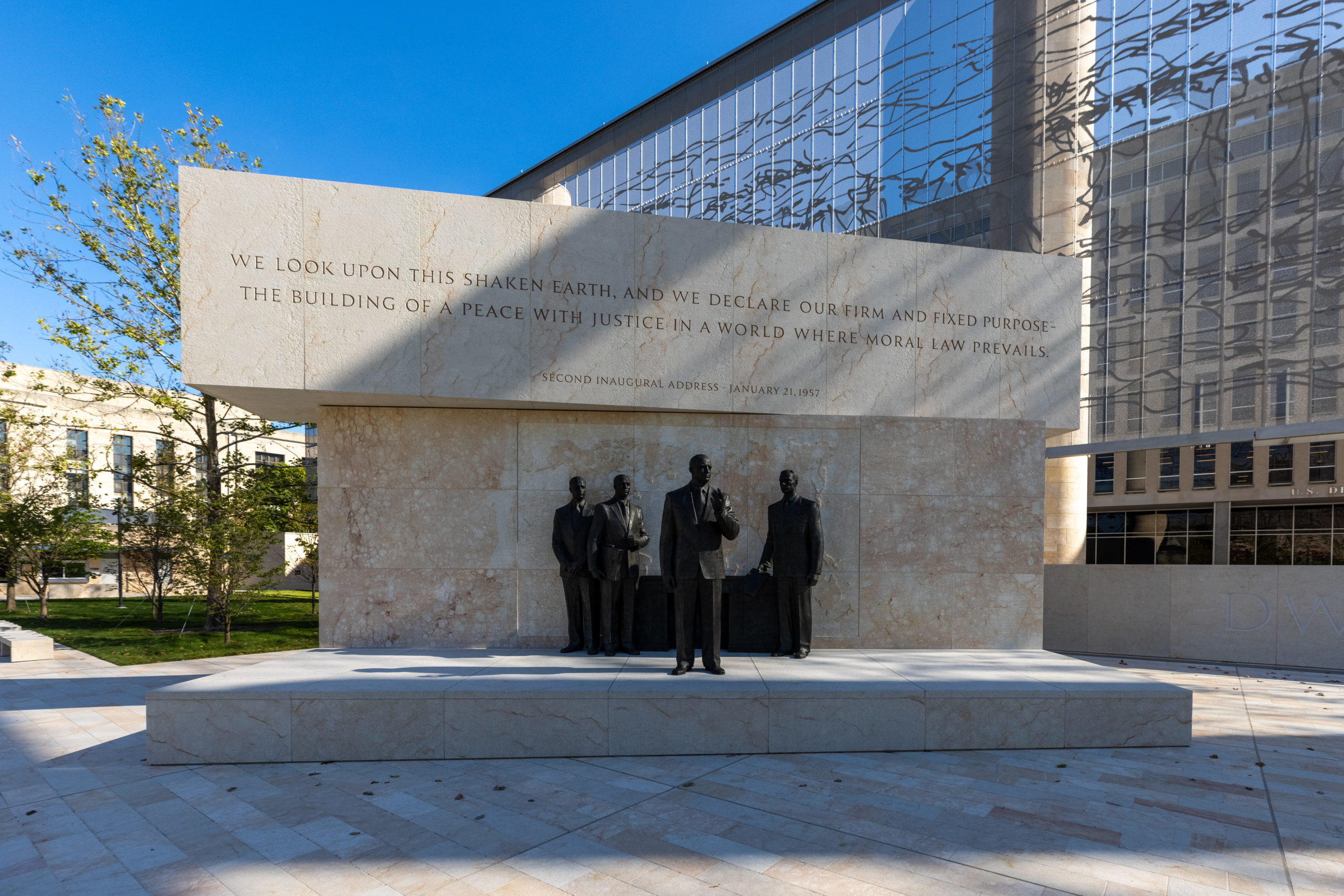
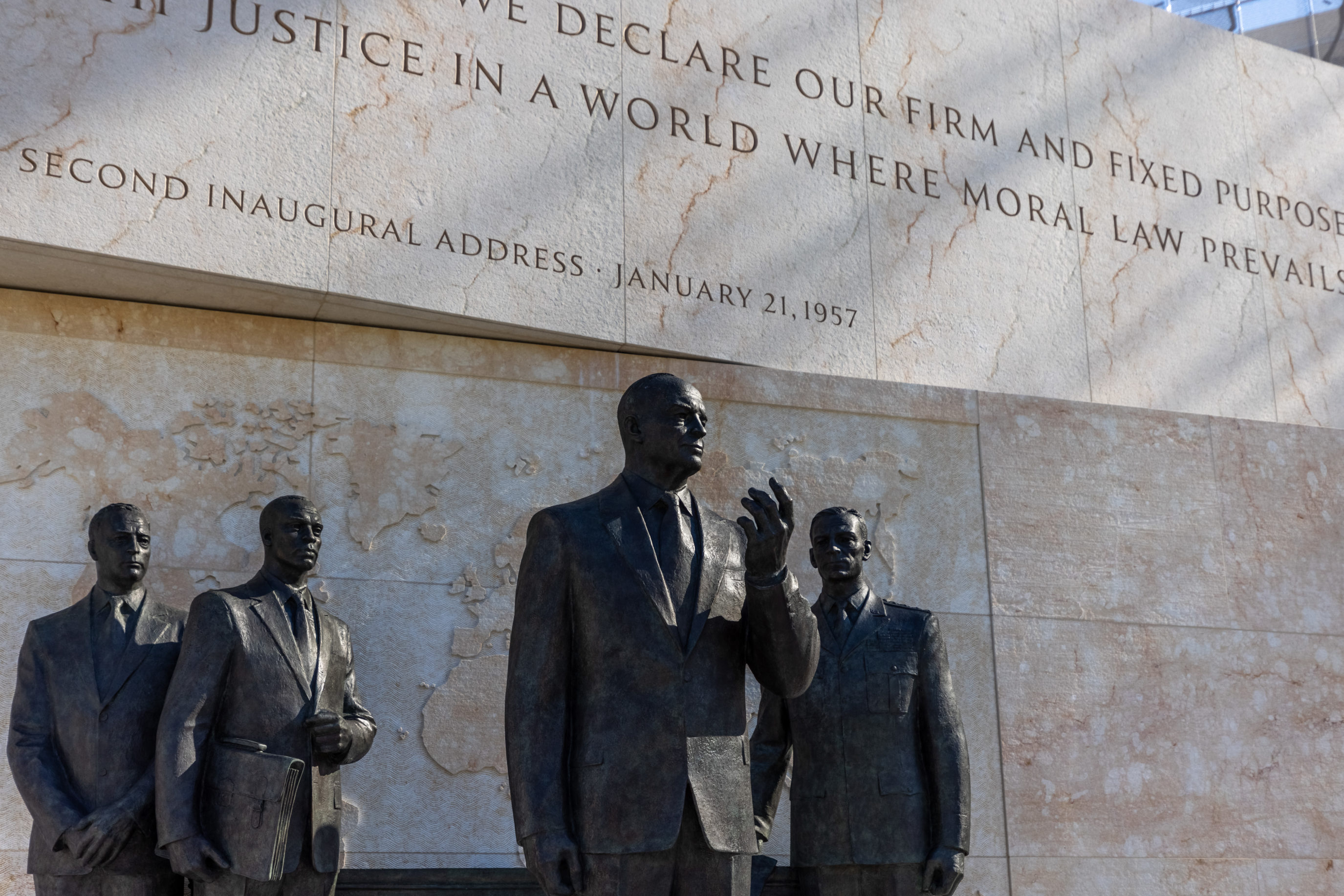
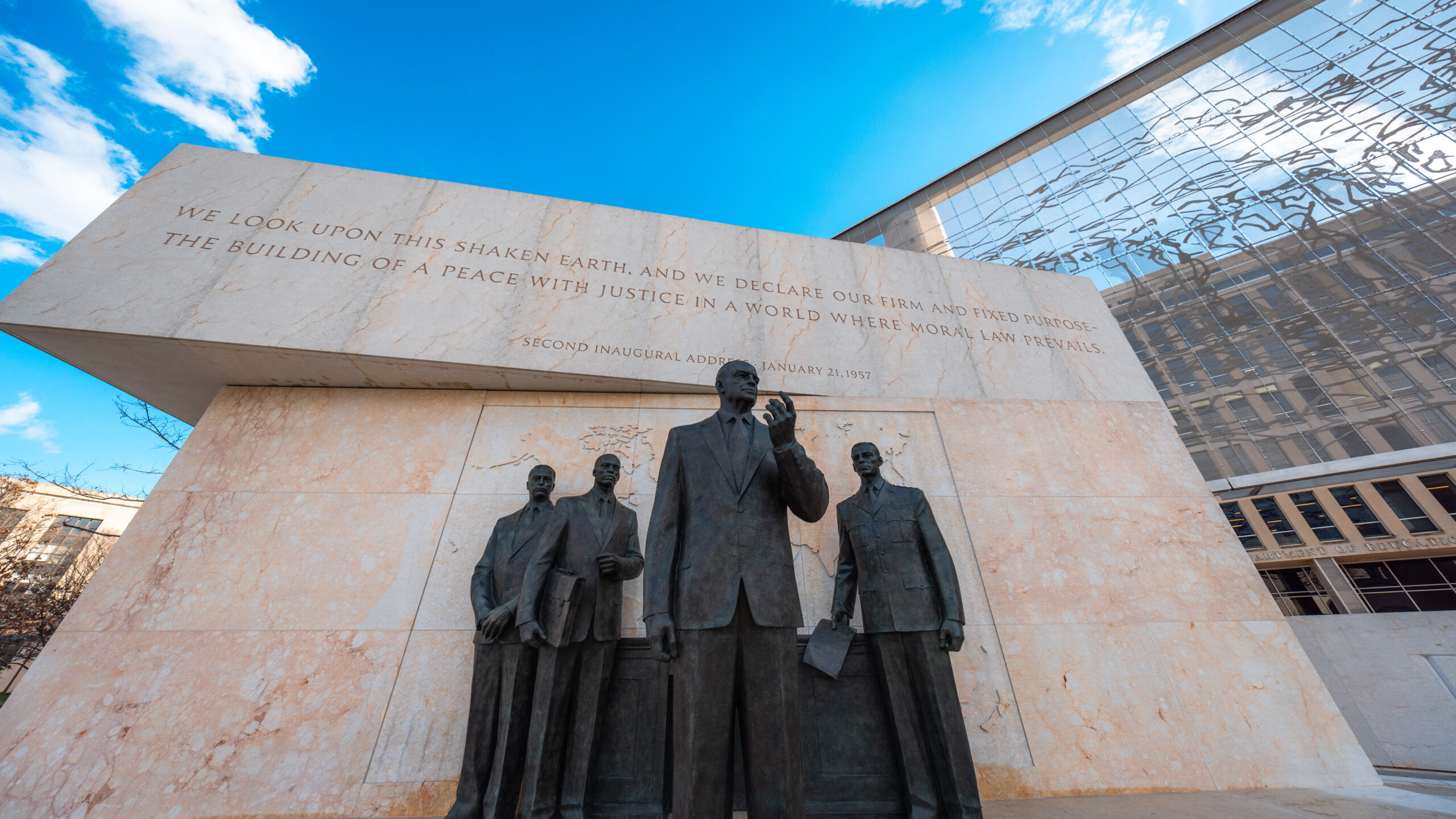
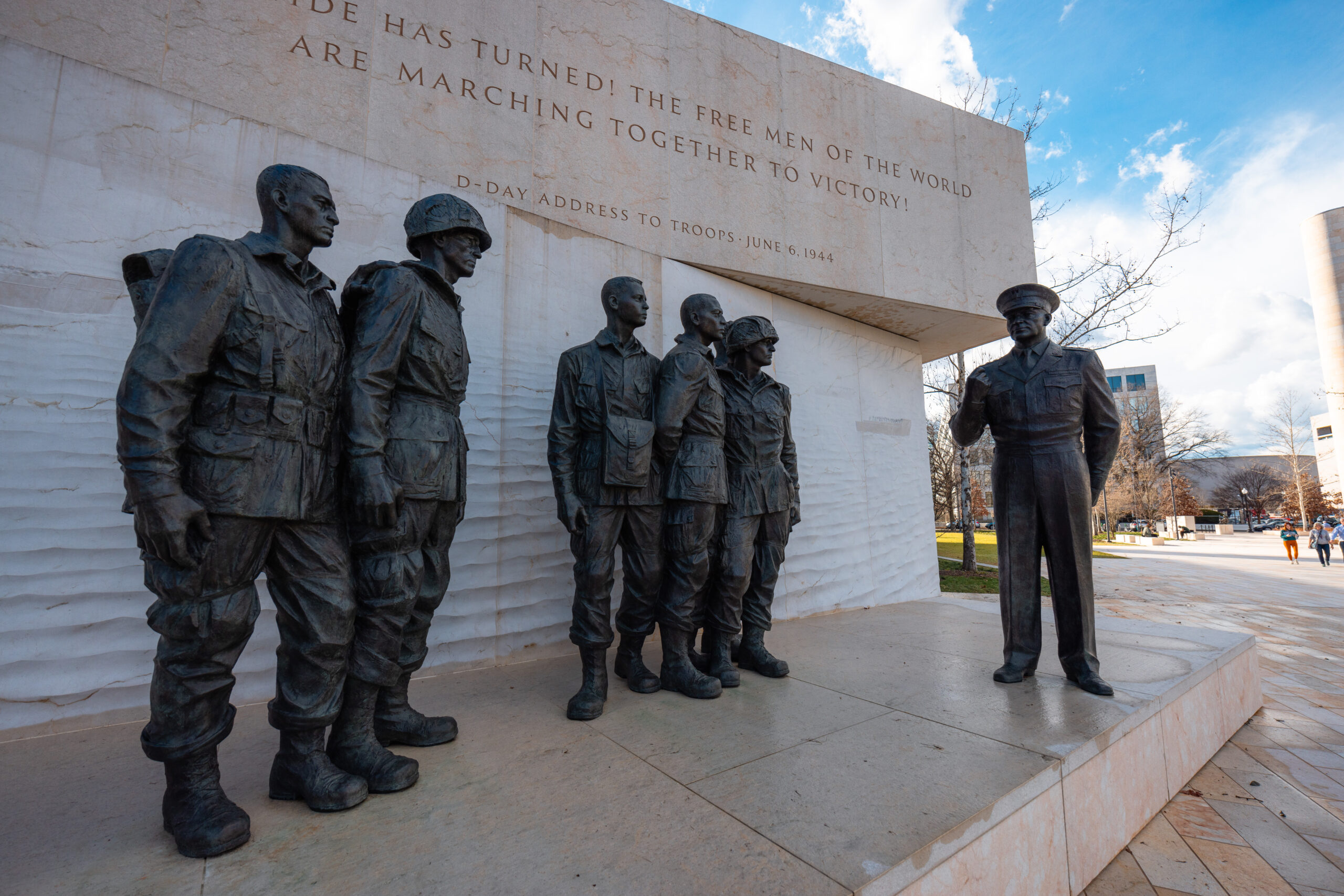
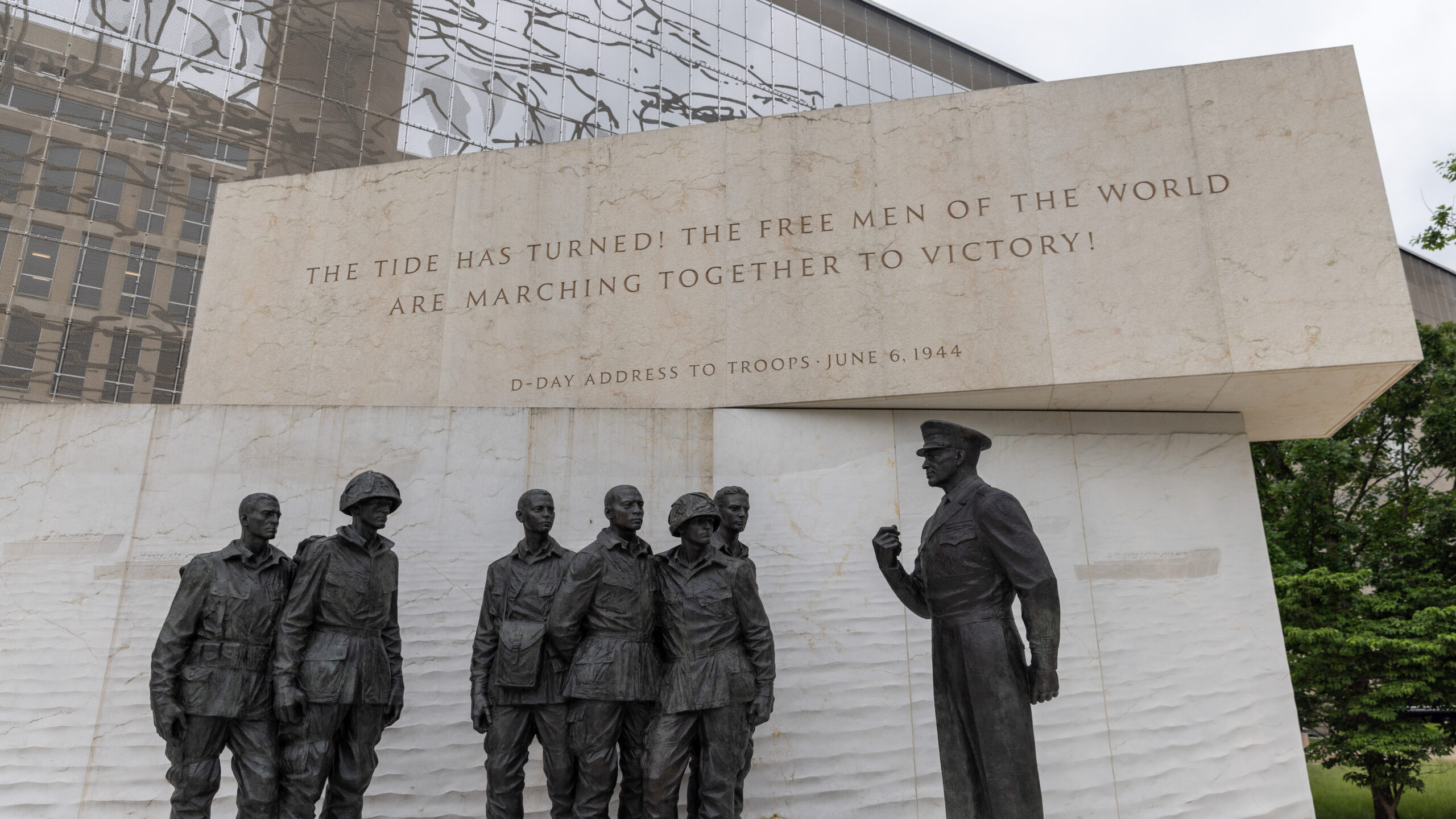
Russian-American sculptor Sergey Eylanbekov created the bronze figures and bas-reliefs at the memorial: 12 cast bronze sculptures and 2 stone bas-reliefs in total. They are arranged in two scene groupings on either side of the central pavilion.
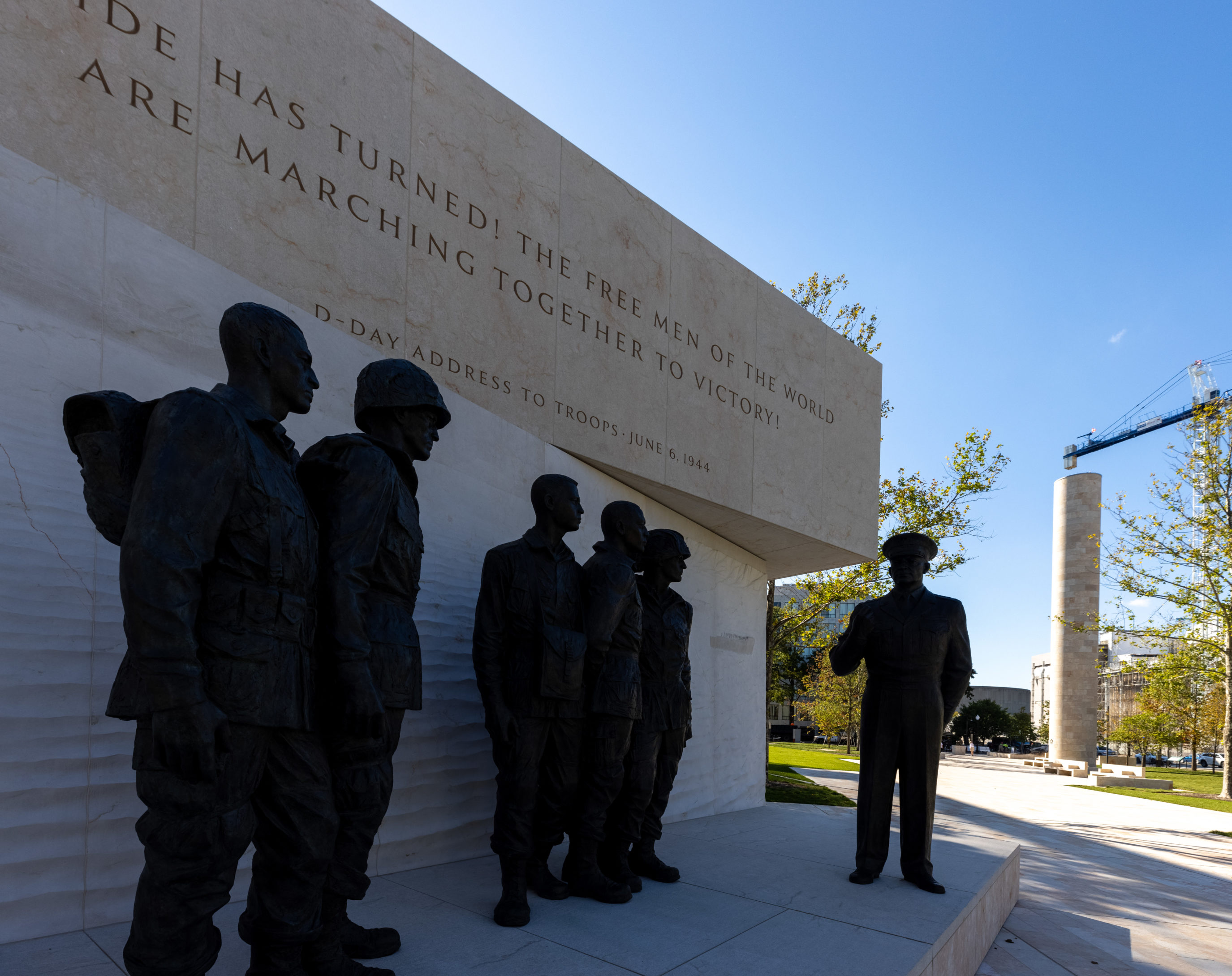
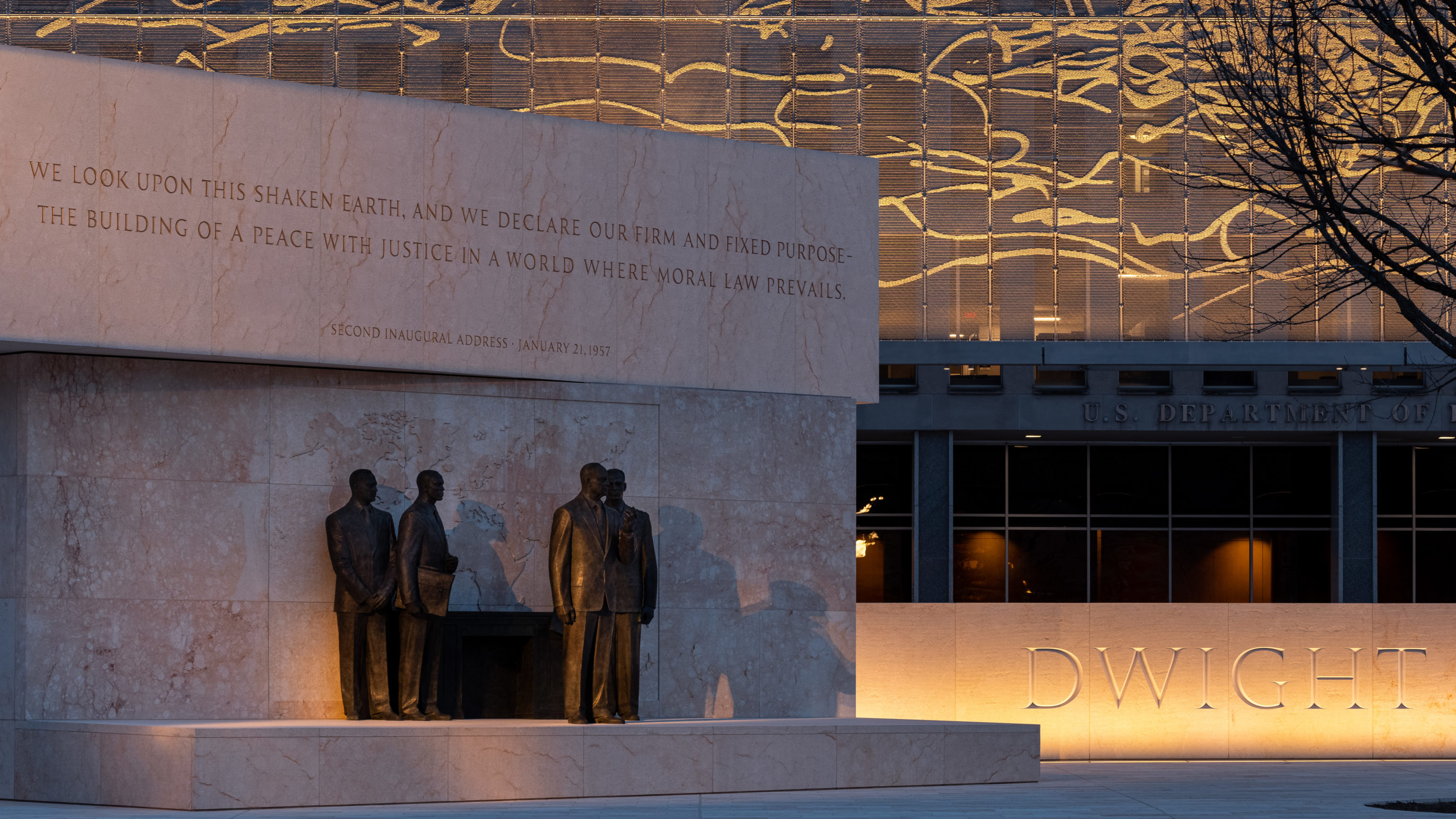
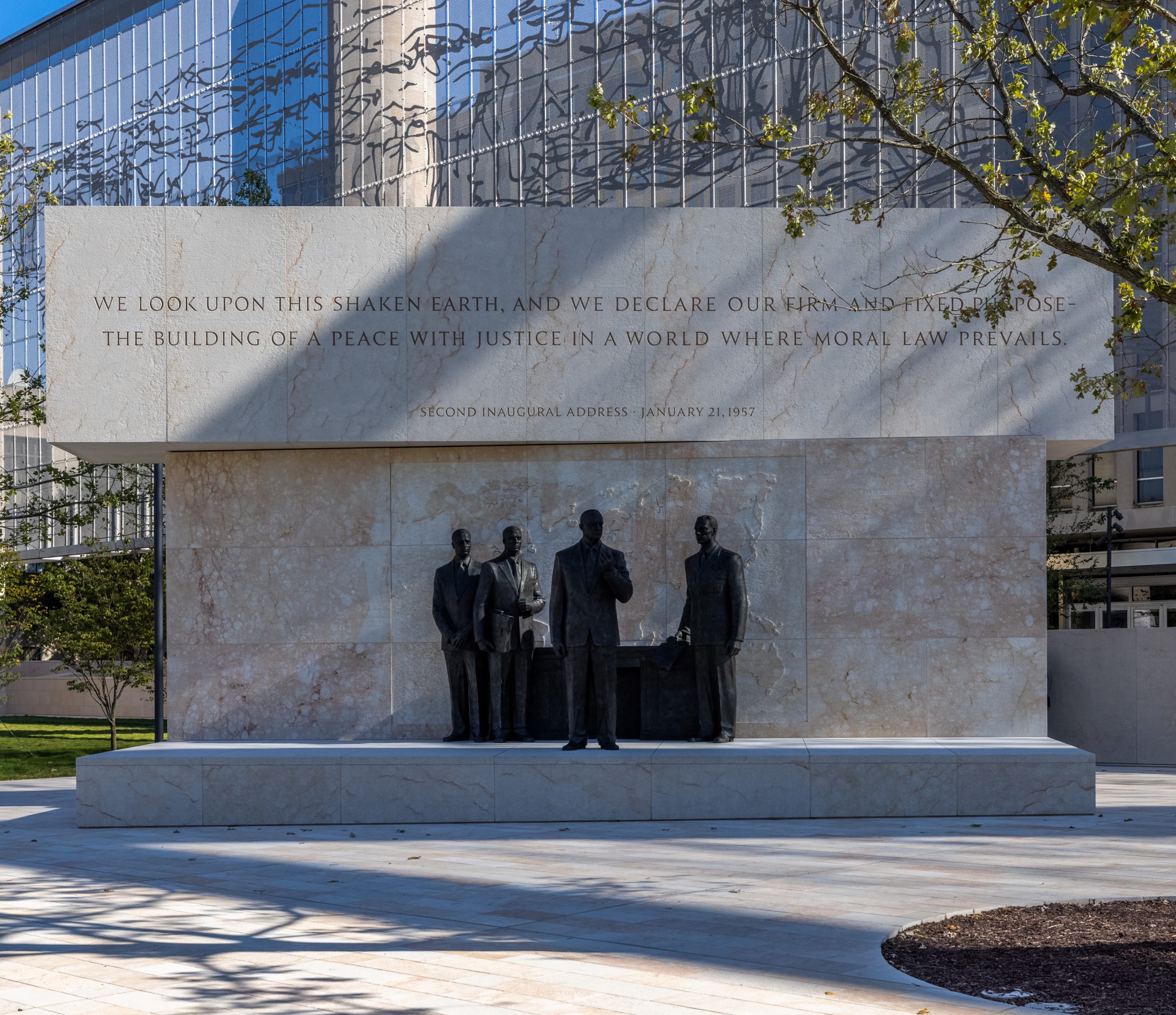
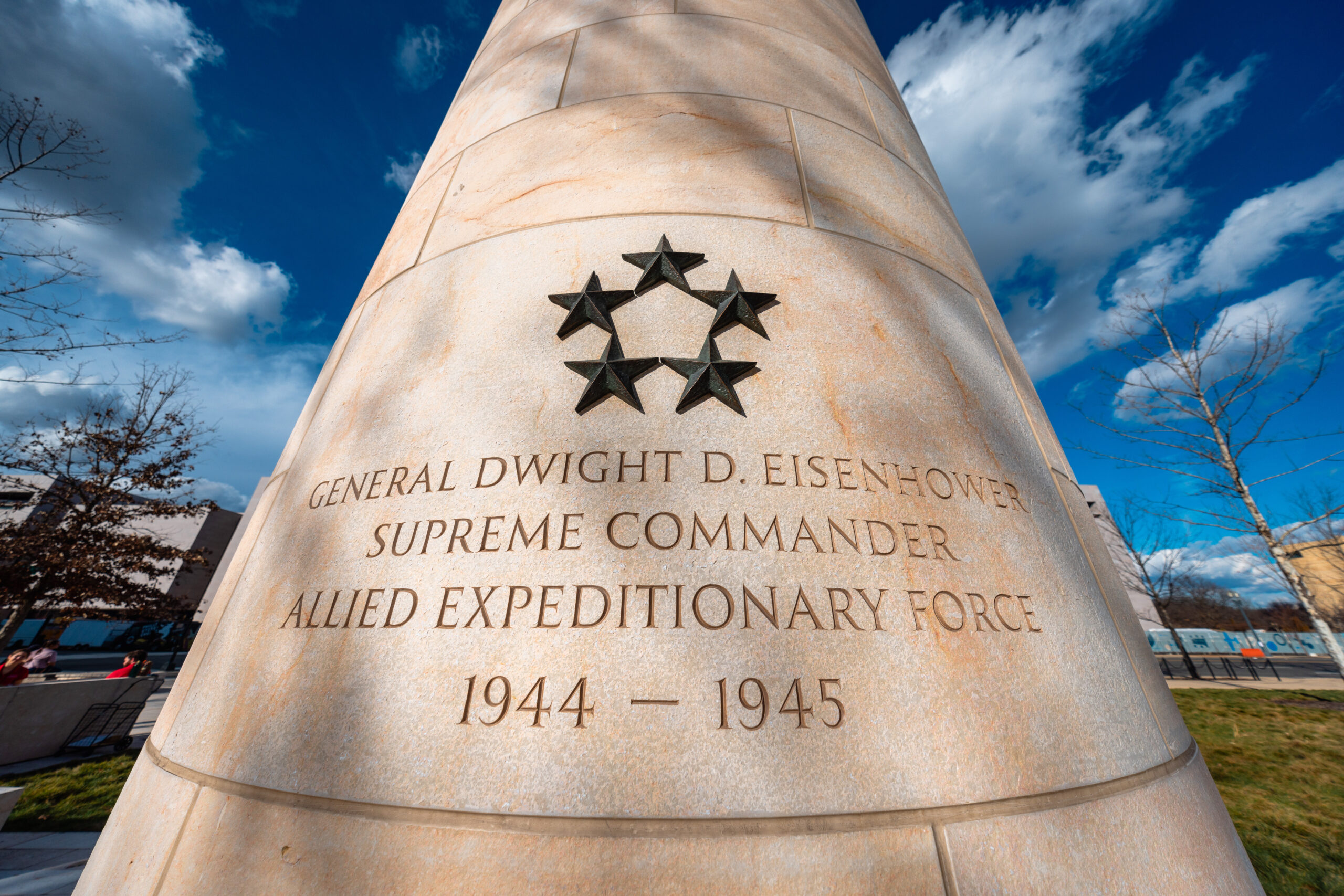
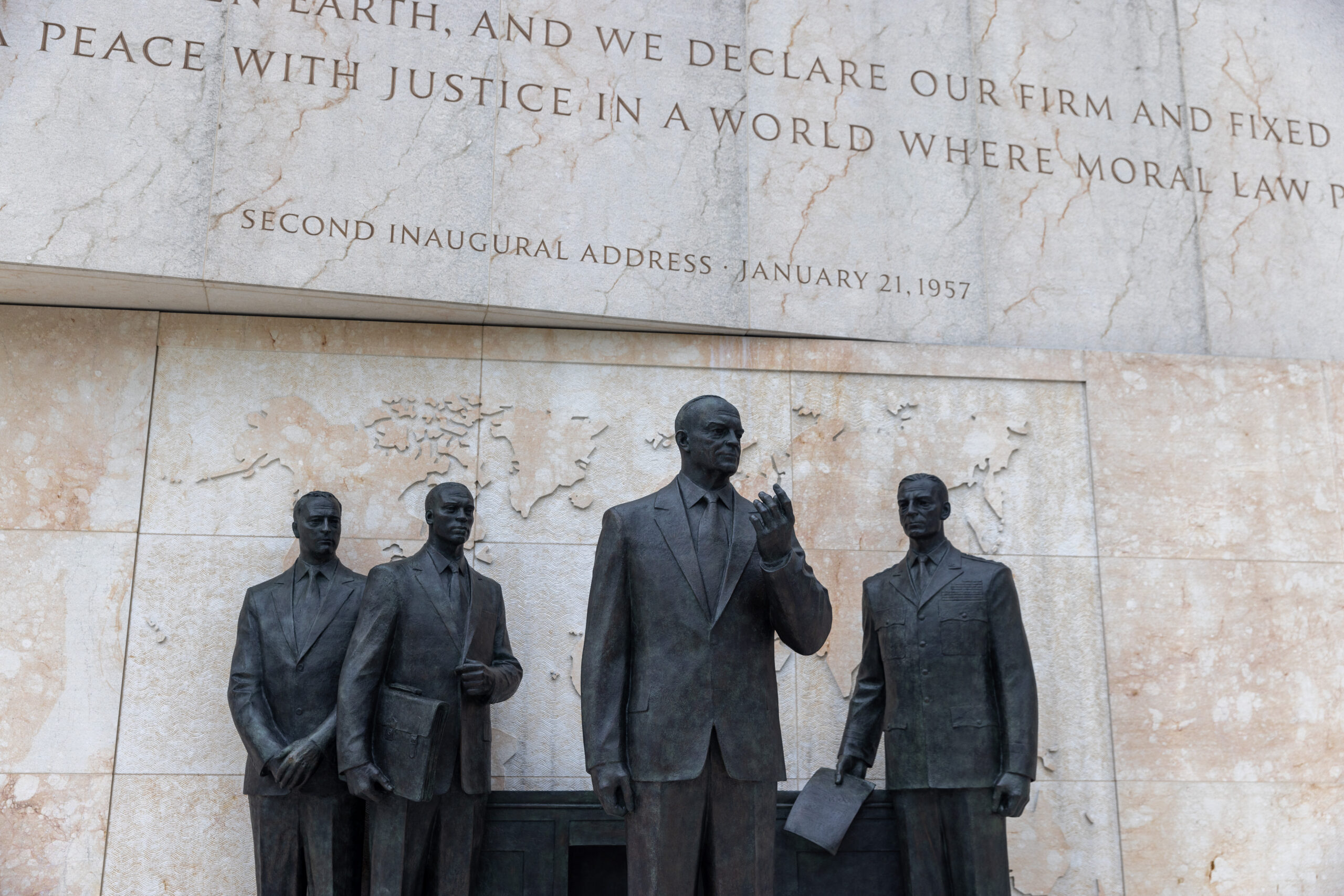
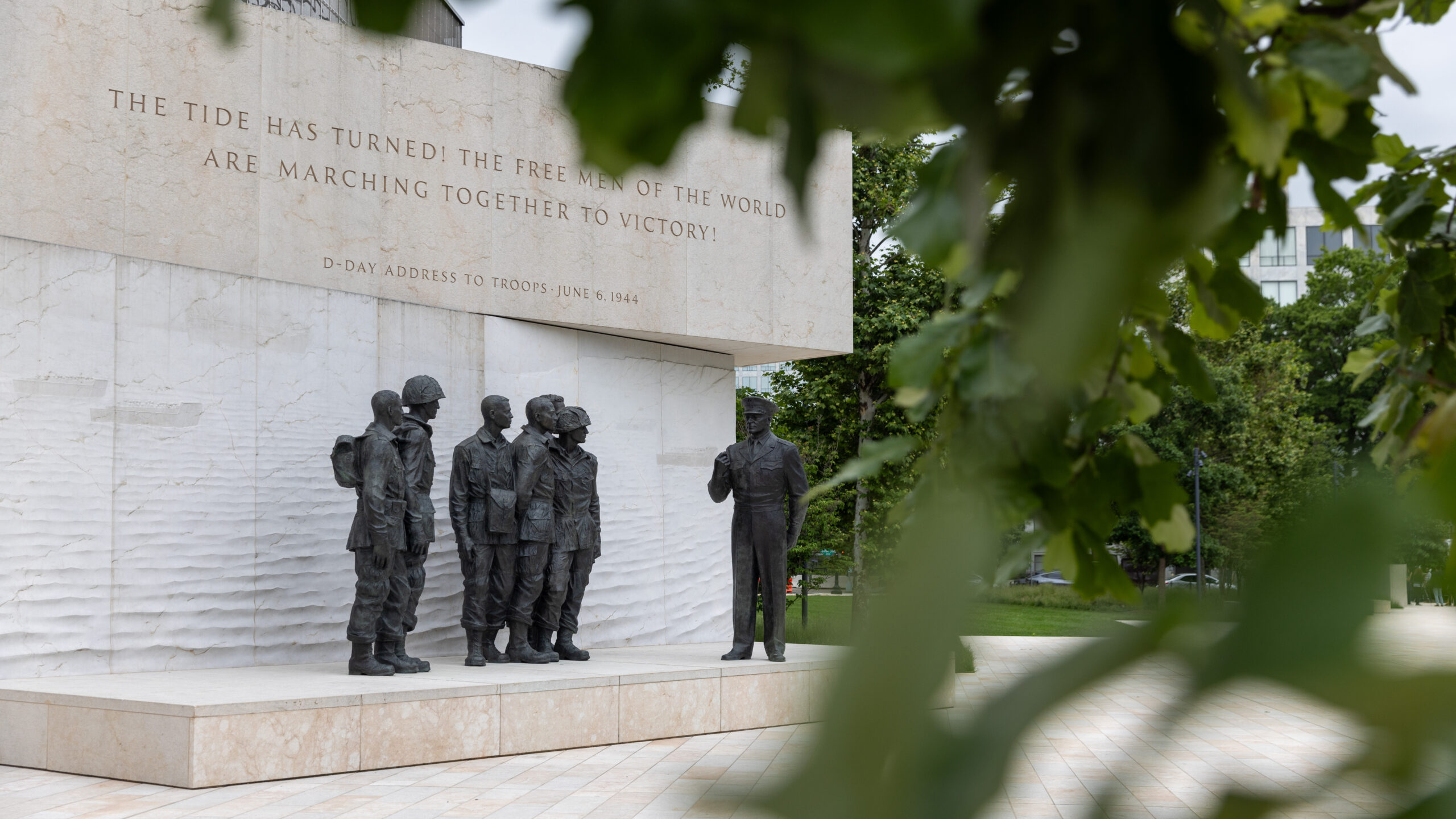
The Supreme Commander scene depicts Eisenhower addressing soldiers of the 502nd Parachute Infantry Regiment, 101st Airborne Division, on June 5, 1944, the day before the D-Day landings. Behind the figures, a stone bas-relief shows the Normandy invasion itself. The President scene shows Eisenhower in the Oval Office flanked by civilian and military advisors, with a second bas-relief depicting the peaceful America he led from 1953 to 1961.
“I like Ike”
Slogan used by Eisenhower while running for president
After completing his military service, Eisenhower ran successfully for president and was elected to serve two terms (from 1953 to 1961). The creation of the Interstate Highway System, the Little Rock Nine incident, and his policy of “brinkmanship” toward the Cold War are just a few of the major domestic and international accomplishments that marked his presidency. His influence on American development, civil liberties, and foreign policy is still felt today.
The “Barefoot Boy” Statue
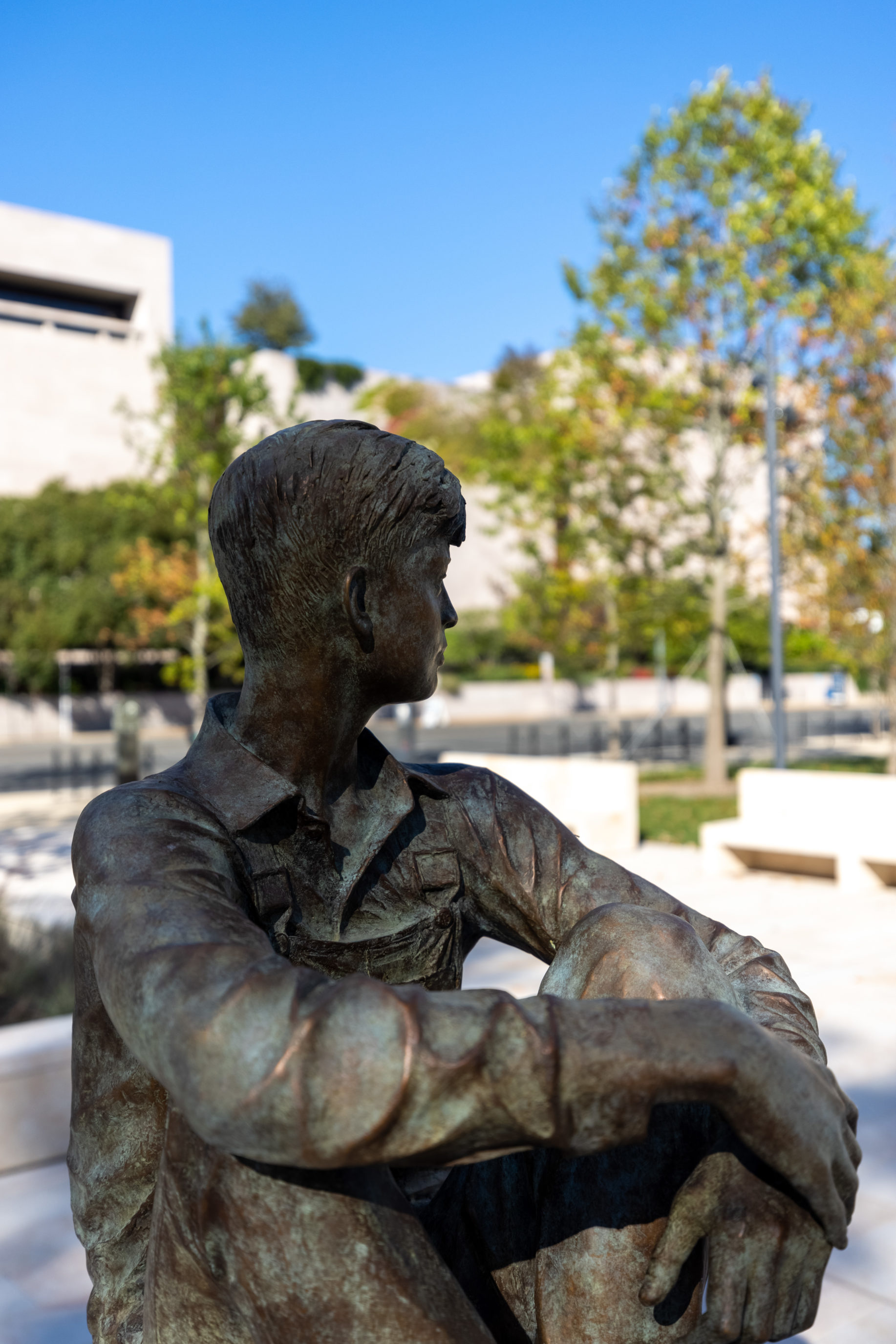
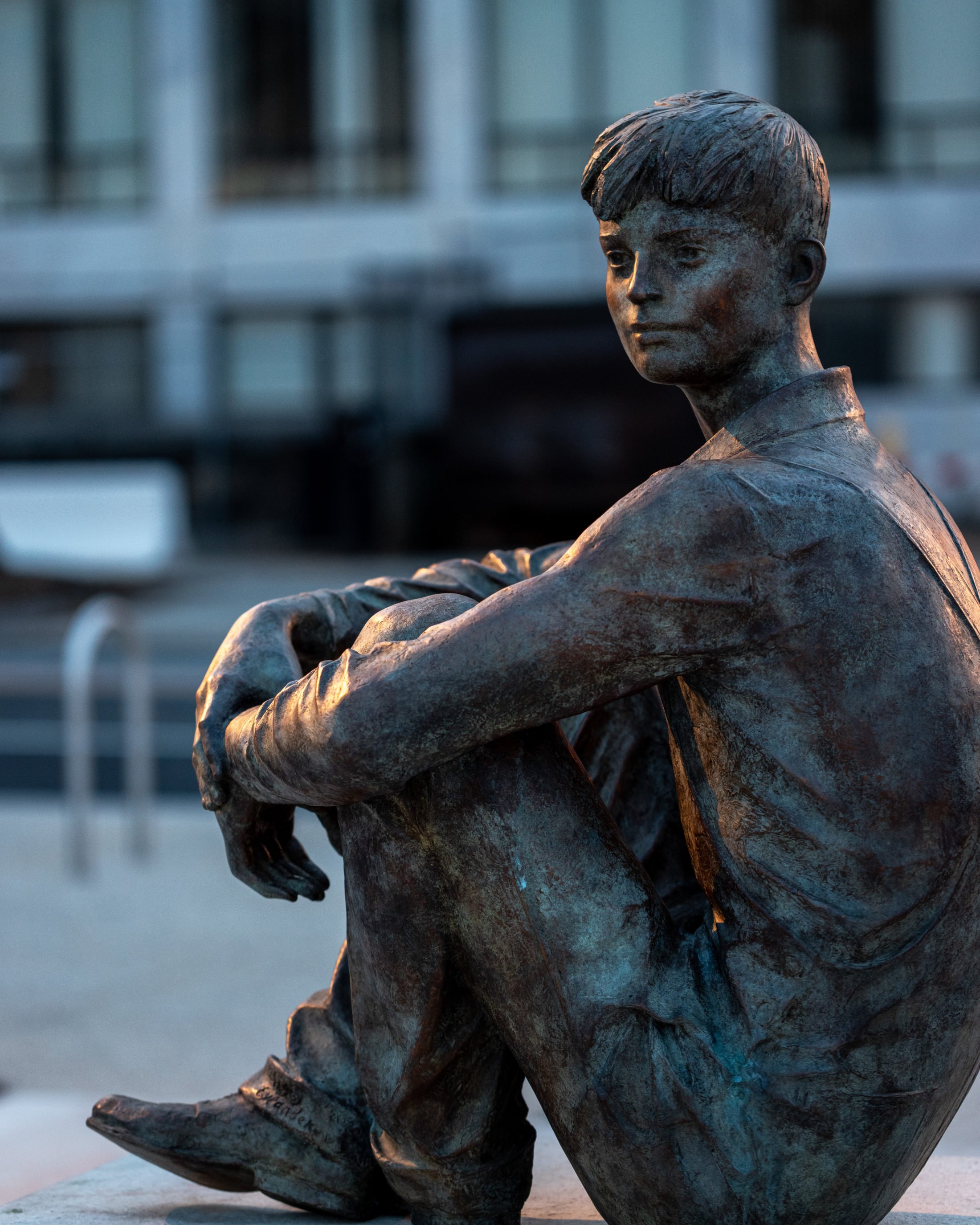
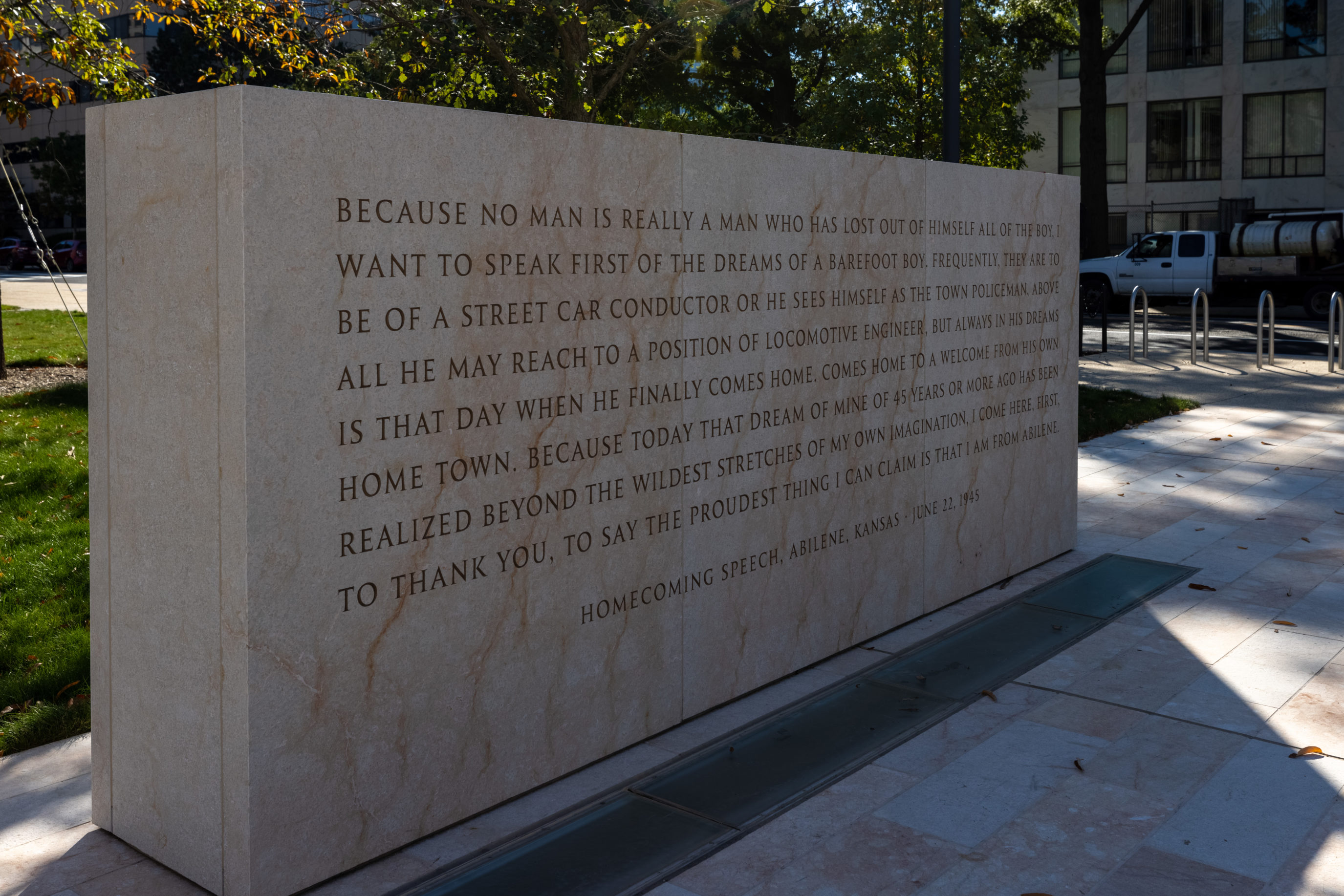
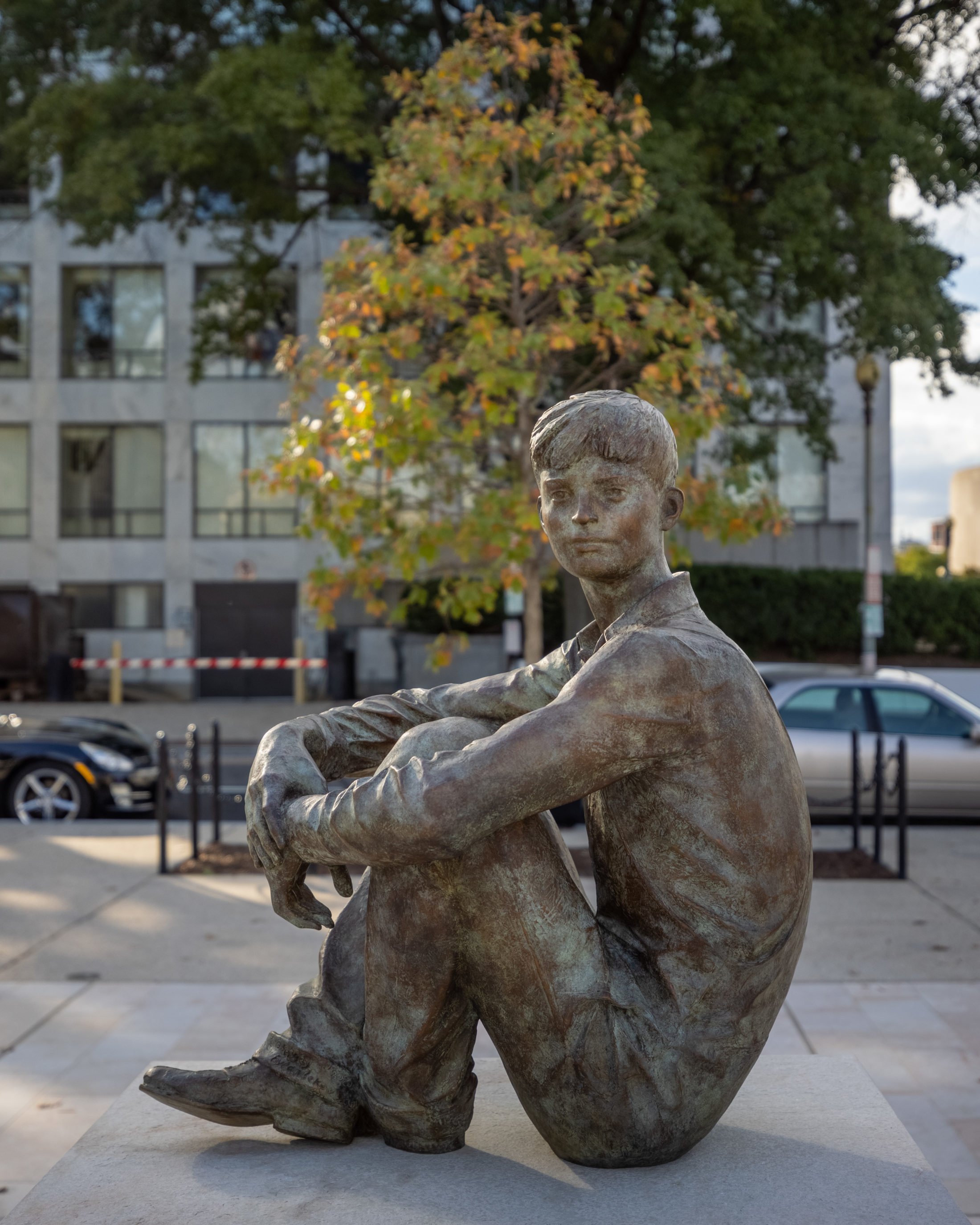
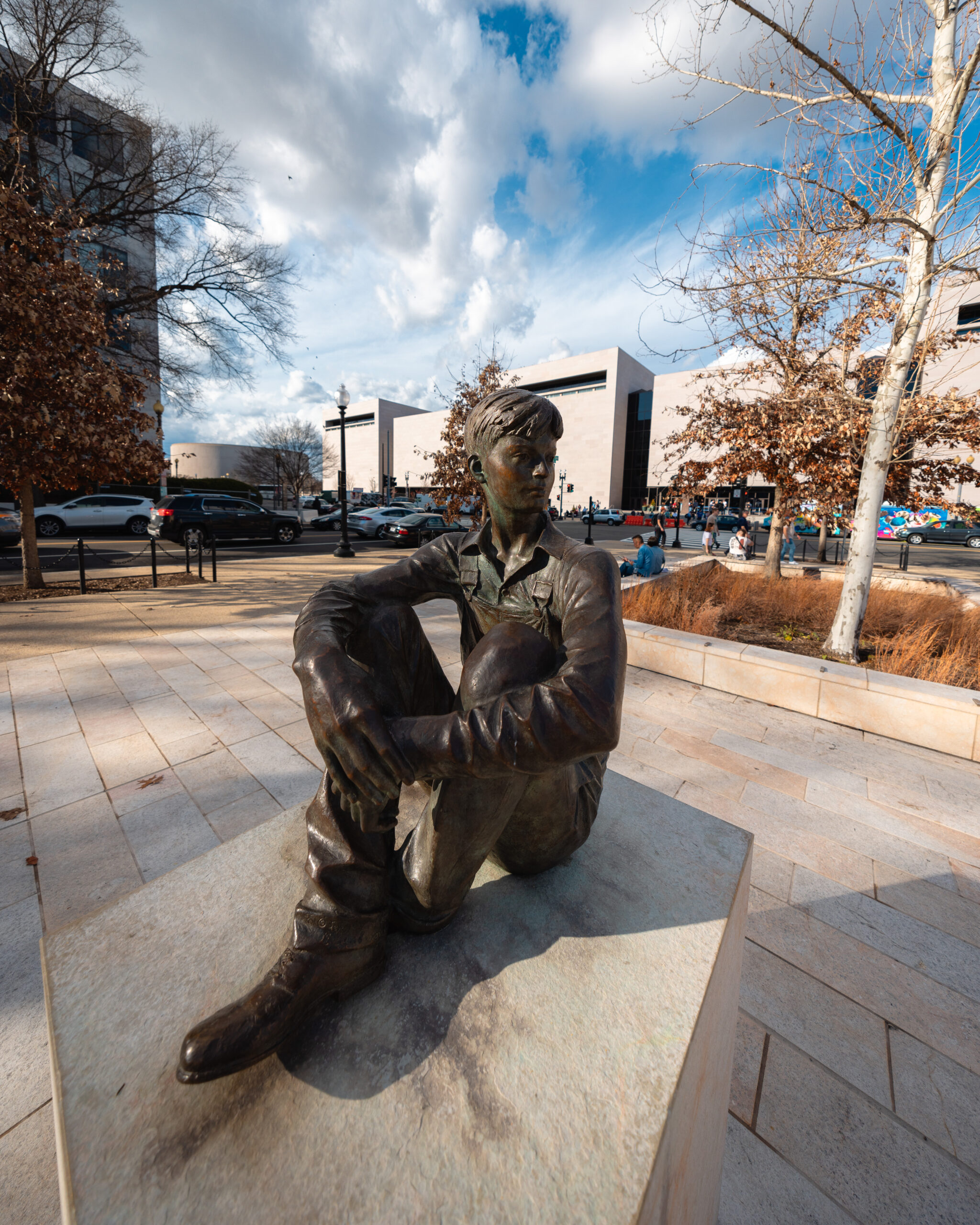
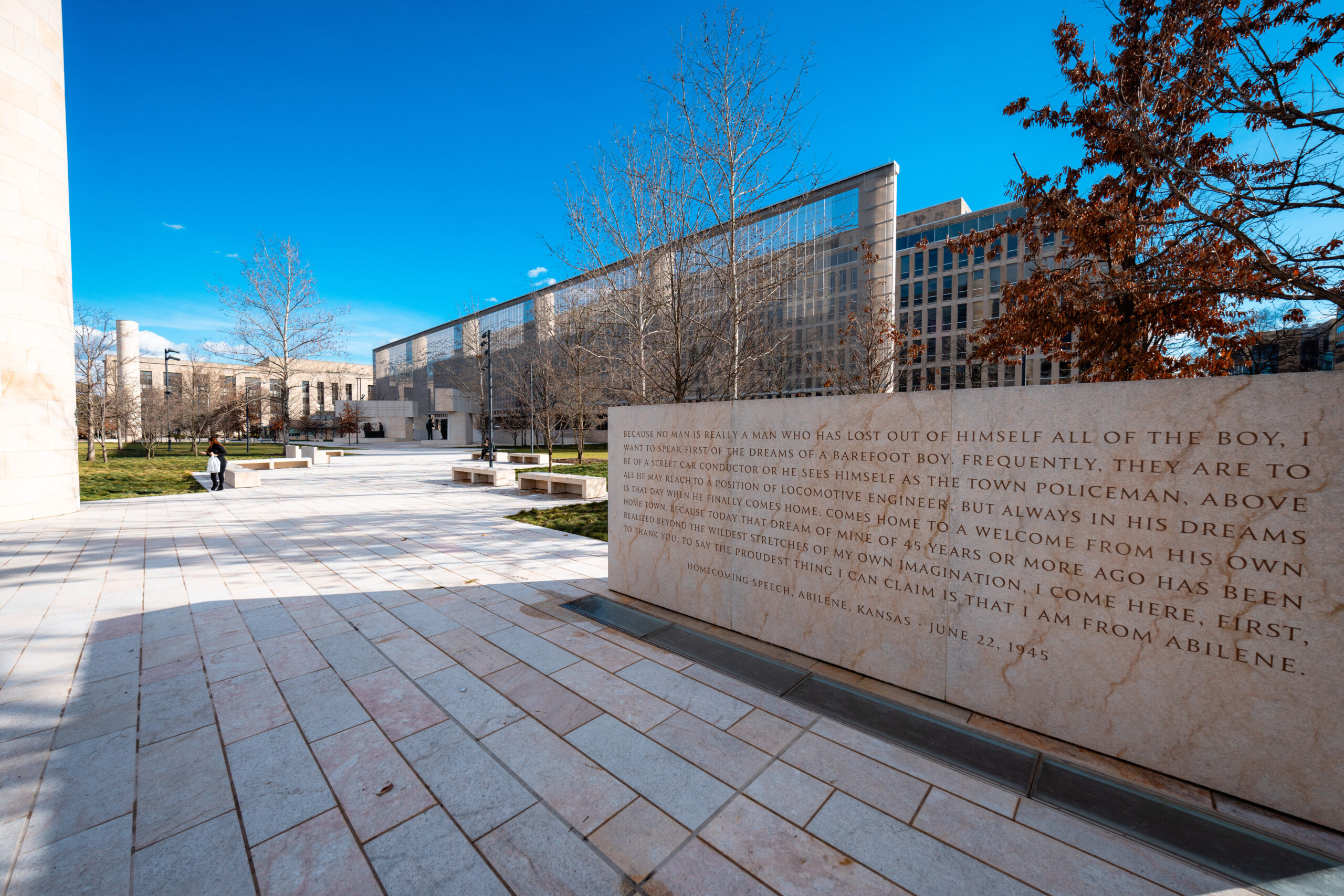
Between the Supreme Commander and President scenes is a smaller, life-sized bronze of young Eisenhower as a barefoot boy from Abilene, Kansas. The piece is paired with a passage from his June 22, 1945 Abilene Homecoming speech: “The thing I am most proud of is my connection to Abilene.” It frames the rest of the memorial (the world-shaping general, the two-term president) as growing out of a single small-town childhood.
Quotes and Inscriptions
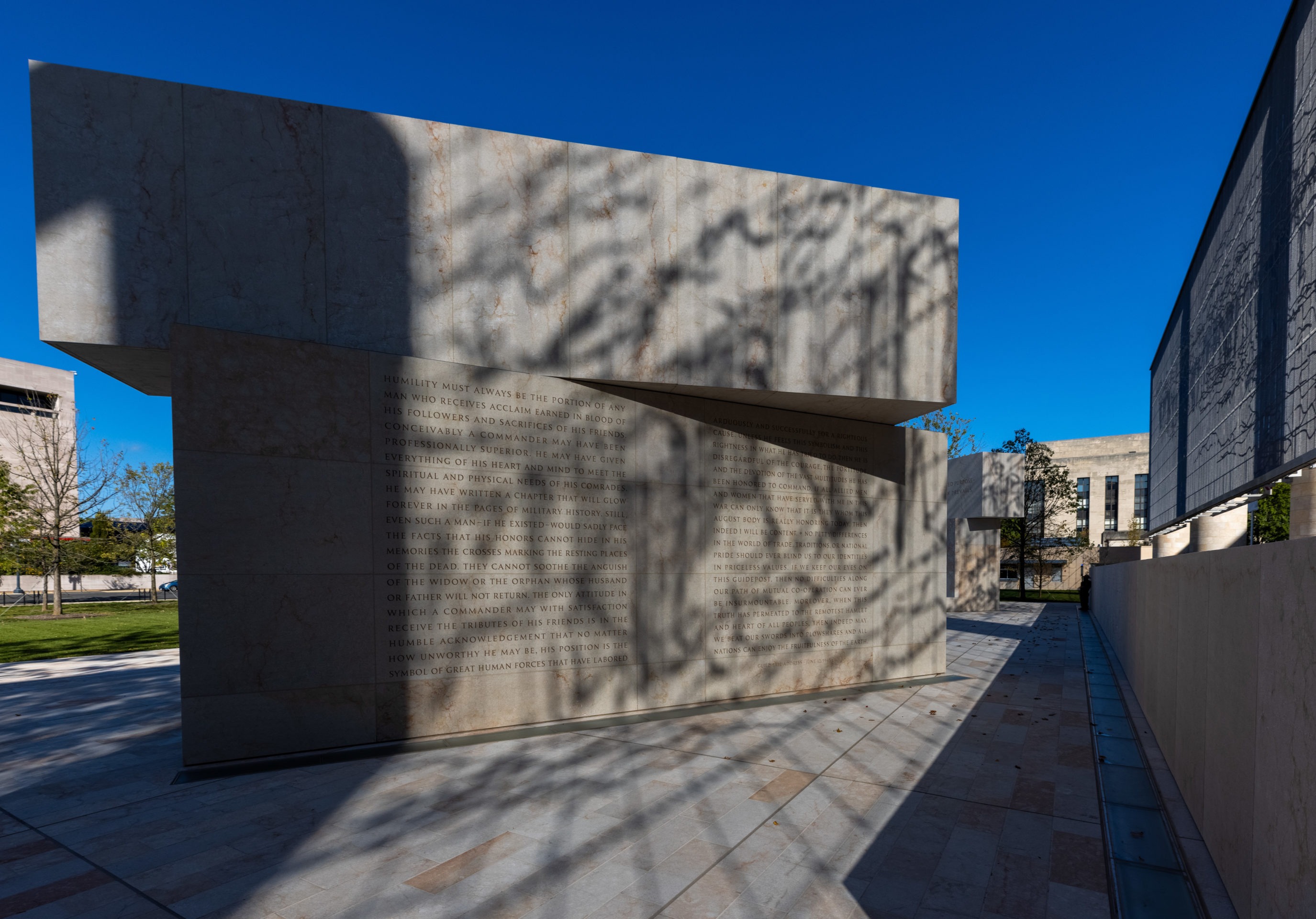
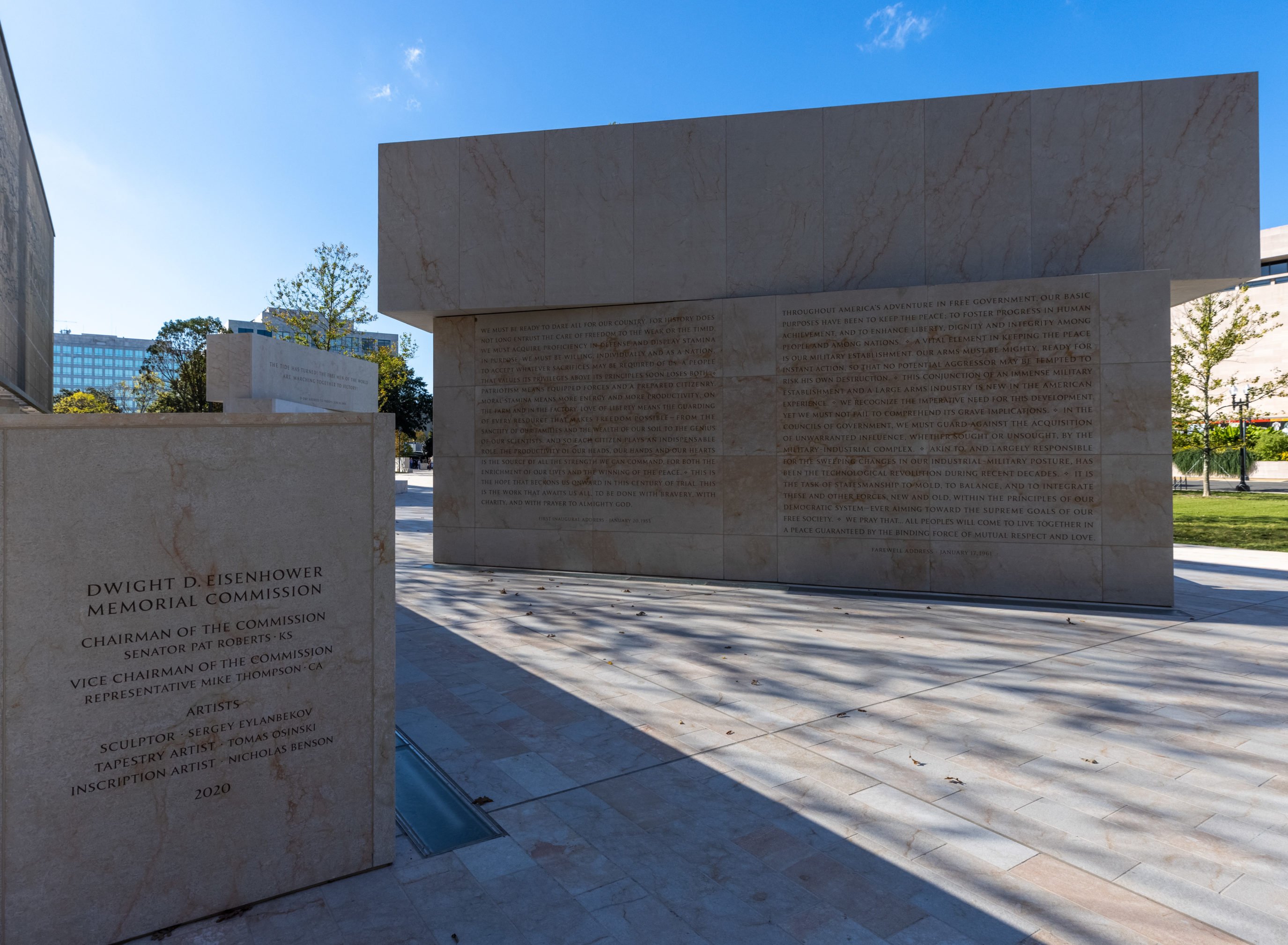
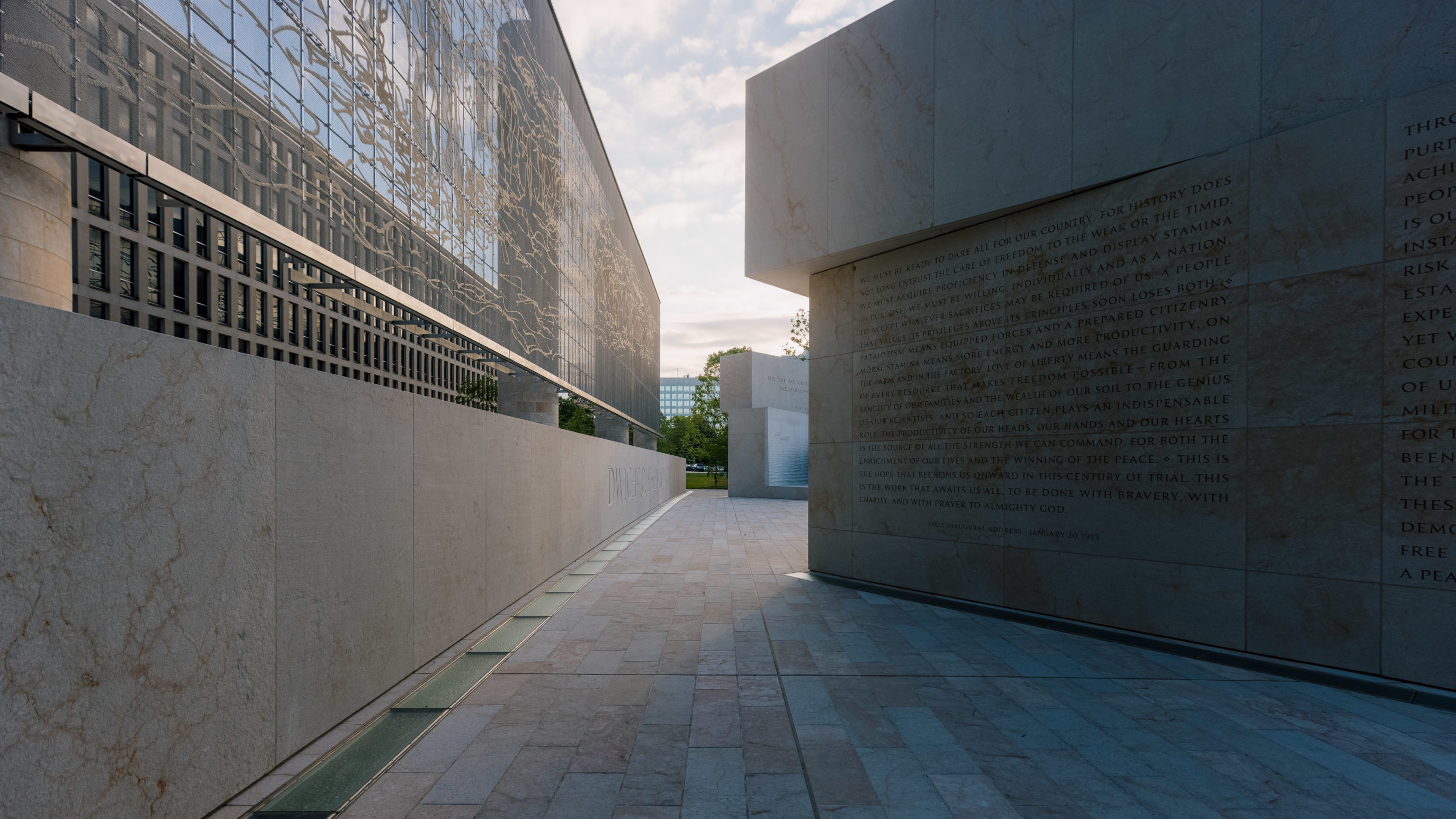
Stone panels around the memorial are inscribed with excerpts from Eisenhower’s most famous speeches, including his 1945 Guildhall Address, his 1953 “Chance for Peace” speech, and his 1961 Farewell Address (the one in which he warned Americans about “the acquisition of unwarranted influence… by the military-industrial complex”). The selection covers his shift from wartime general to peacetime statesman.
Lighting at Night
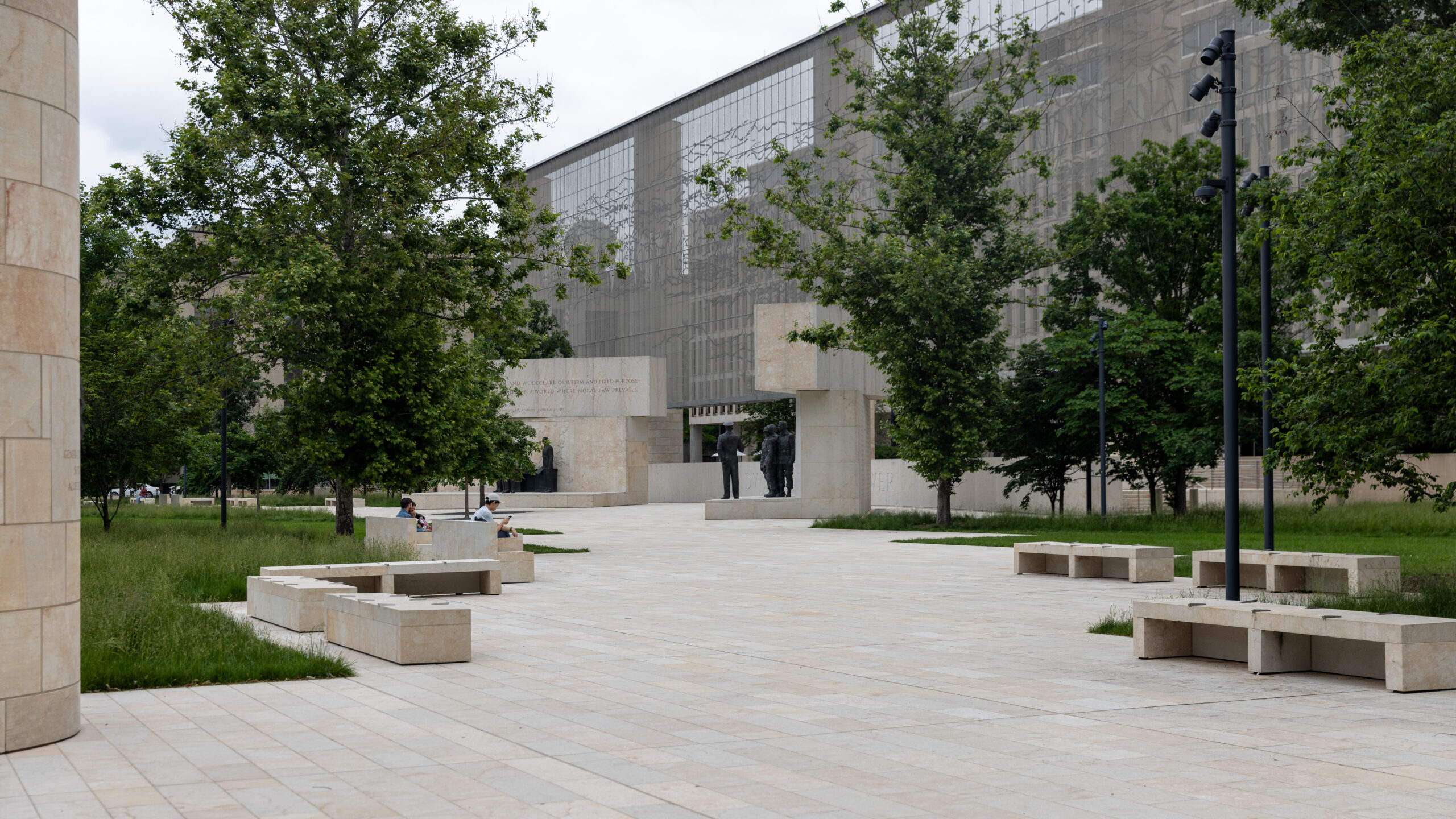
The benches are uplit from underneath after dark, and the tapestry is lit so the Normandy cliff scene reads at night as well. The memorial is one of the better night-photography spots on the Mall, especially when there are fewer visitors.
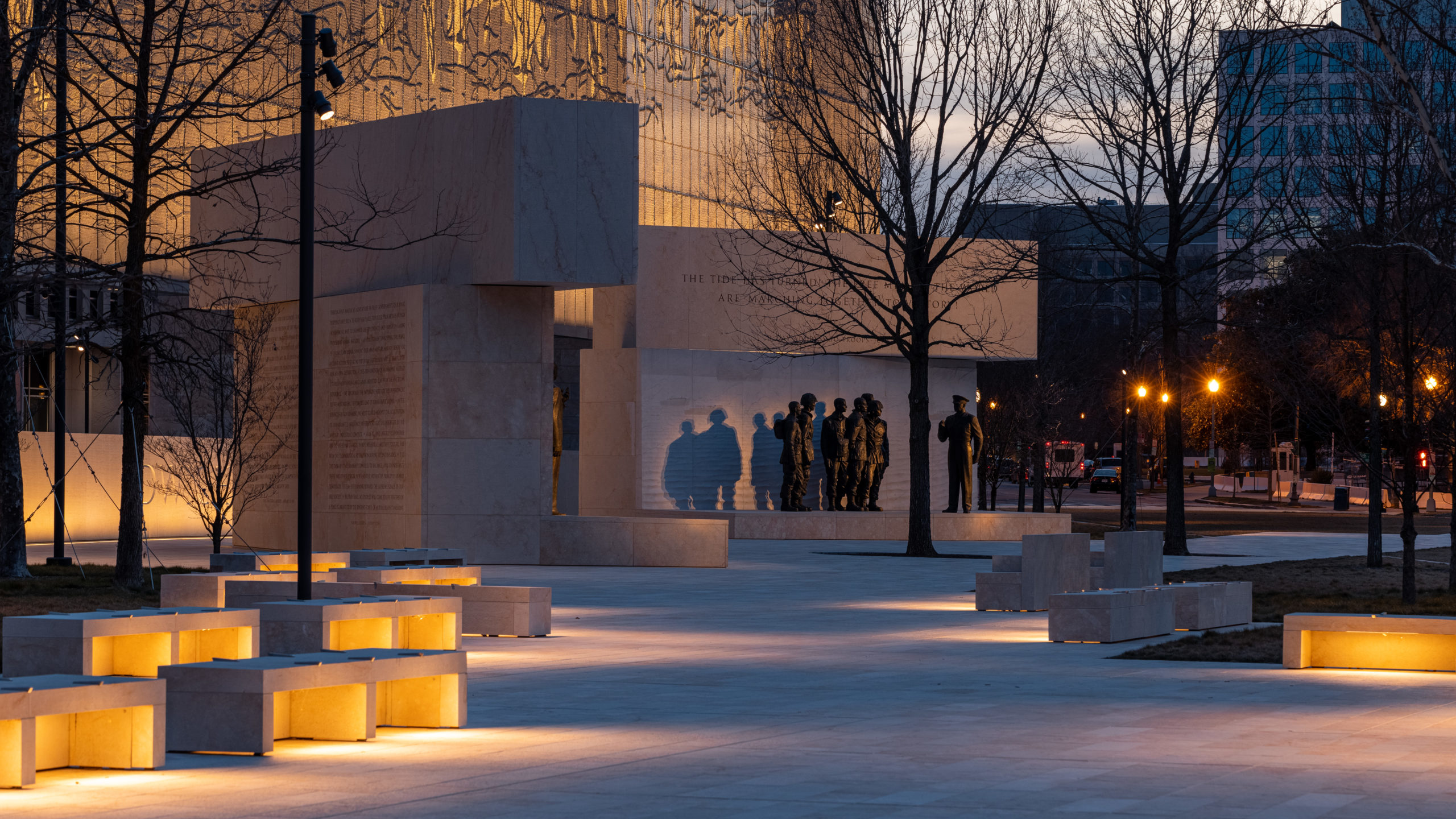
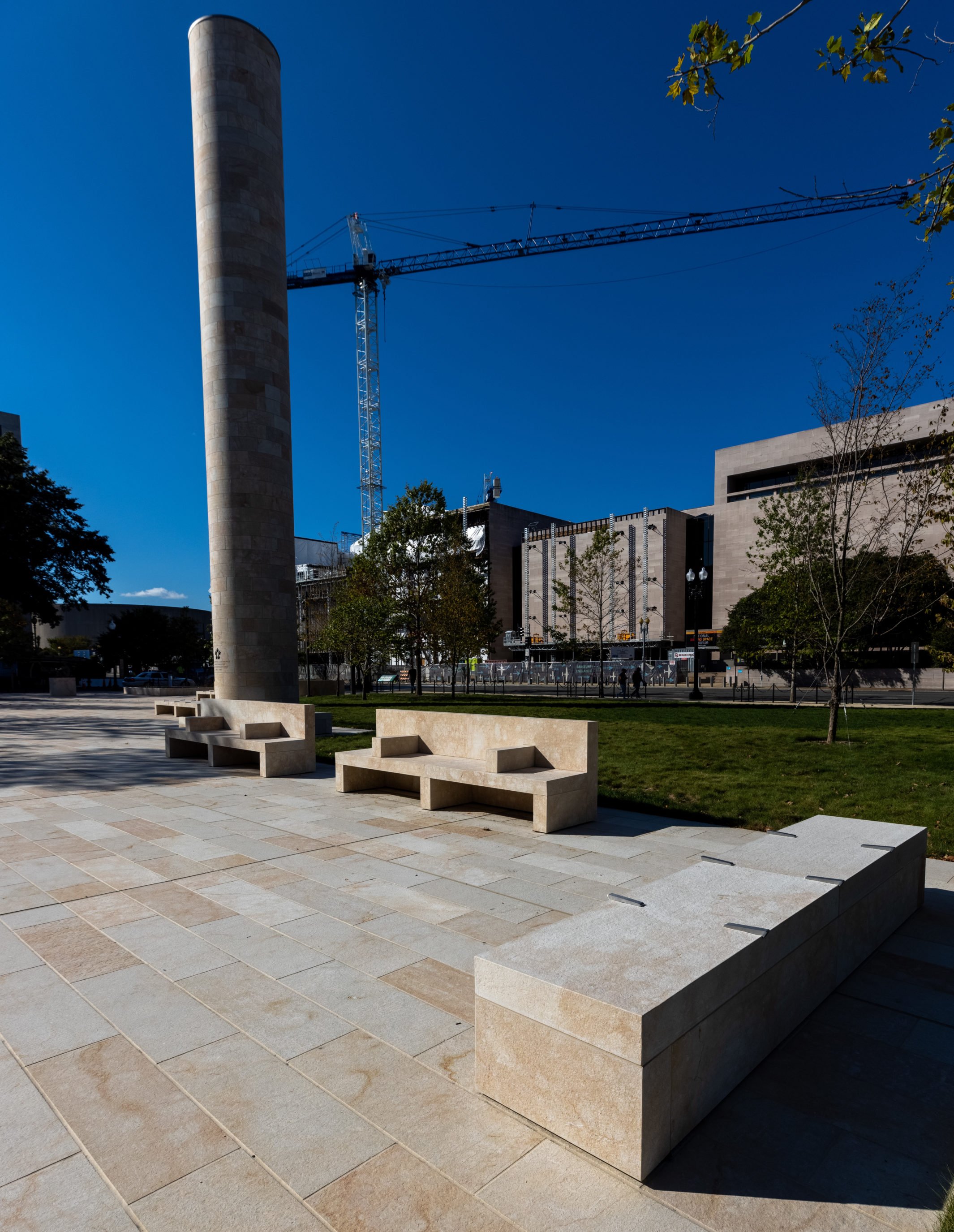
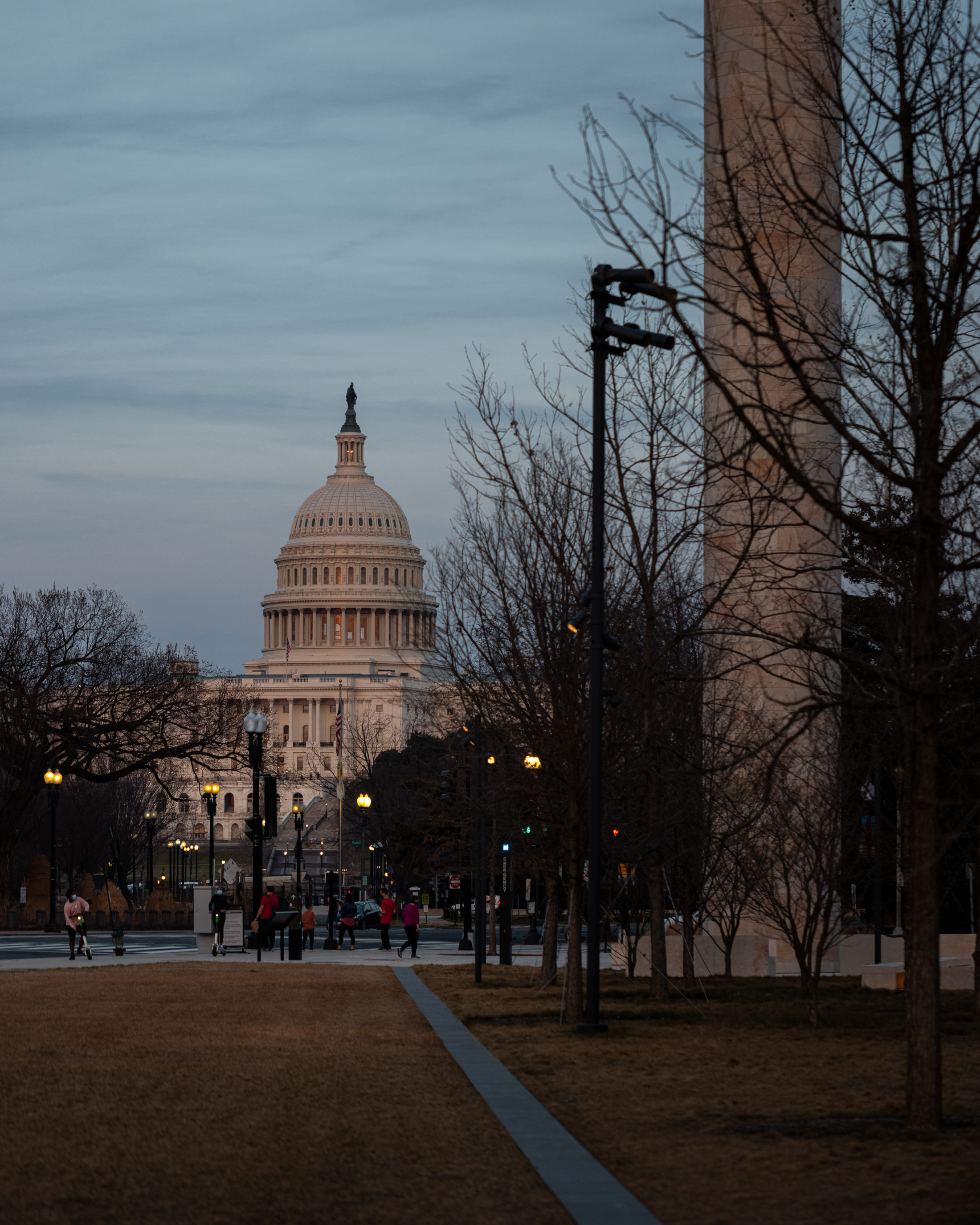
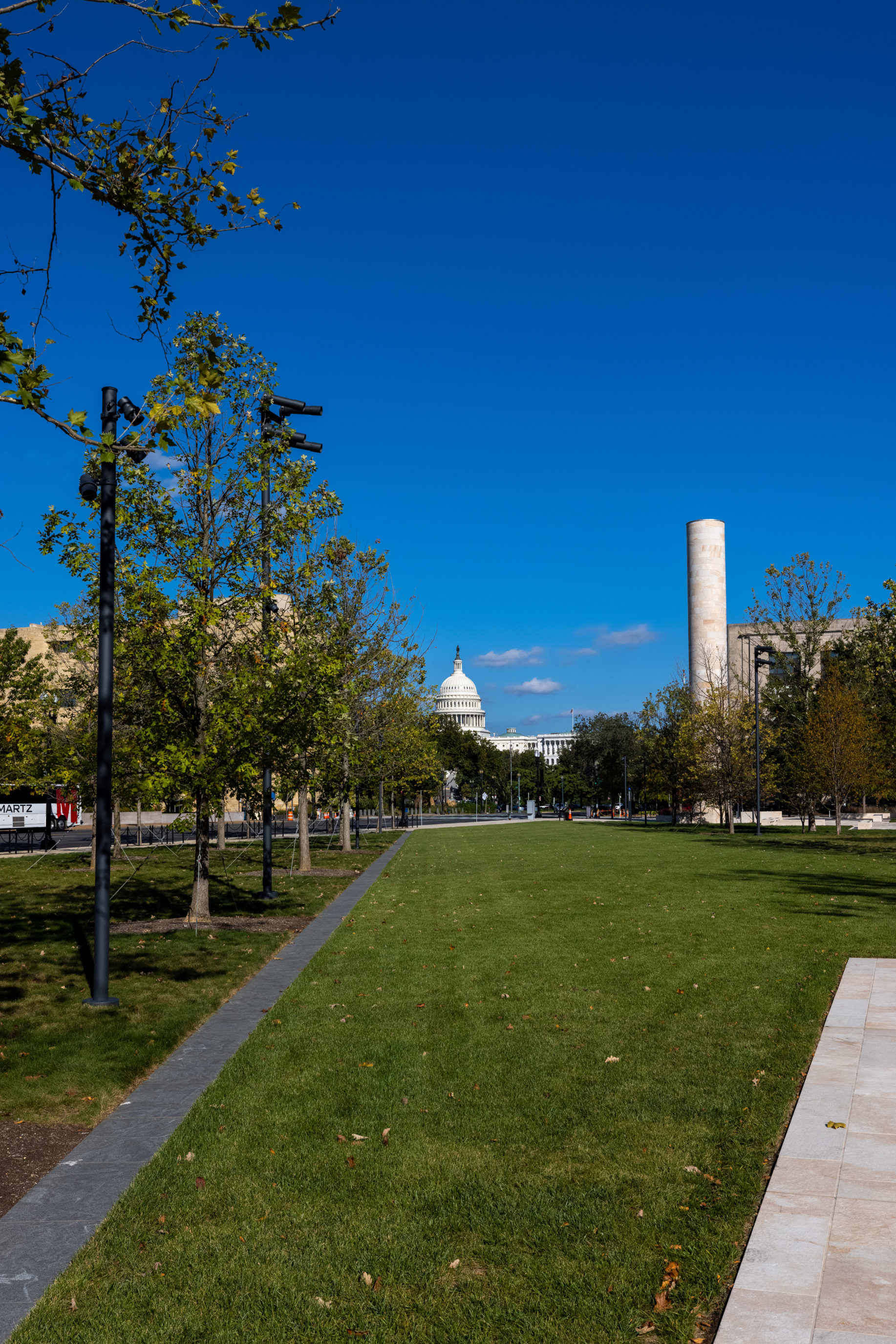
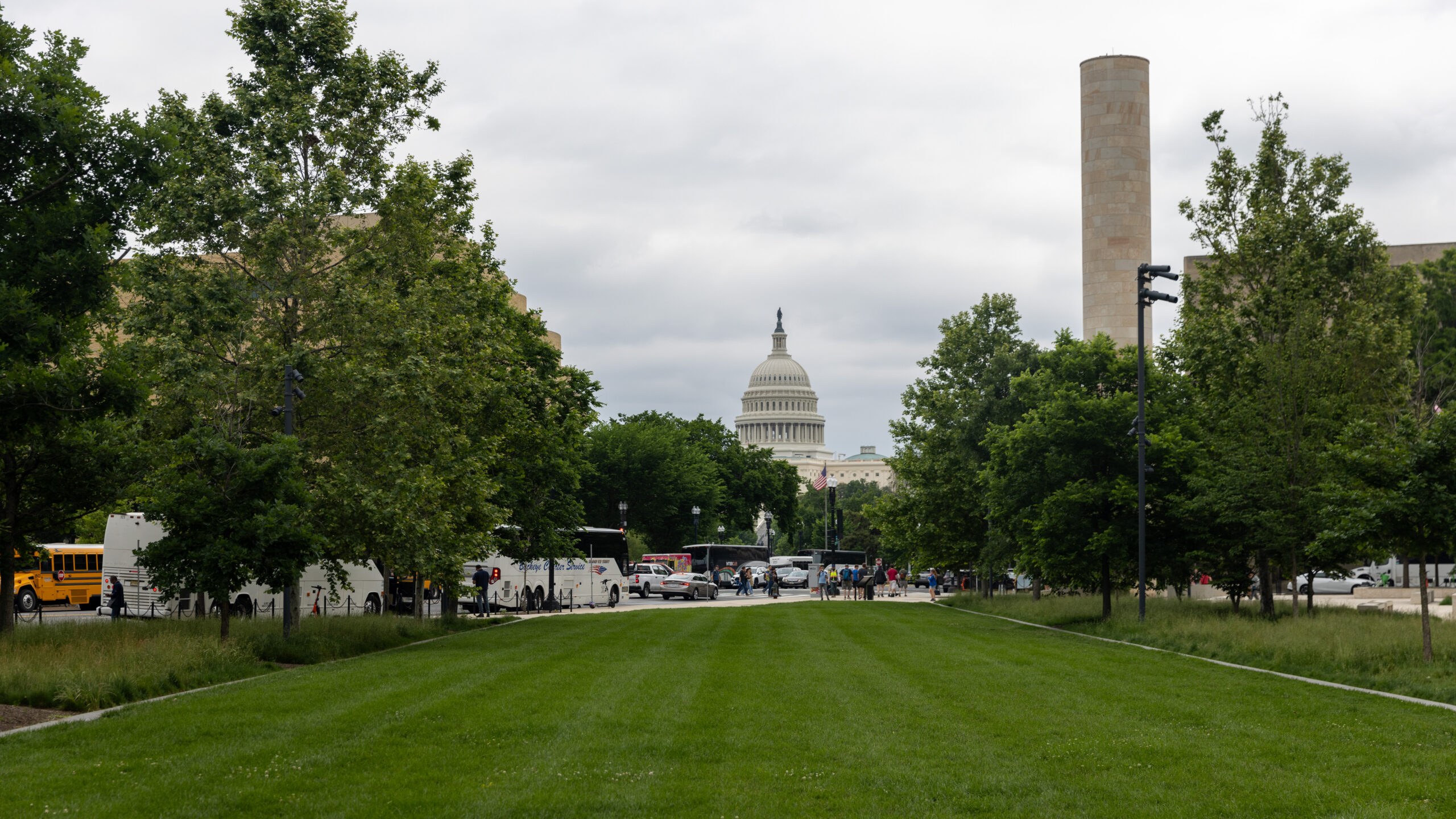
There are also plenty of places to sit in the grass field facing the United States Capitol with a view of Maryland Avenue.
The Family Compromise
The memorial took two decades to build, partly because the Eisenhower family objected to Frank Gehry’s original concept. Eisenhower’s granddaughter Susan Eisenhower publicly criticized the early design for emphasizing his small-town Kansas childhood at the expense of his military and political careers. Funding was delayed multiple times while the design was revised.
Former U.S. Secretary of State James Baker brokered the compromise. In September 2016, Susan Eisenhower announced the family supported the revised design, which added the D-Day landing imagery and a new quote to the monument. Construction proceeded after that and the memorial opened to the public in 2020.
The Eisenhower Memorial can be found close to the National Mall. It is located a short distance to the south of the nearby National Air and Space Museum. You’ll often even see staff from the Smithsonian National Air and Space Museum doing public exhibitions at the Eisenhower Memorial. I’ve seen them do sun telescopes on a clear day and radio demonstrations when it’s cloudy on my visits.
The memorial is currently maintained by the National Park Service (NPS). In addition to its location away from the Mall, which helps keep crowds to a minimum, the memorial also features restrooms that are open to the general public.
Dwight D. Eisenhower Memorial on Google MapsPhotos of the Eisenhower Memorial
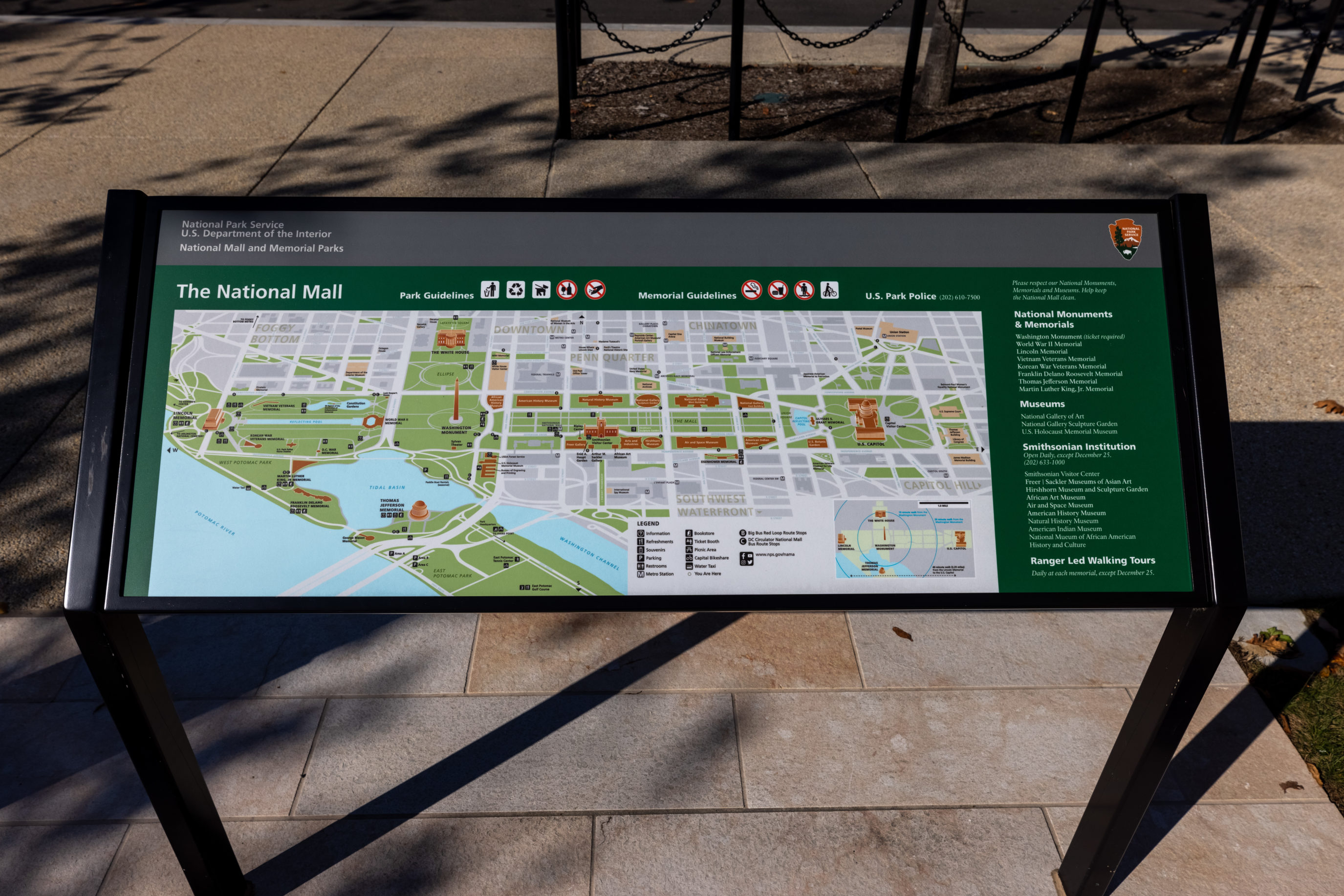
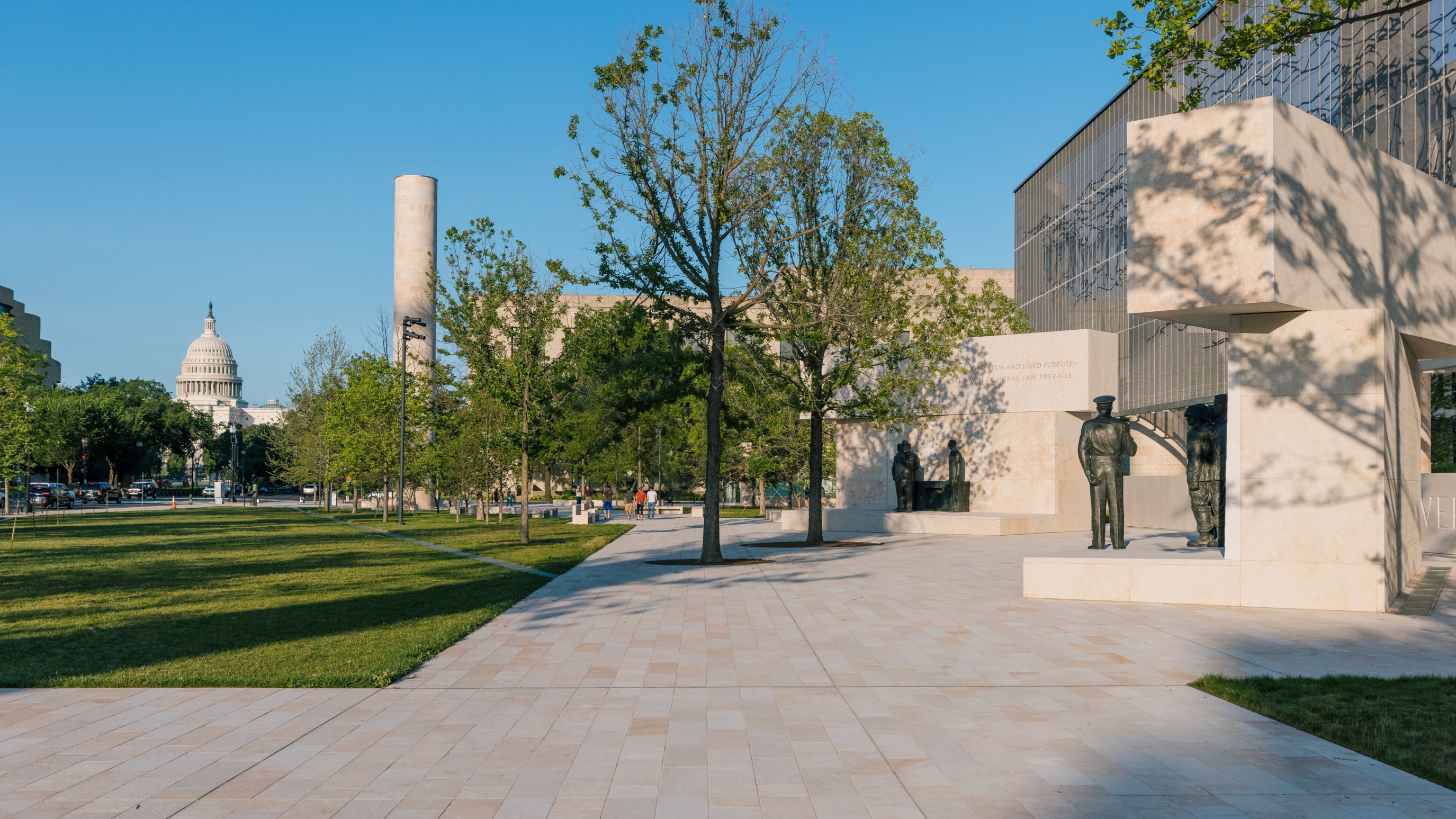
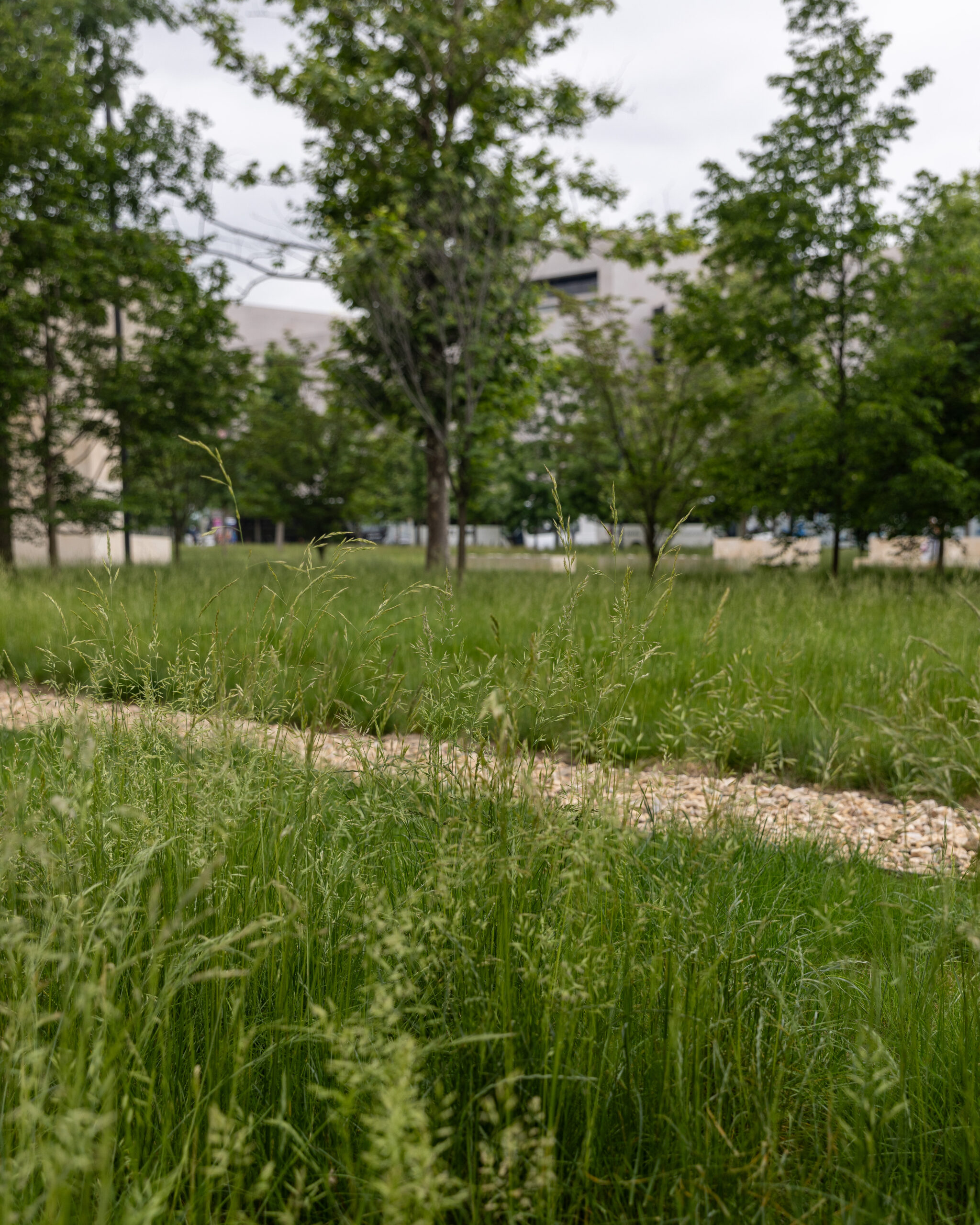
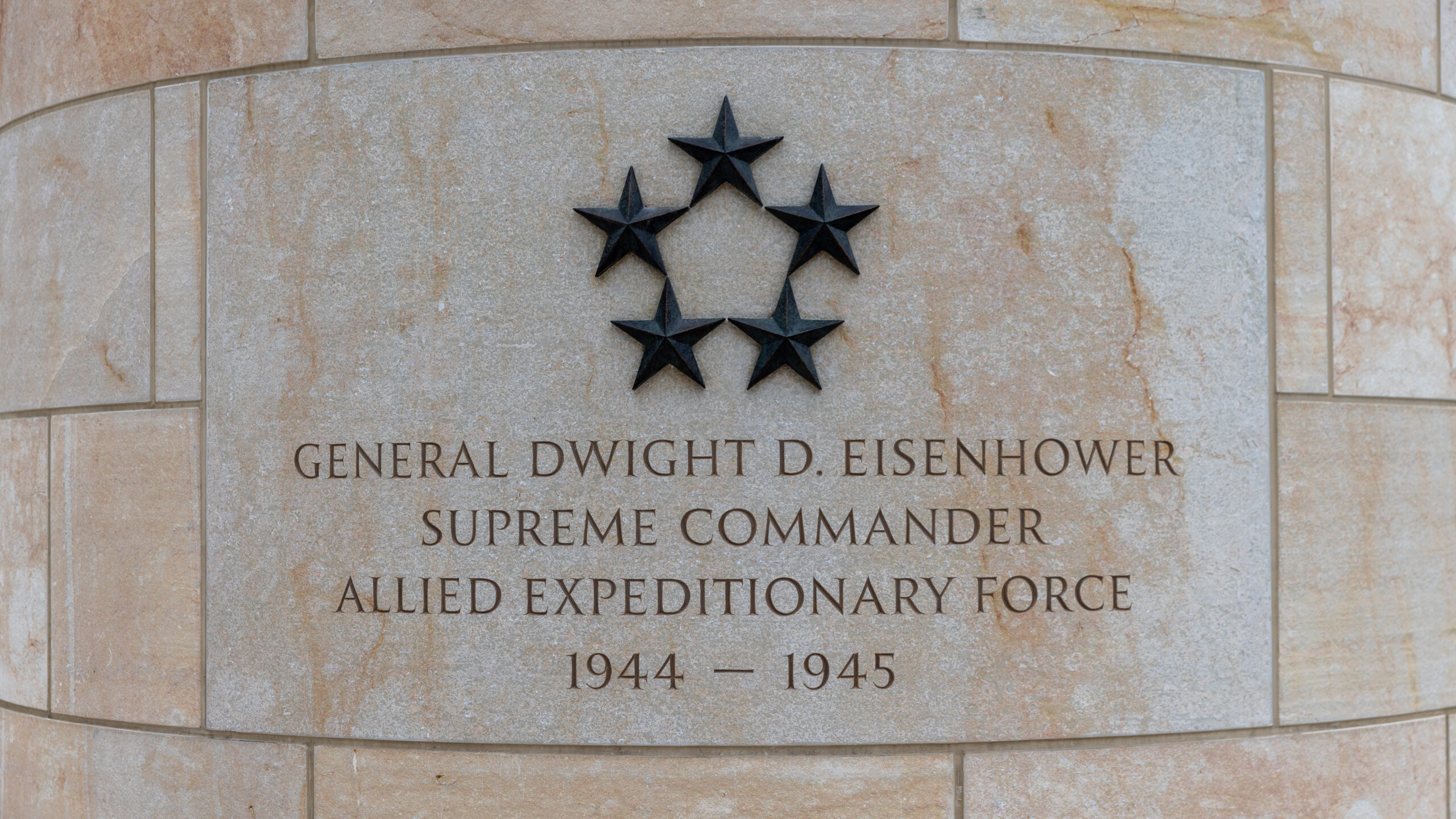
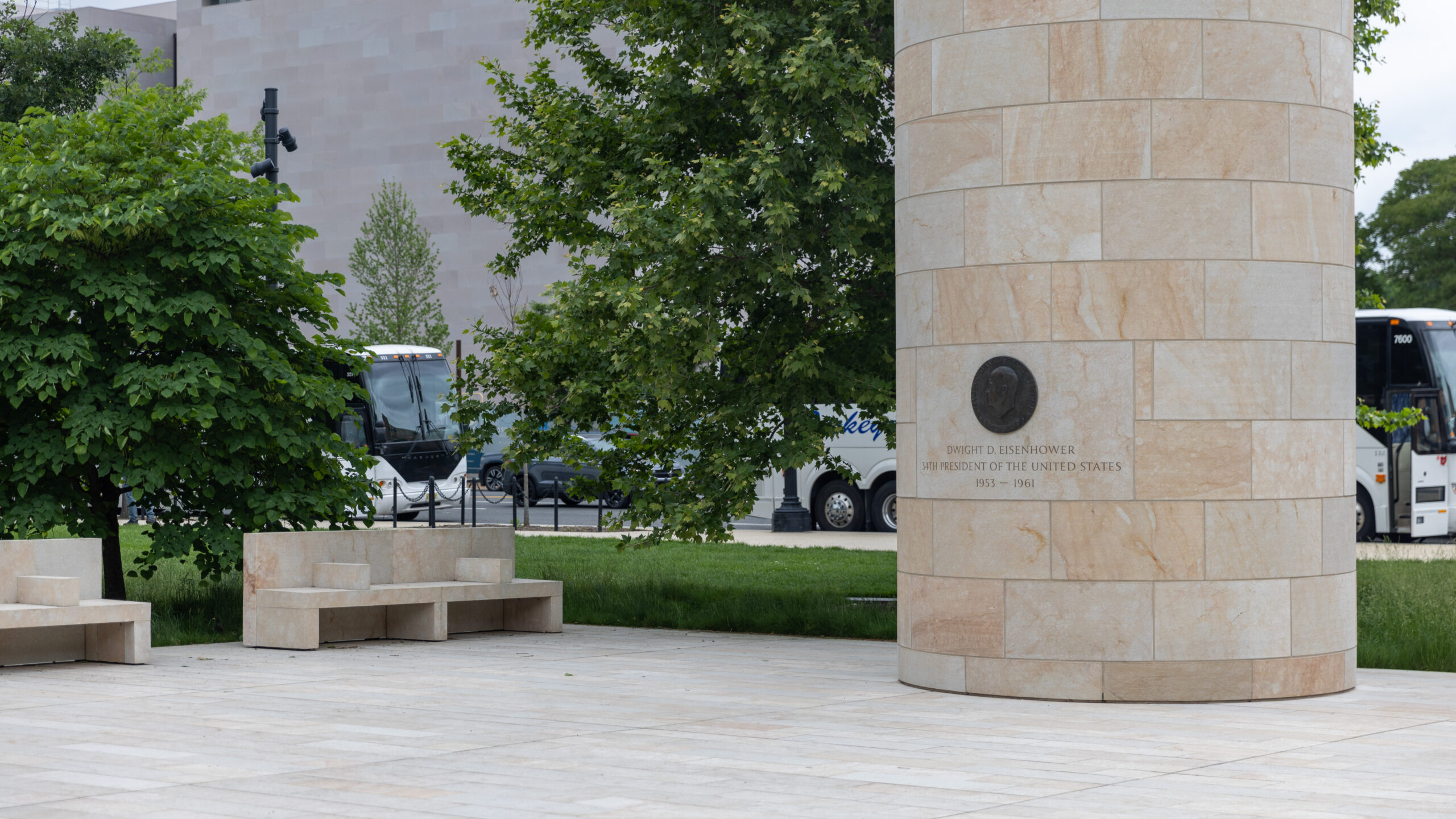
Here are some more pictures that I took at the Eisenhower Memorial in Washington, District of Columbia. If you’re a photographer planning a trip to DC here’s my list of the best DC photo spots.

Getting to the Eisenhower Memorial
It’s extremely easy to plan a trip to the Eisenhower Memorial since it’s located right off the National Mall. The Eisenhower Memorial is open 24/7 and can be accessed off Independence Ave SW. It’s located between the Air and Space Museum and Department of Education building.
The U.S. Capitol Building is just 0.5 miles away making it a short walk if you’re already visiting the Capitol grounds.
If you plan on taking the Metro the closest metro stop to the Eisenhower Memorial is the L’Enfant Plaza station (0.2 mile walk). The L’Enfant station has Blue/Green/Orange/Silver/Yellow lines making it easy to get to.
Parking is typically available on Independence Ave SW, 4th St S, or Jefferson Dr SW. Of course it’s a pleasant walk if you find parking anywhere on the National Mall.
You’ll also find electric scooters you can rent plus Capital Bikeshare bikes. Just be careful when parking rental vehicles since the National Mall is typically a no parking area.
Dwight D. Eisenhower Memorial on Google MapsEisenhower Memorial FAQ
Where is the Eisenhower Memorial?
The Dwight D. Eisenhower Memorial is at 540 Independence Avenue SW in Washington DC, between the National Air and Space Museum and the U.S. Department of Education. The closest Metro stop is L’Enfant Plaza, about a 0.2-mile walk.
When did the Eisenhower Memorial open?
The memorial was dedicated on September 17, 2020 (Constitution Day). The project broke ground in 2017 after a long approval process that started in 1999.
Who designed the Eisenhower Memorial?
Architect Frank Gehry of Gehry Partners designed the overall memorial. The 447-foot stainless steel tapestry was fabricated by Tomas Osinski. The 12 bronze sculptures and 2 stone bas-reliefs were created by sculptor Sergey Eylanbekov.
Is the Eisenhower Memorial free to visit?
Yes. The memorial is free, open 24 hours a day, and maintained by the National Park Service. Public restrooms are on-site, which is unusual for a National Mall area memorial.
What does the tapestry depict?
The 447-foot stainless steel mesh tapestry shows the cliffs of Pointe du Hoc on the Normandy coast at peacetime. Pointe du Hoc was a key target on D-Day (June 6, 1944), assaulted by U.S. Army Rangers under Eisenhower’s command. The peacetime depiction is meant to represent what Eisenhower’s leadership ultimately achieved.
How long does it take to visit?
About 20 to 30 minutes covers the main features (tapestry, the two bronze scenes, the barefoot boy statue, and the inscribed quotes). It pairs well with a visit to the Air and Space Museum directly across Independence Avenue, or a longer walk south to the U.S. Botanic Garden.
For more places to photograph in DC, see my guide to Washington DC photography locations.