The Korean War Veterans Memorial sits just southeast of the Lincoln Memorial on the National Mall in Washington DC. It was dedicated on July 27, 1995, the 42nd anniversary of the armistice that ended the Korean War, and expanded in 2022 with the Wall of Remembrance honoring the more than 43,000 service members who died in the conflict.
This post covers what to see at the memorial, how to get there, the history and design of the site, and includes my photos from years of visiting.
Table of contents
Planning Your Visit
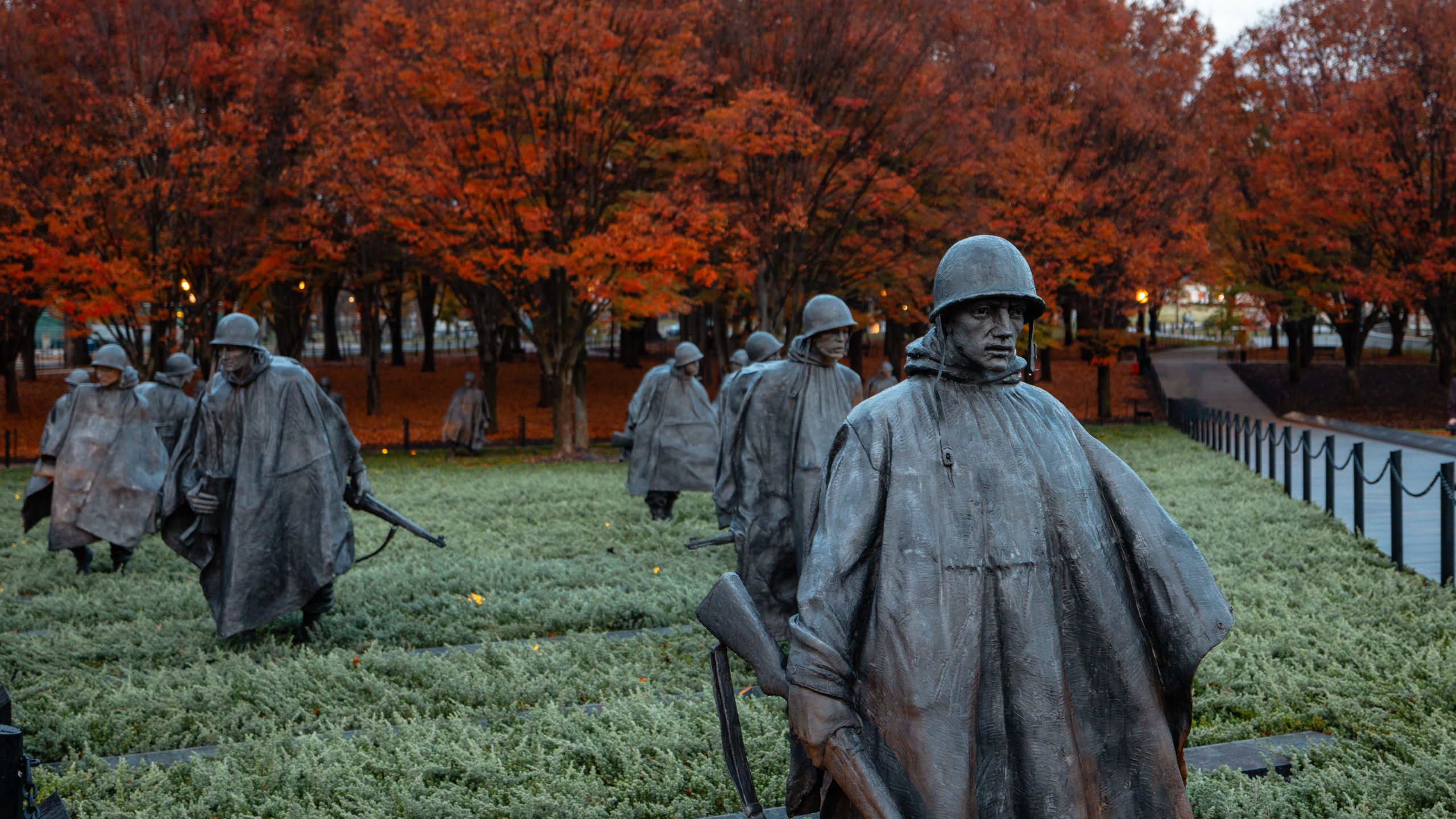
The Korean War Veterans Memorial is on the southeast side of the Lincoln Memorial along the National Mall. The grounds are open 24 hours a day and there is no admission fee. The site is particularly striking at night when the 19 stainless steel soldier statues are uplit and the Pool of Remembrance reflects the surrounding light.
How to get to the Korean War Memorial
Many of the metro stations are approximately one mile away from the Korean War Veterans Memorial, so you will have to walk a bit to reach the memorial. The most convenient metro stations for the Korean War Veterans Memorial are Foggy Bottom (0.9 miles away) and the Smithsonian (1.2 miles away).
Hourly parking is usually available on Ohio Drive SW, which is just a couple of blocks away. If you arrive at sunrise, when there is typically ample parking, you can park on Rock Creek and Potomac Parkway, where there are parking spots on both sides of the road near the memorial. Visiting the Korean War Memorial is completely free and open all day, allowing you to freely explore the grounds.
If you need to use a bathroom while at the memorial you can head over to the Lincoln Memorial. There are public restrooms located underneath the Lincoln Memorial, but they often have a line.
Korean War Veterans Memorial on Google MapsWhat to See at the Memorial
The Korean War Veterans Memorial has four main features. Knowing what each one is makes the visit much more meaningful, because the site can feel disorienting on a first walk-through.
The 19 Statues
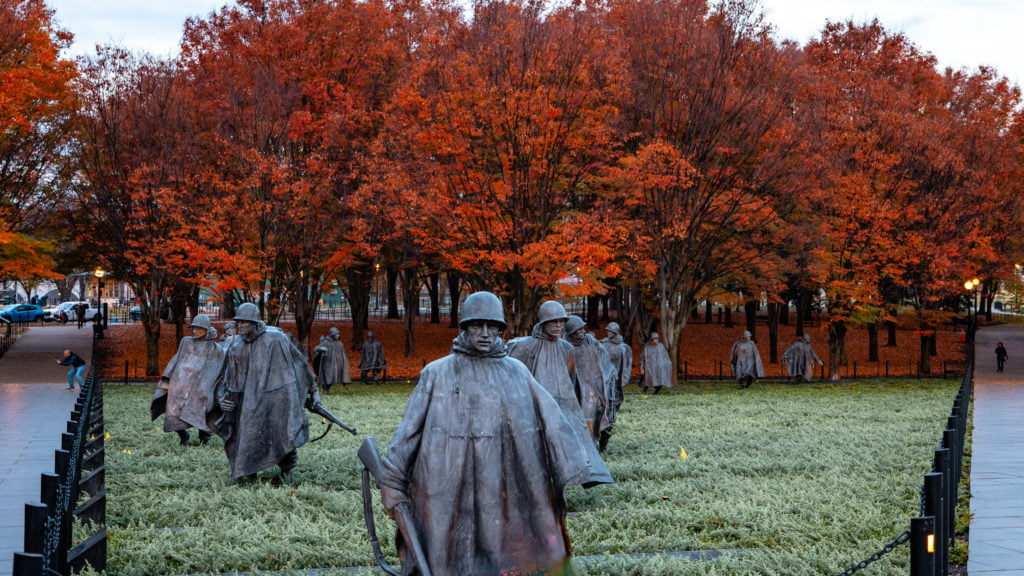
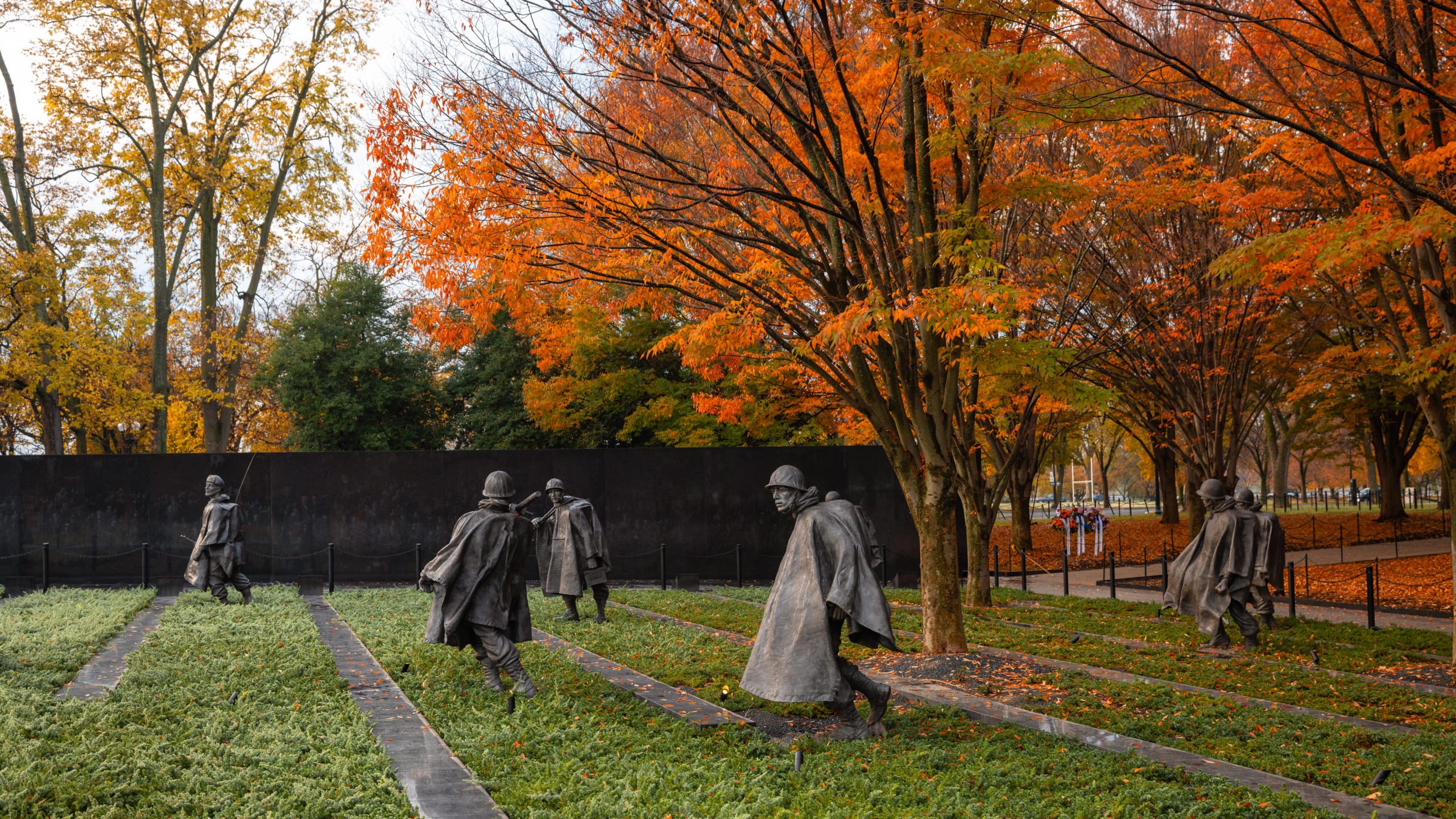
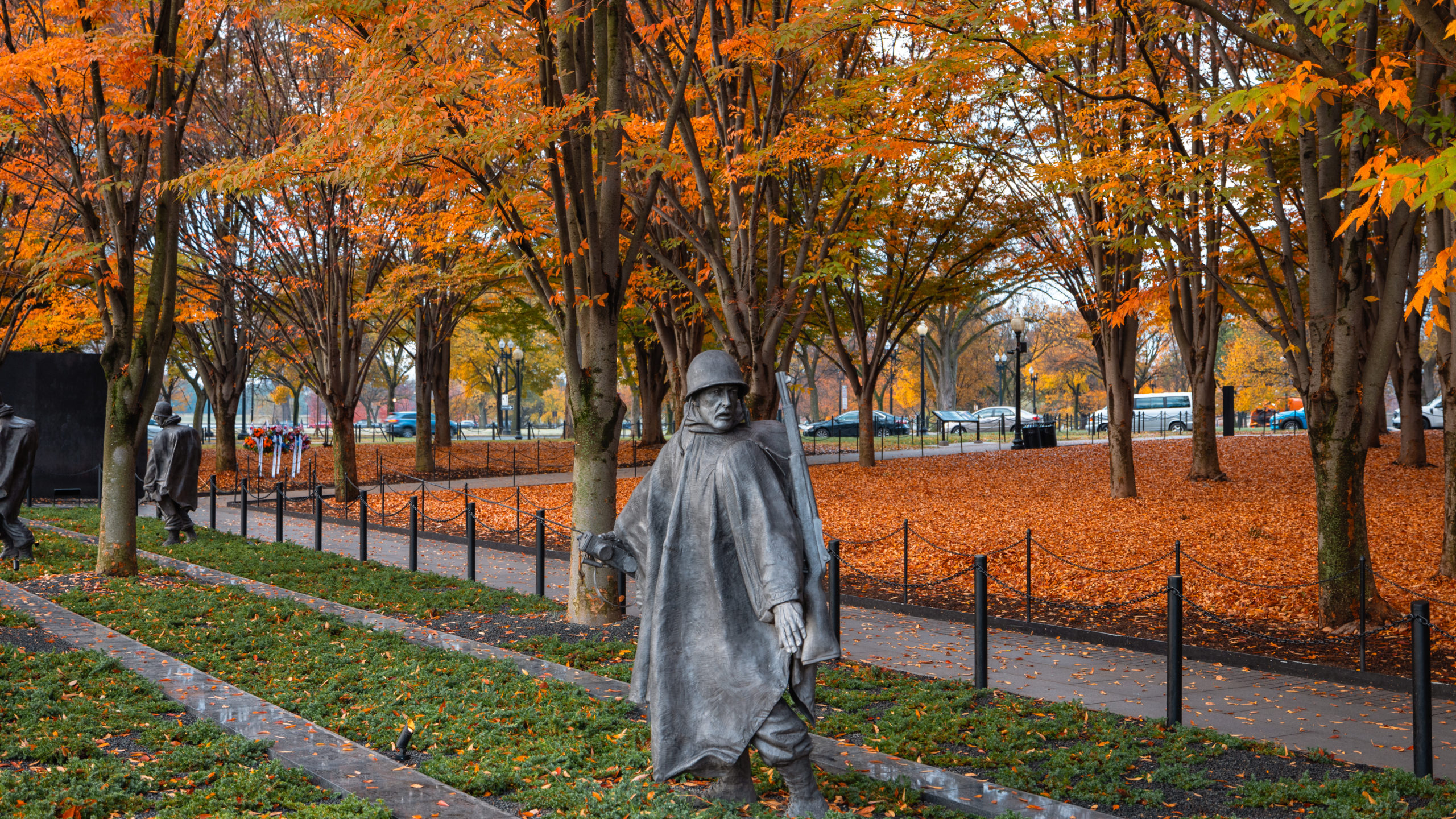
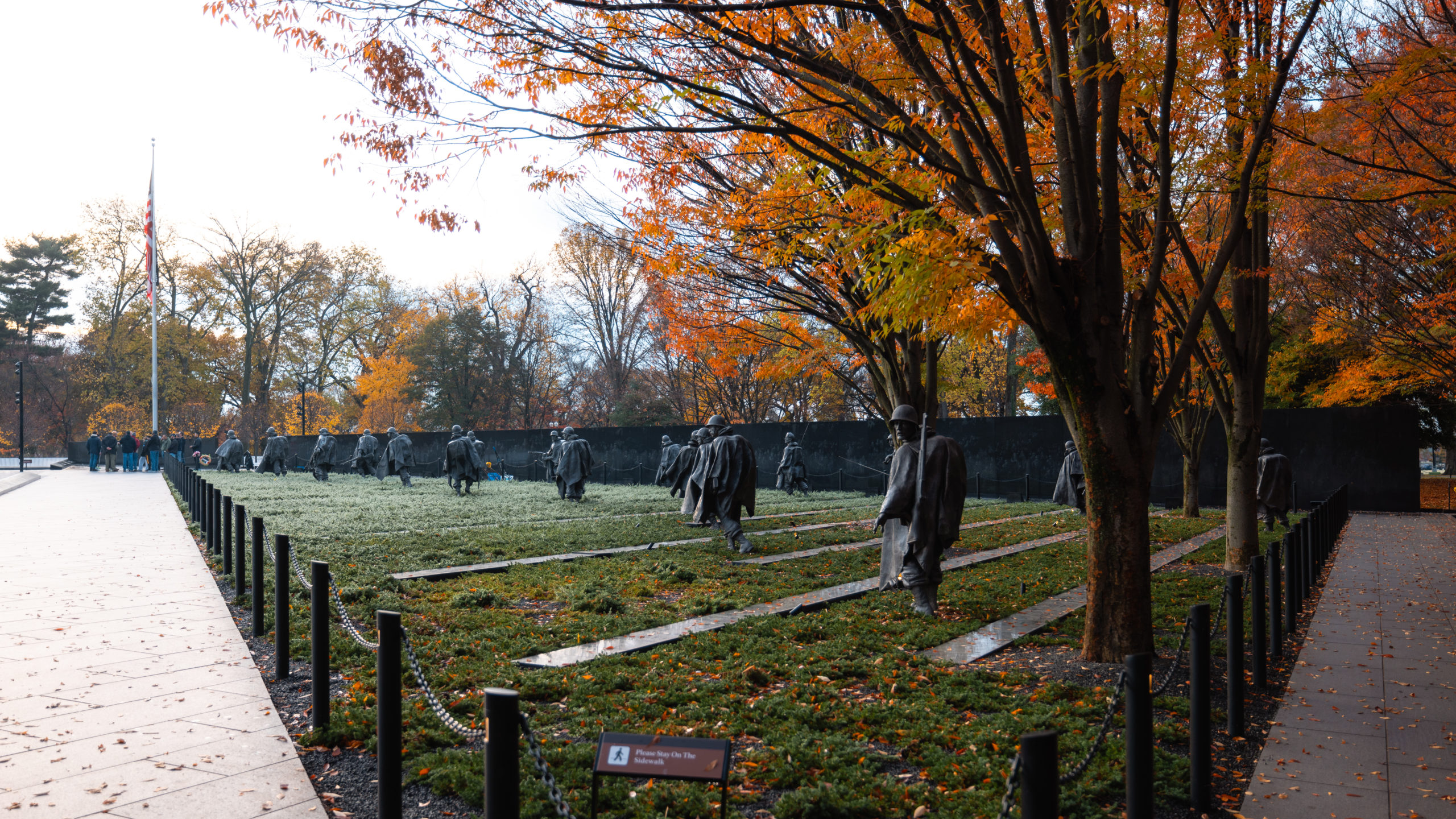
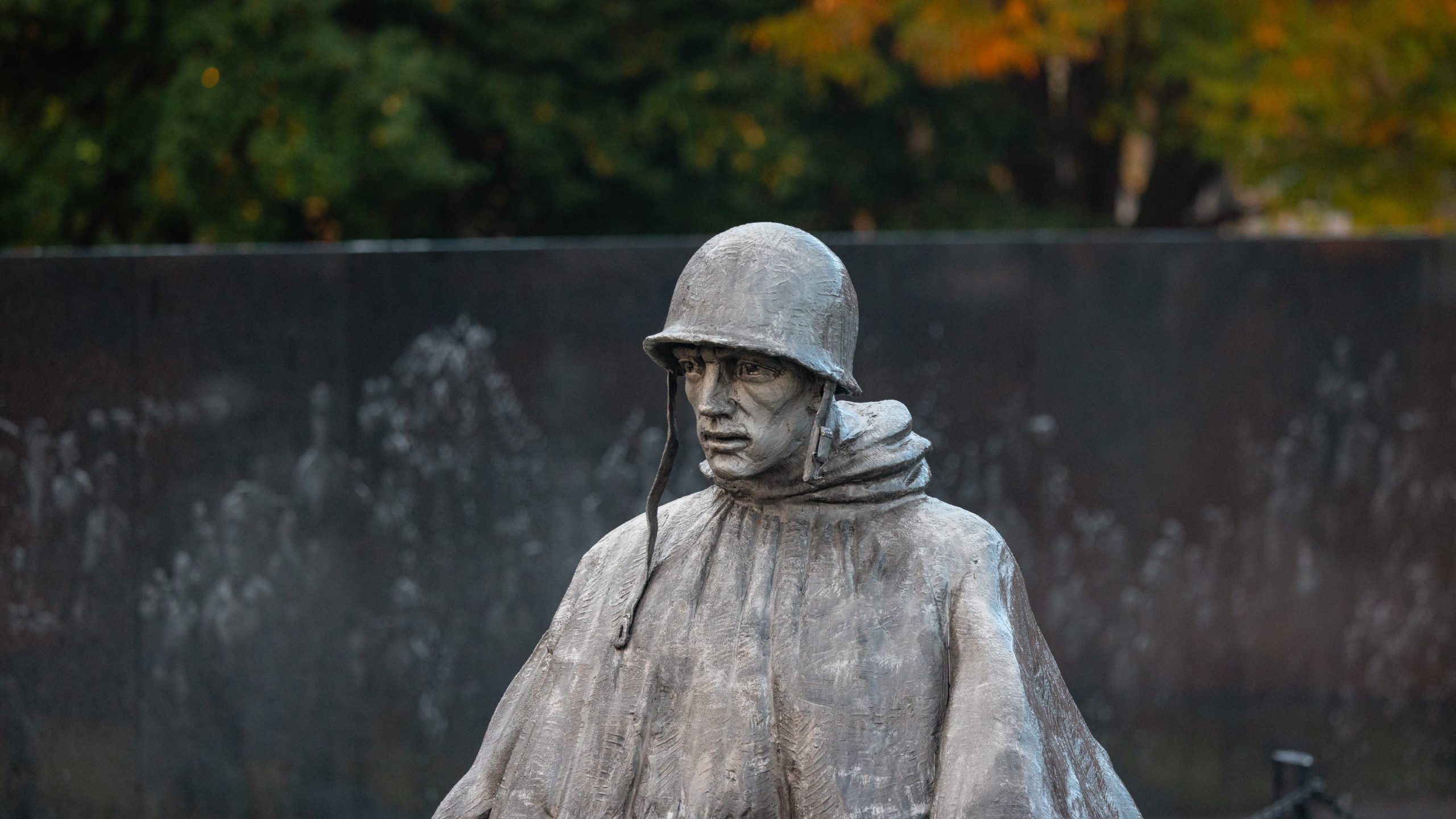
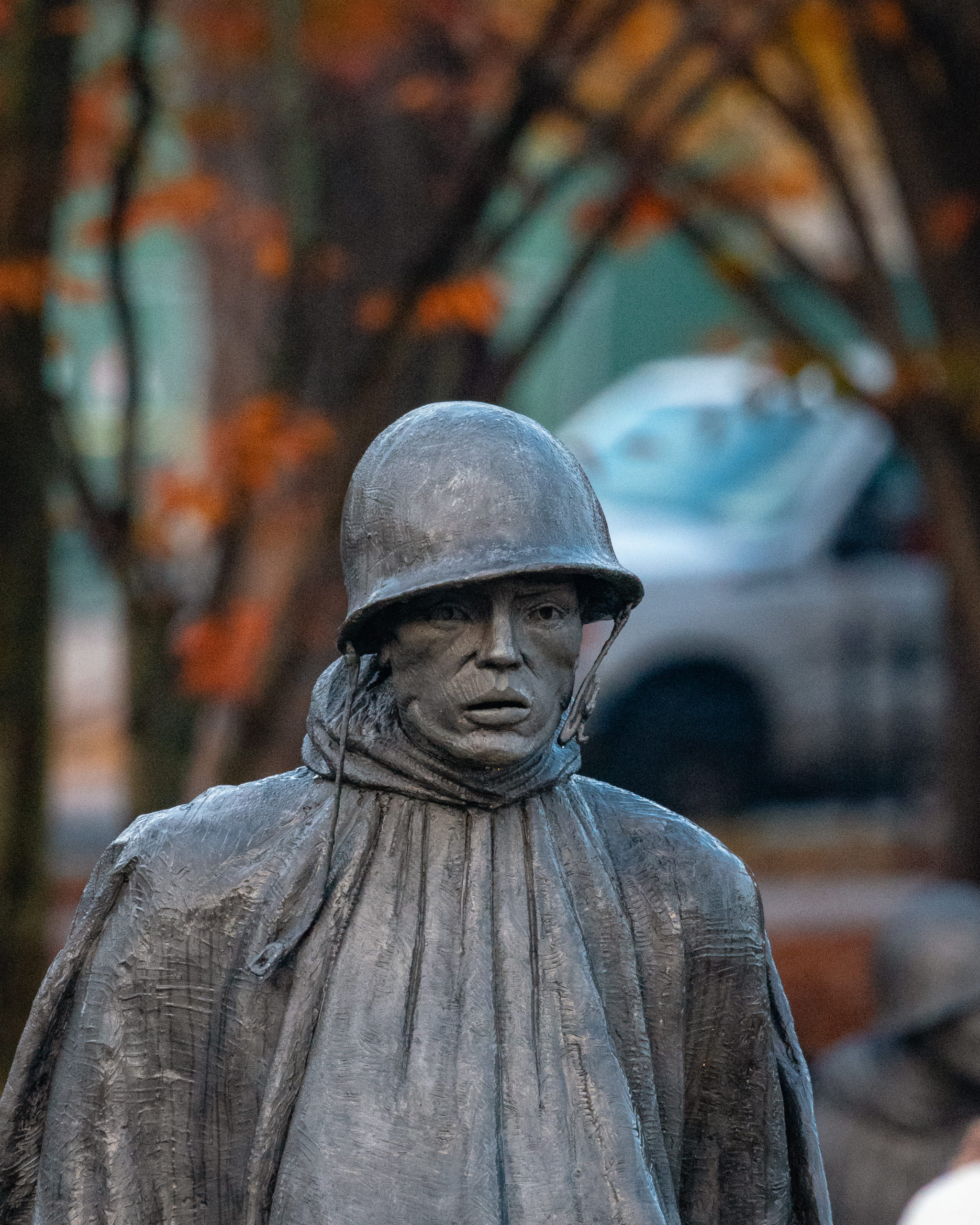
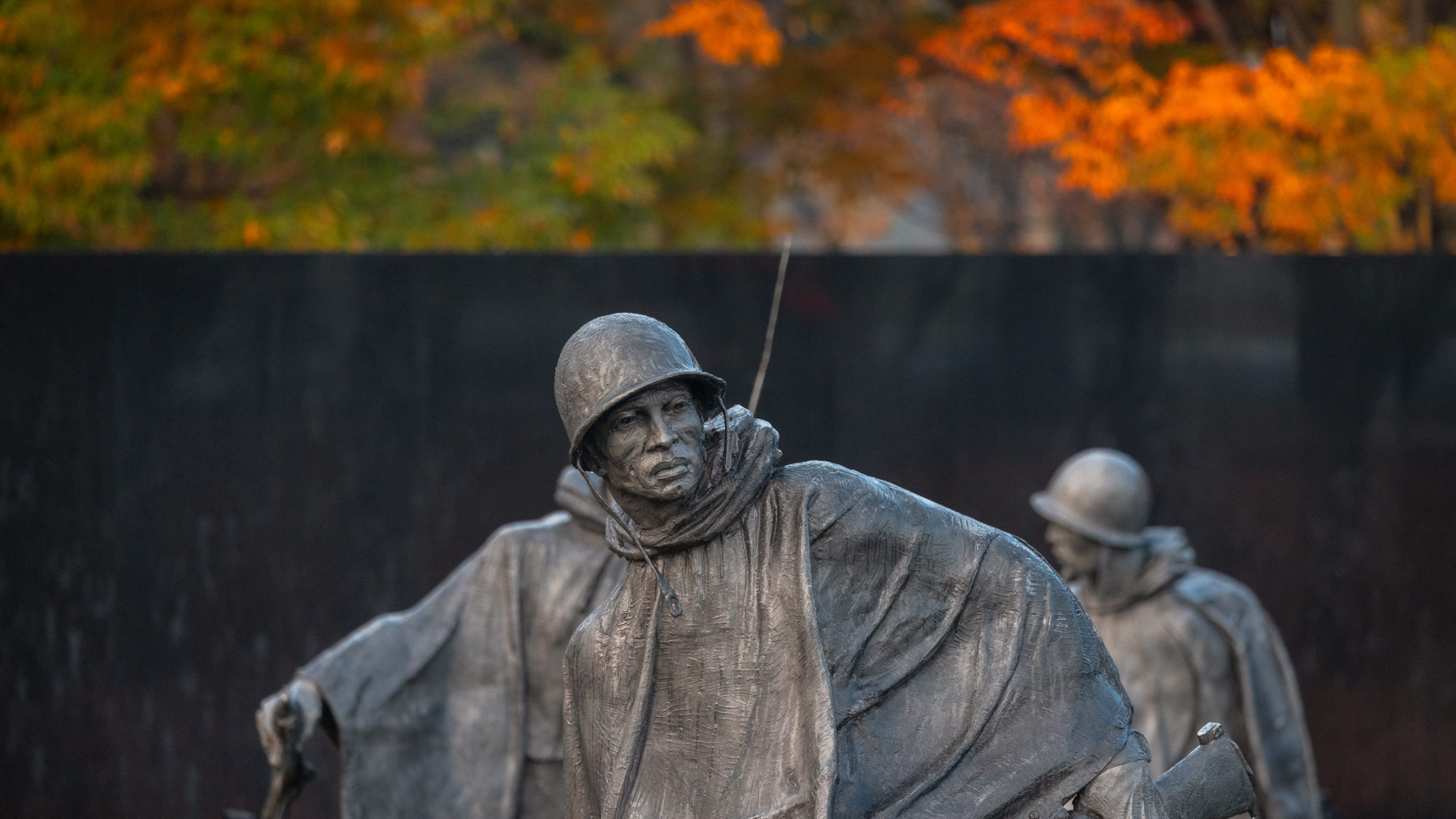
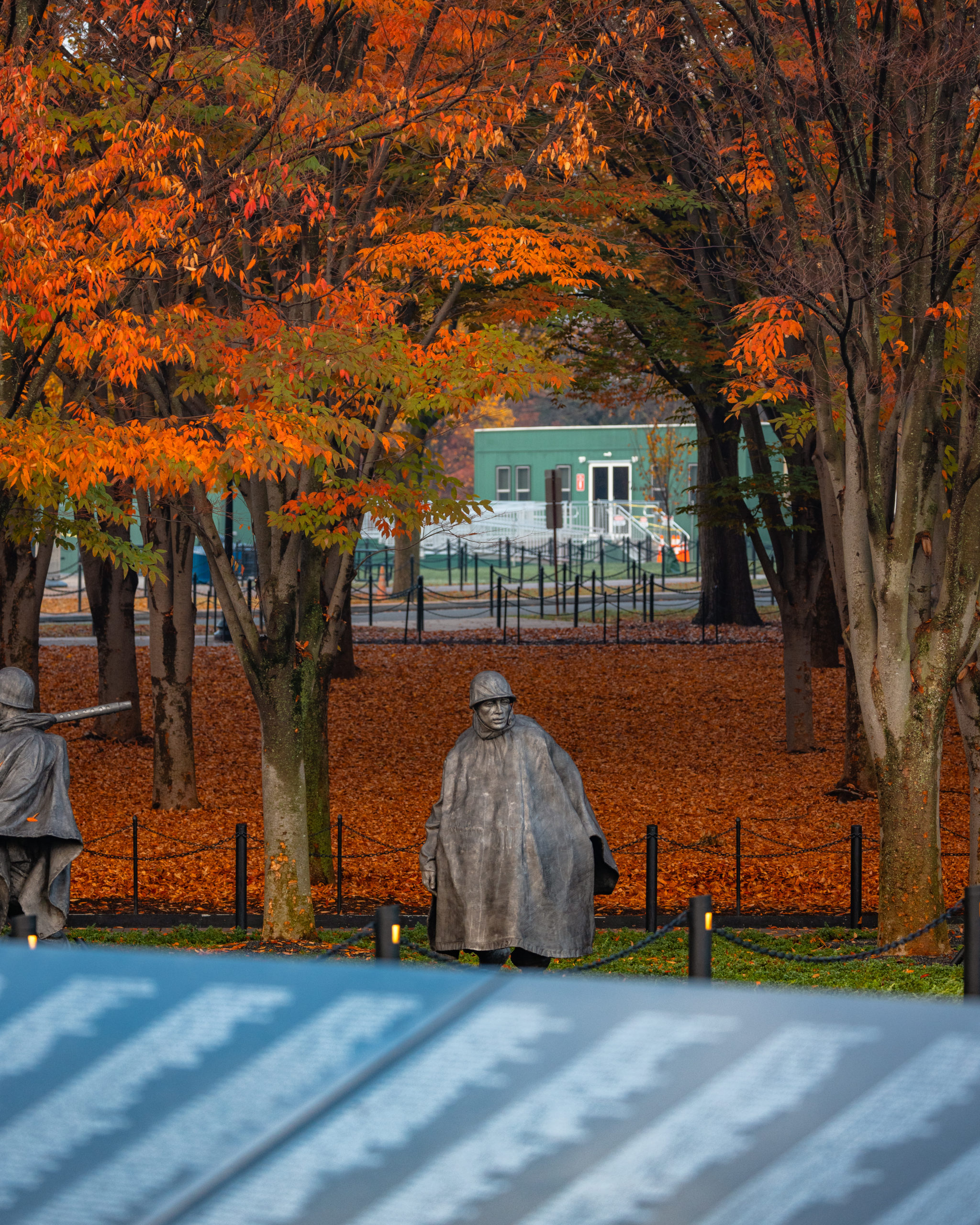
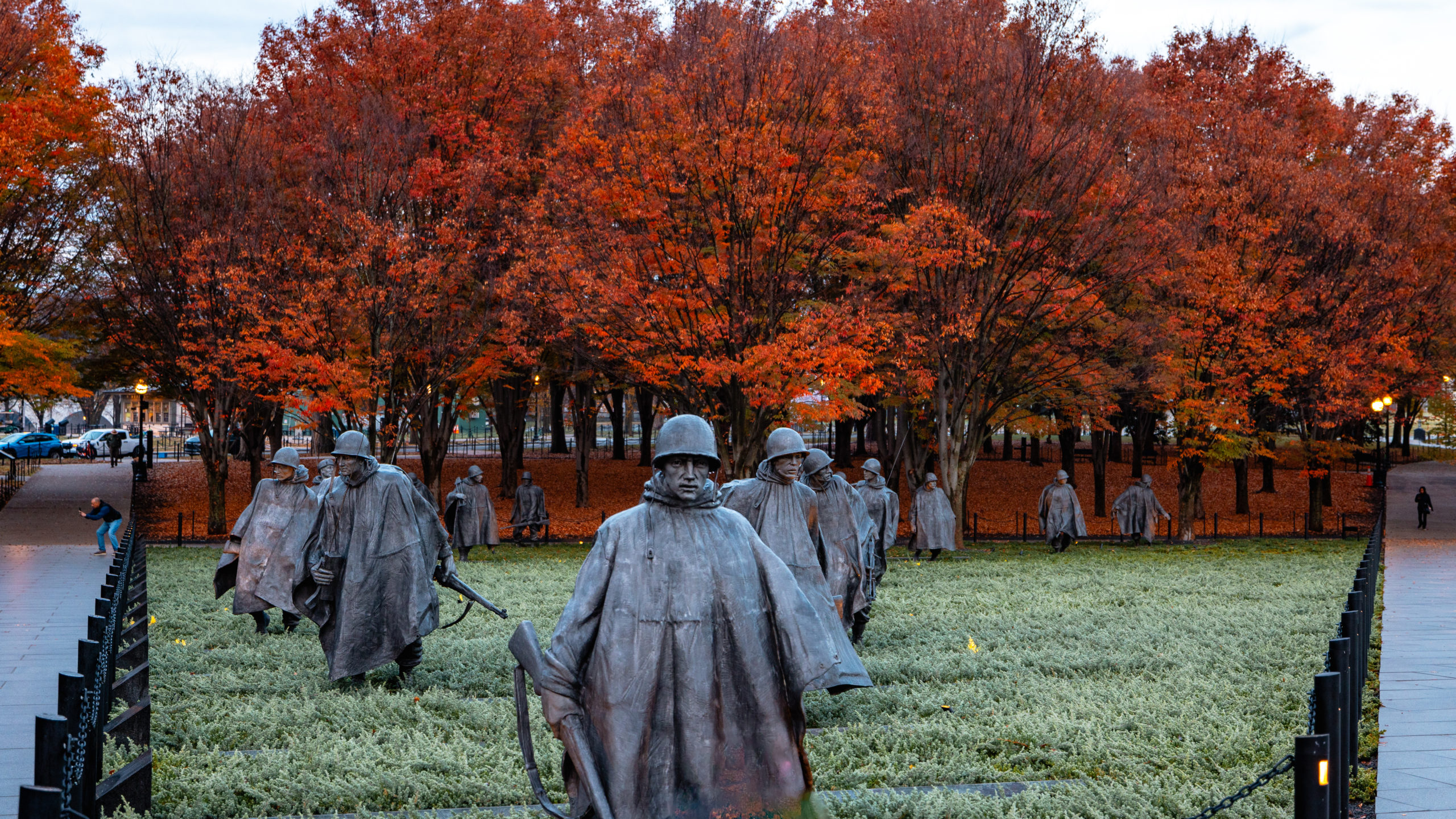
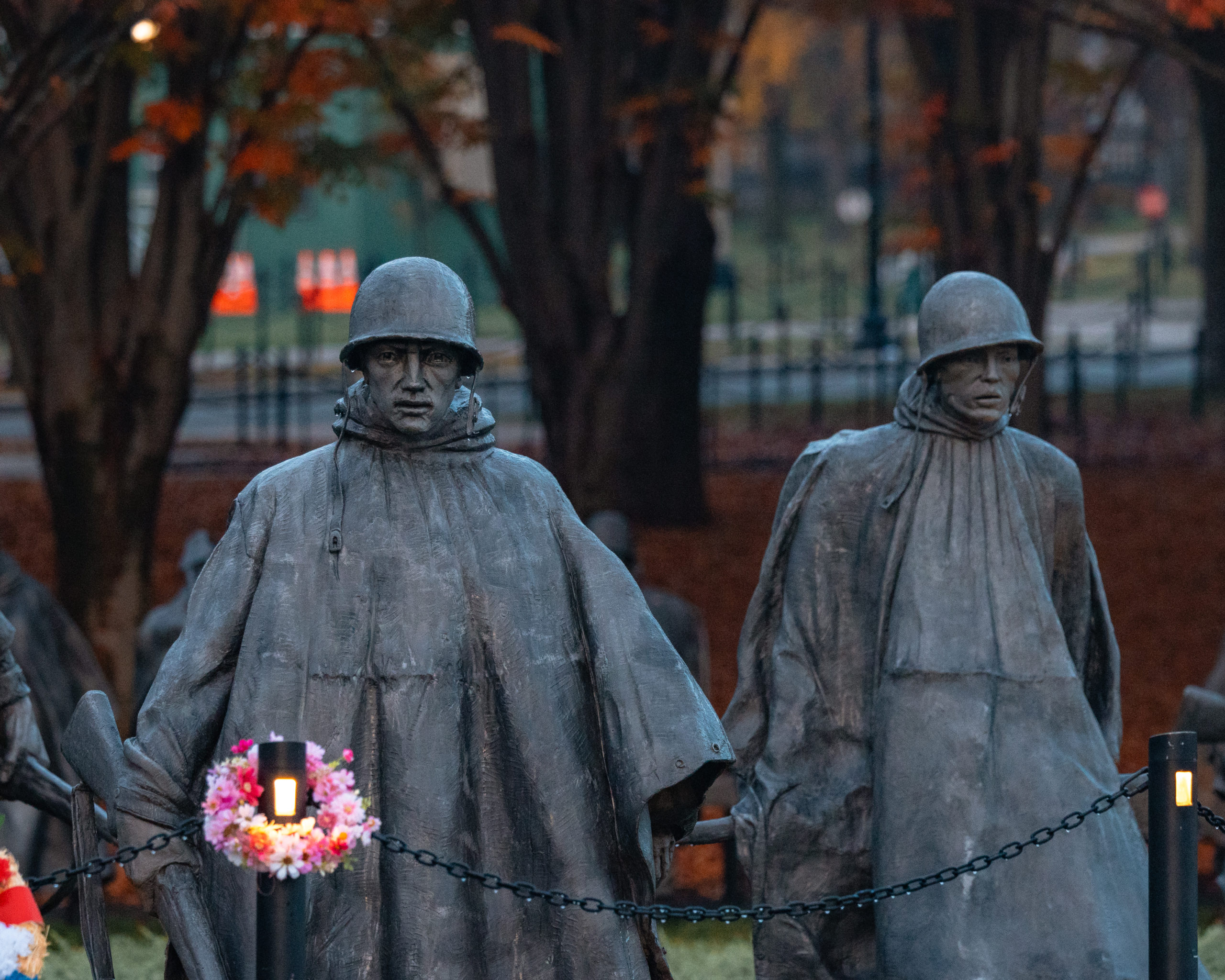
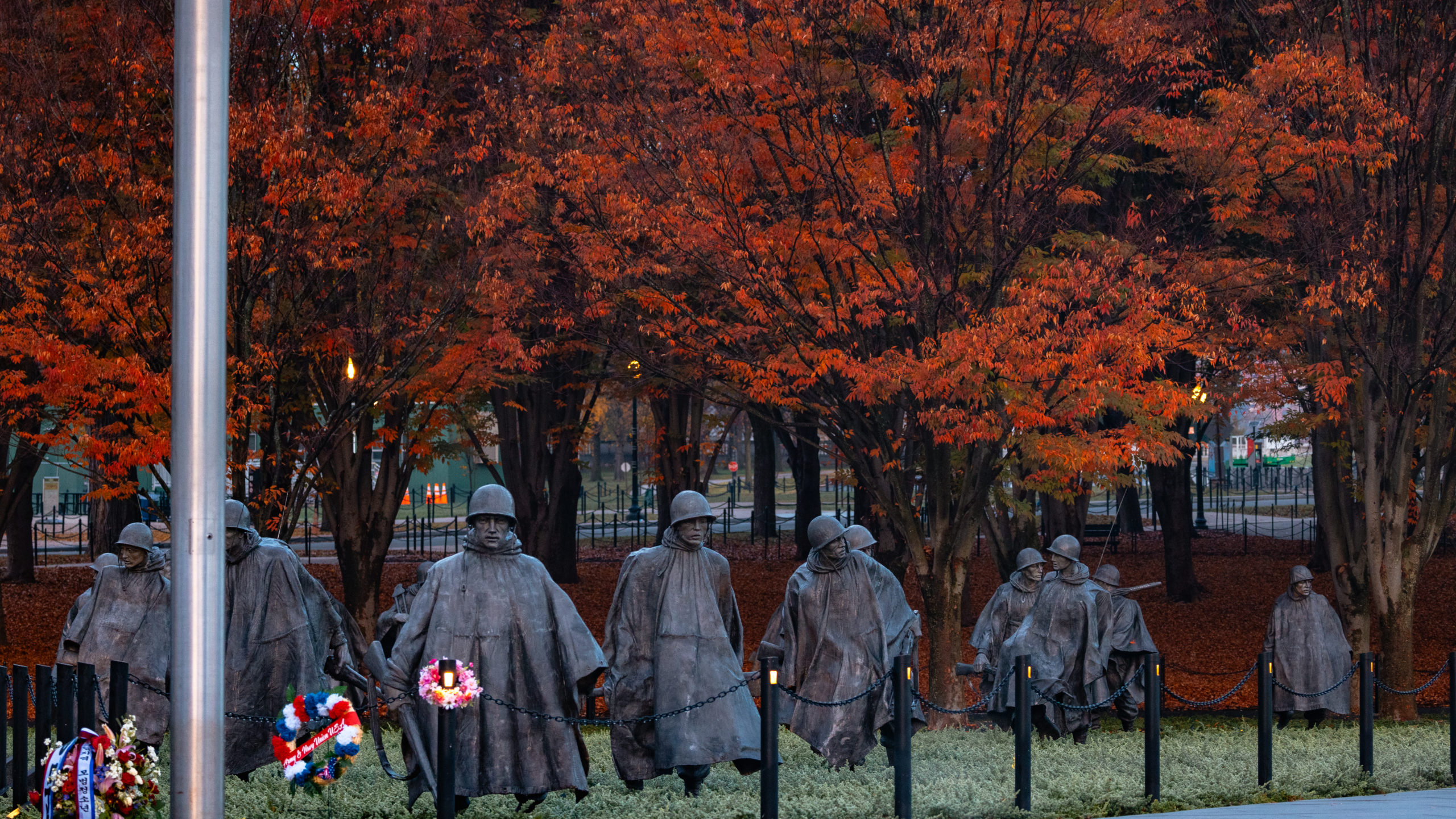
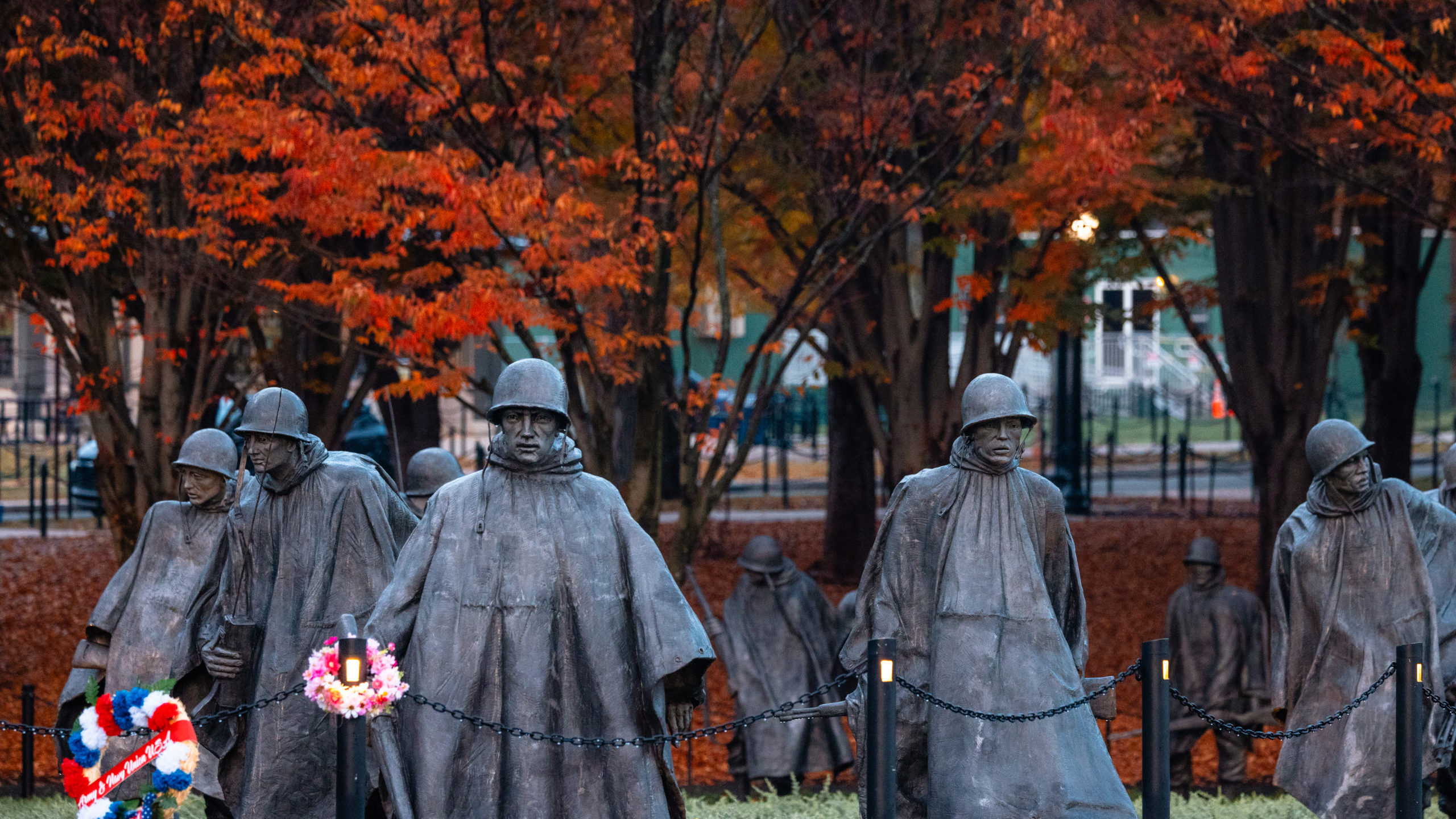
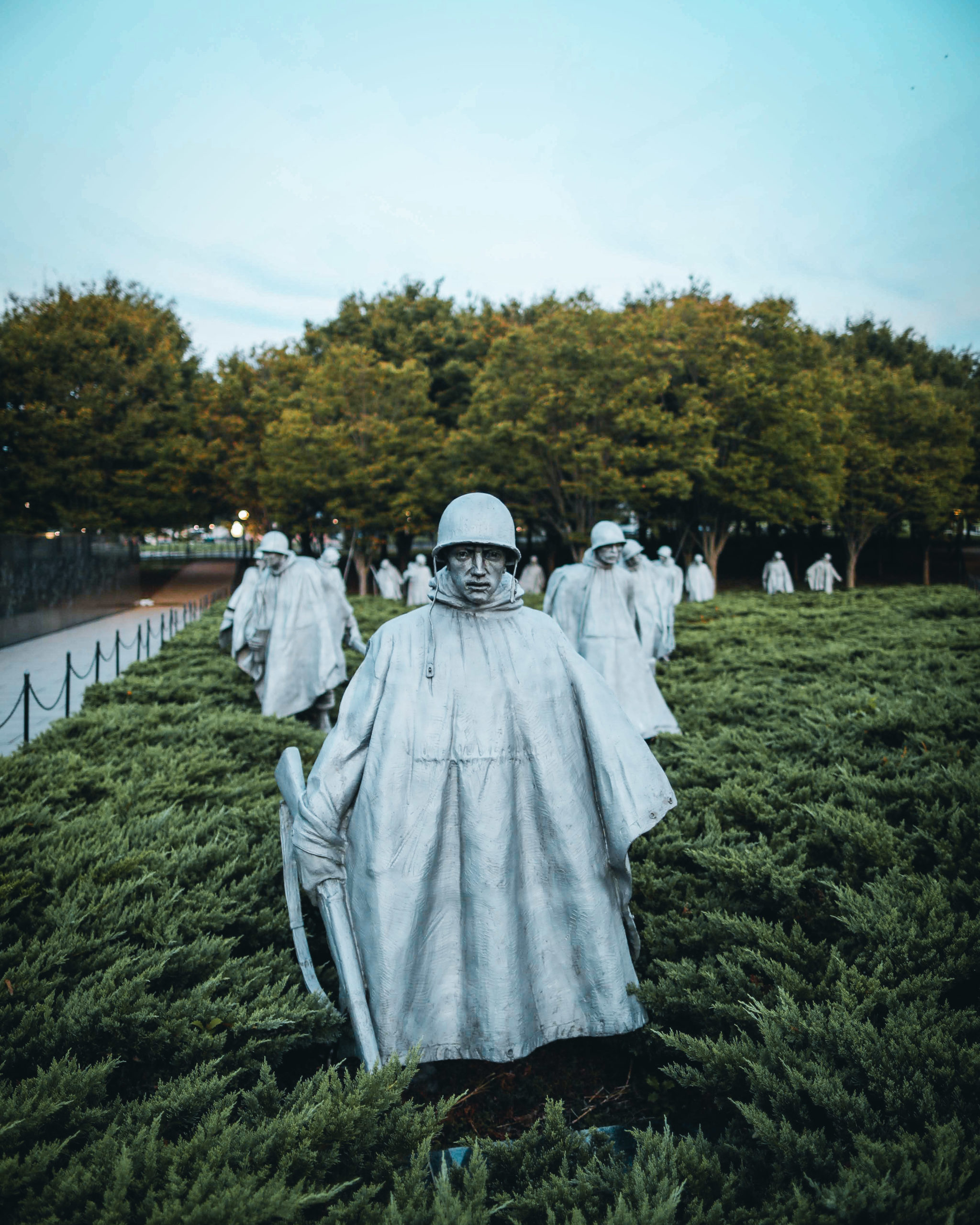
The iconic feature at the center of the memorial is the field of 19 stainless steel statues, designed by sculptor Frank Gaylord of Barre, Vermont. Each statue stands slightly larger than life at about 7 feet 3 inches tall. The figures depict a patrol moving through difficult terrain, surrounded by juniper bushes and granite strips that represent the rough Korean countryside. The patrol includes 14 Army, 3 Marine, 1 Navy, and 1 Air Force figures, reflecting all four service branches that served in Korea.
The Mural Wall
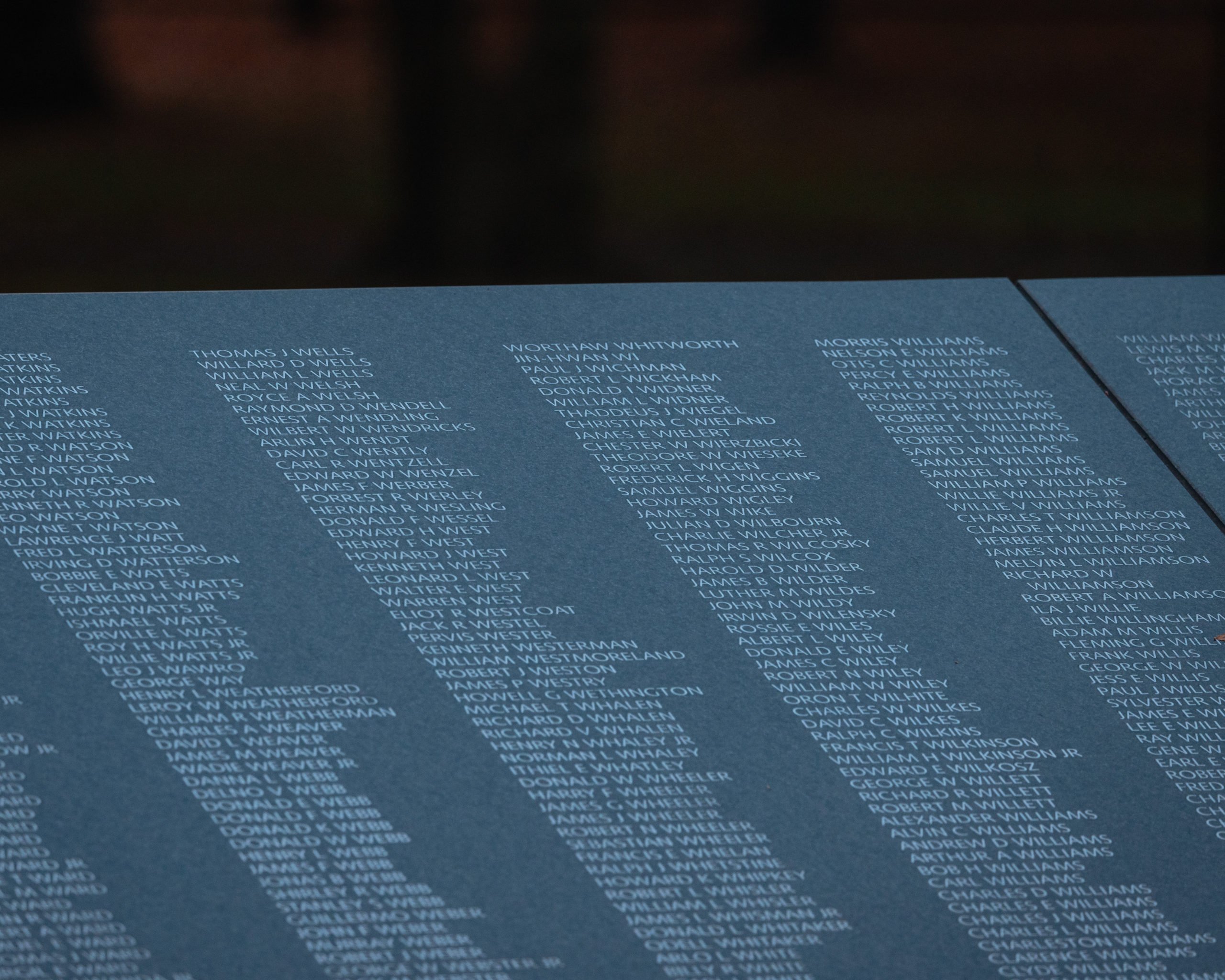
Running along the south side of the statue field is the Mural Wall, designed by Louis Nelson of New York. The 164-foot polished black granite wall contains 41 panels with more than 2,400 photographic images of support troops (nurses, mechanics, chaplains, supply units) sandblasted into the granite. Up close it reads like a wall of faces from the war.
The polished granite is also part of the memorial’s signature visual trick: when you stand in front of the wall, the 19 statues reflect off the polished surface and combine with the photo etchings to create the appearance of 38 figures. The number is deliberate: it references the 38th parallel that divided North and South Korea, and the roughly 38 months of fighting that the armistice ended in July 1953.
The Pool of Remembrance
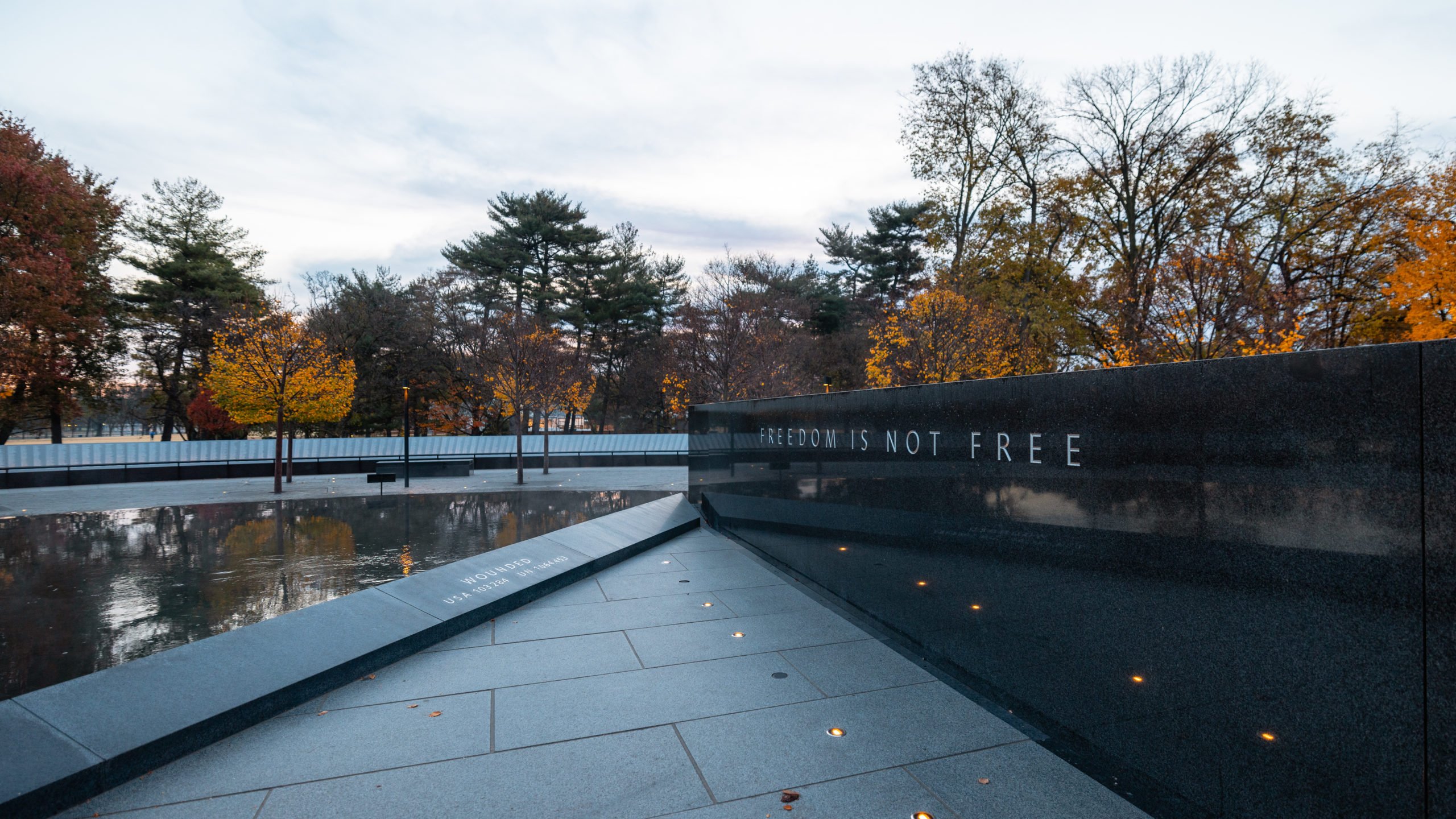
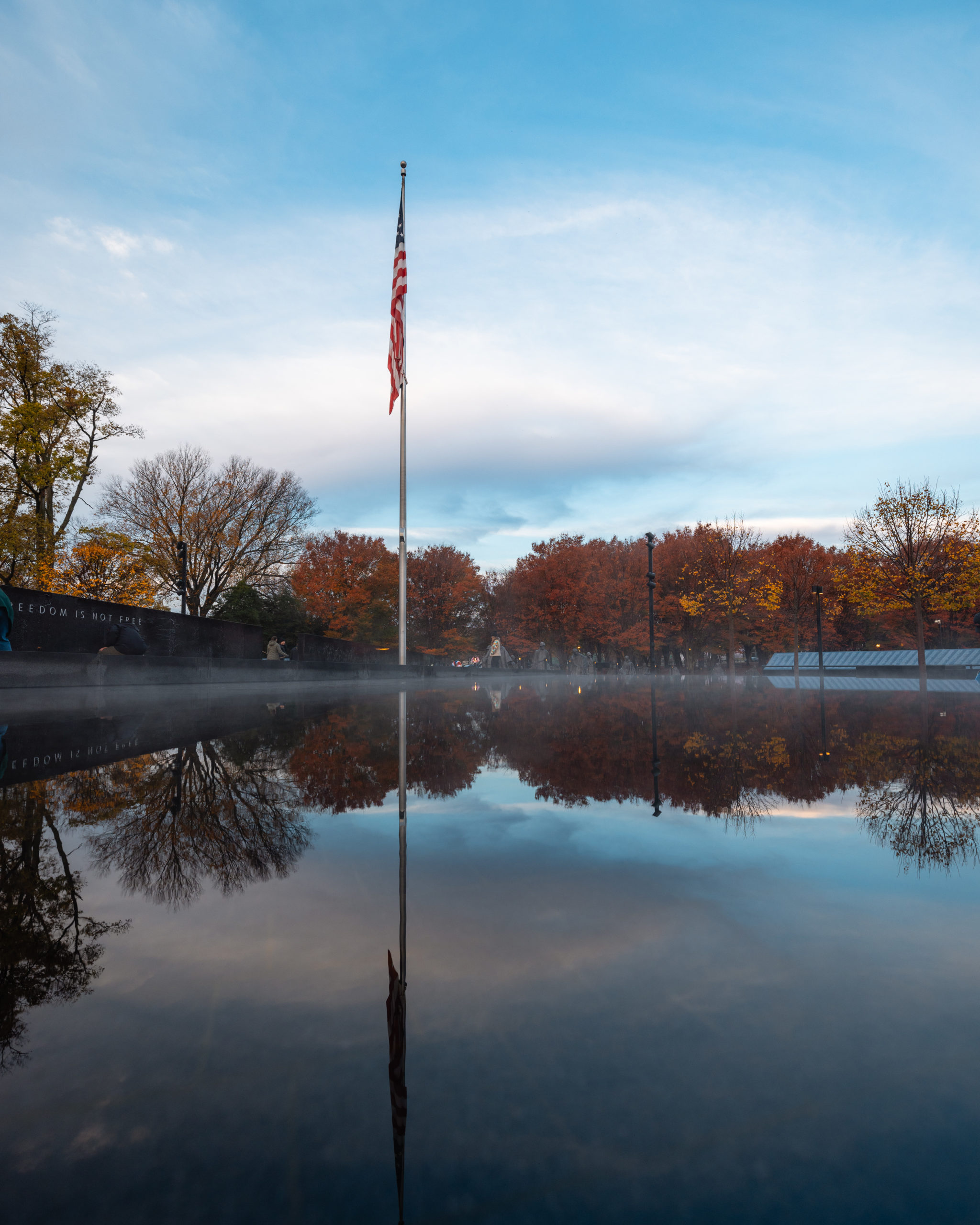
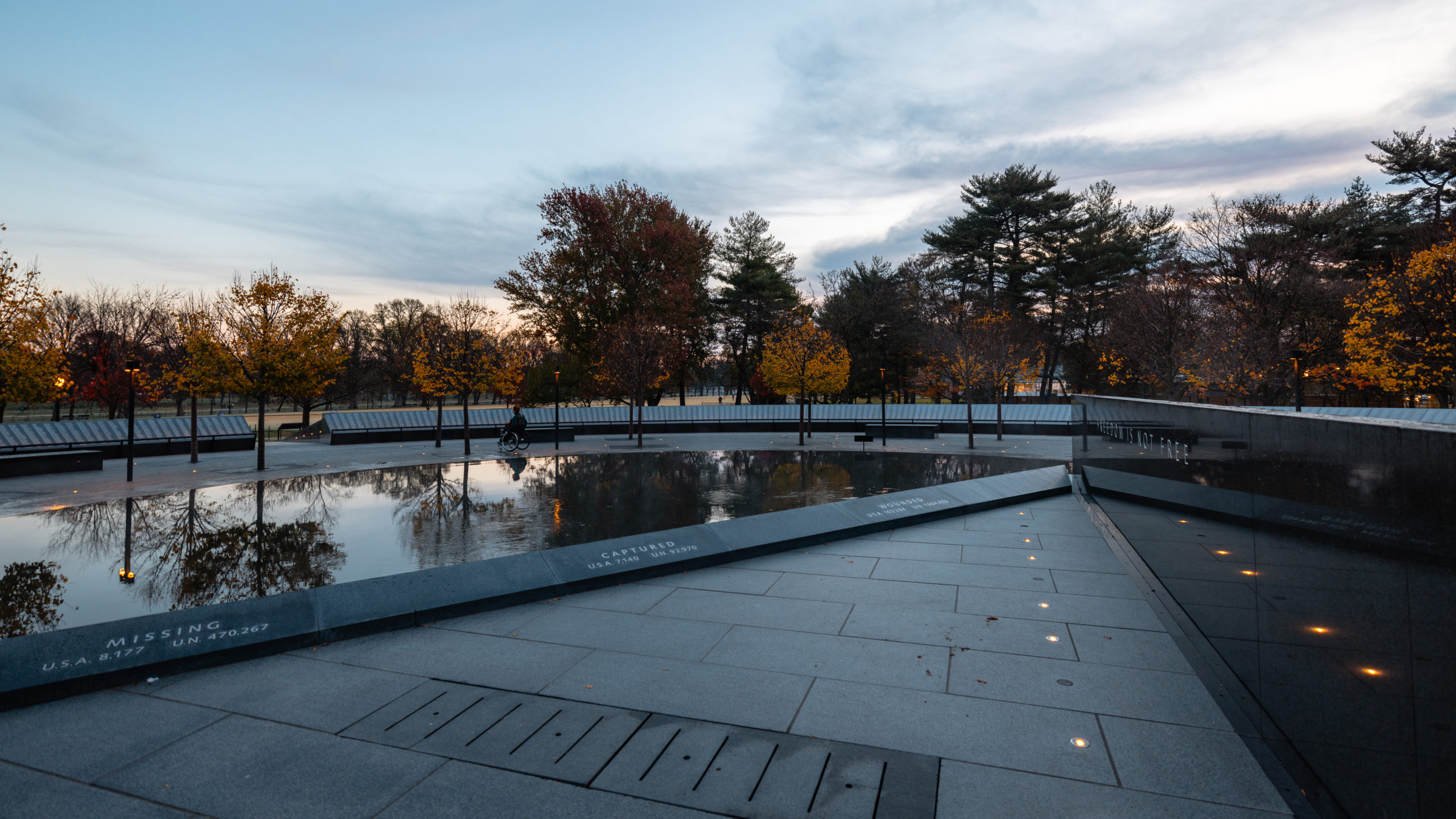
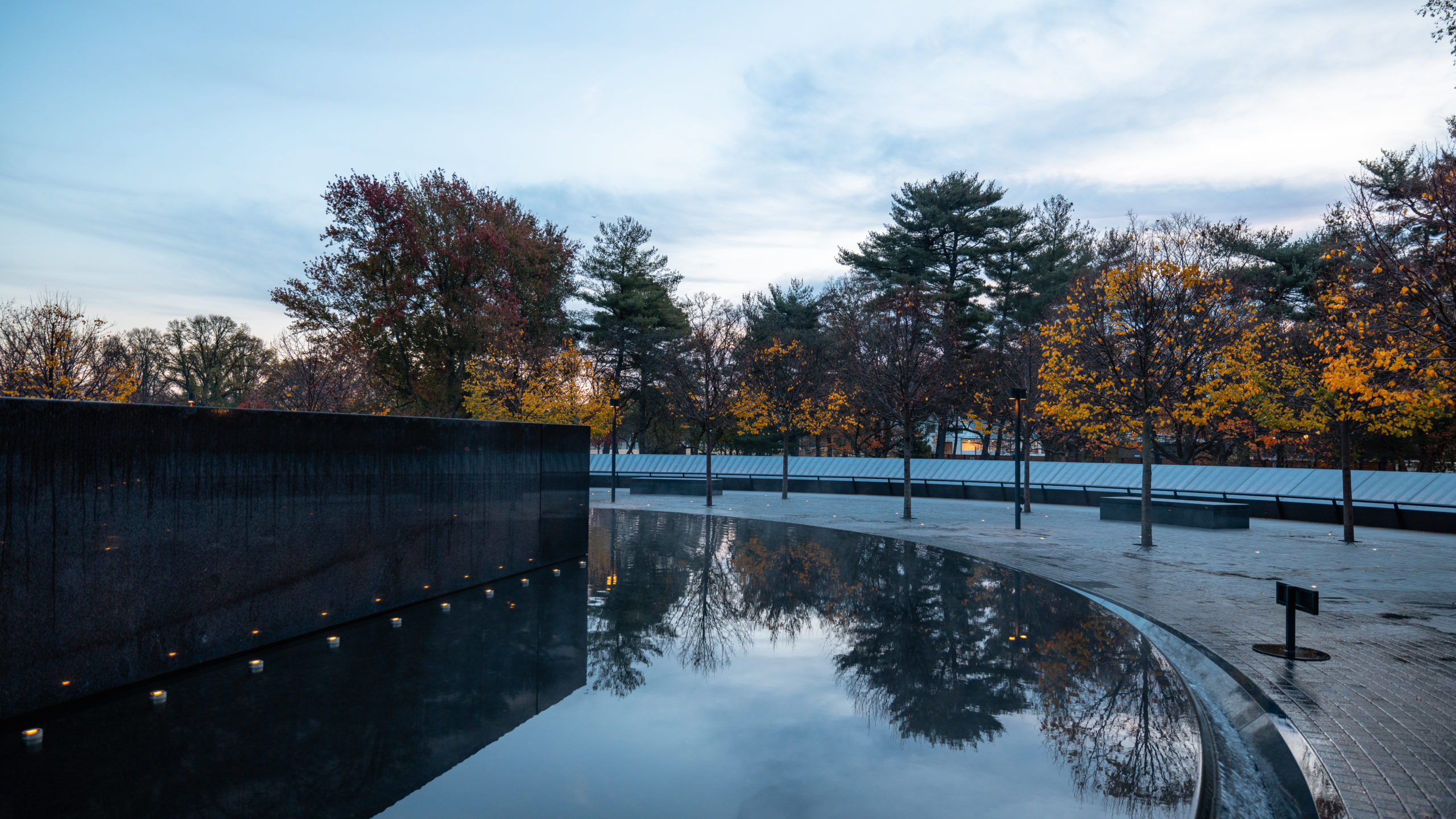
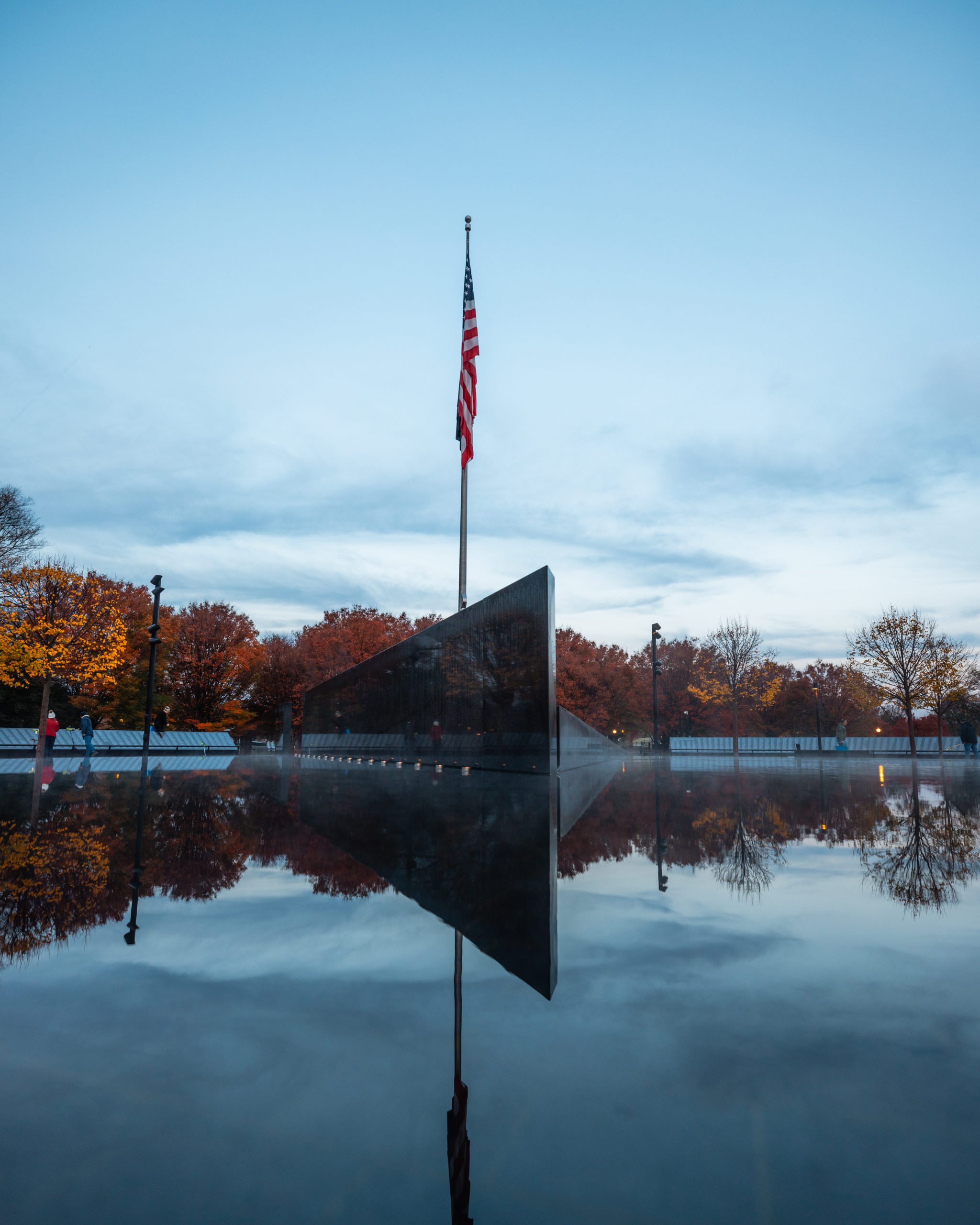
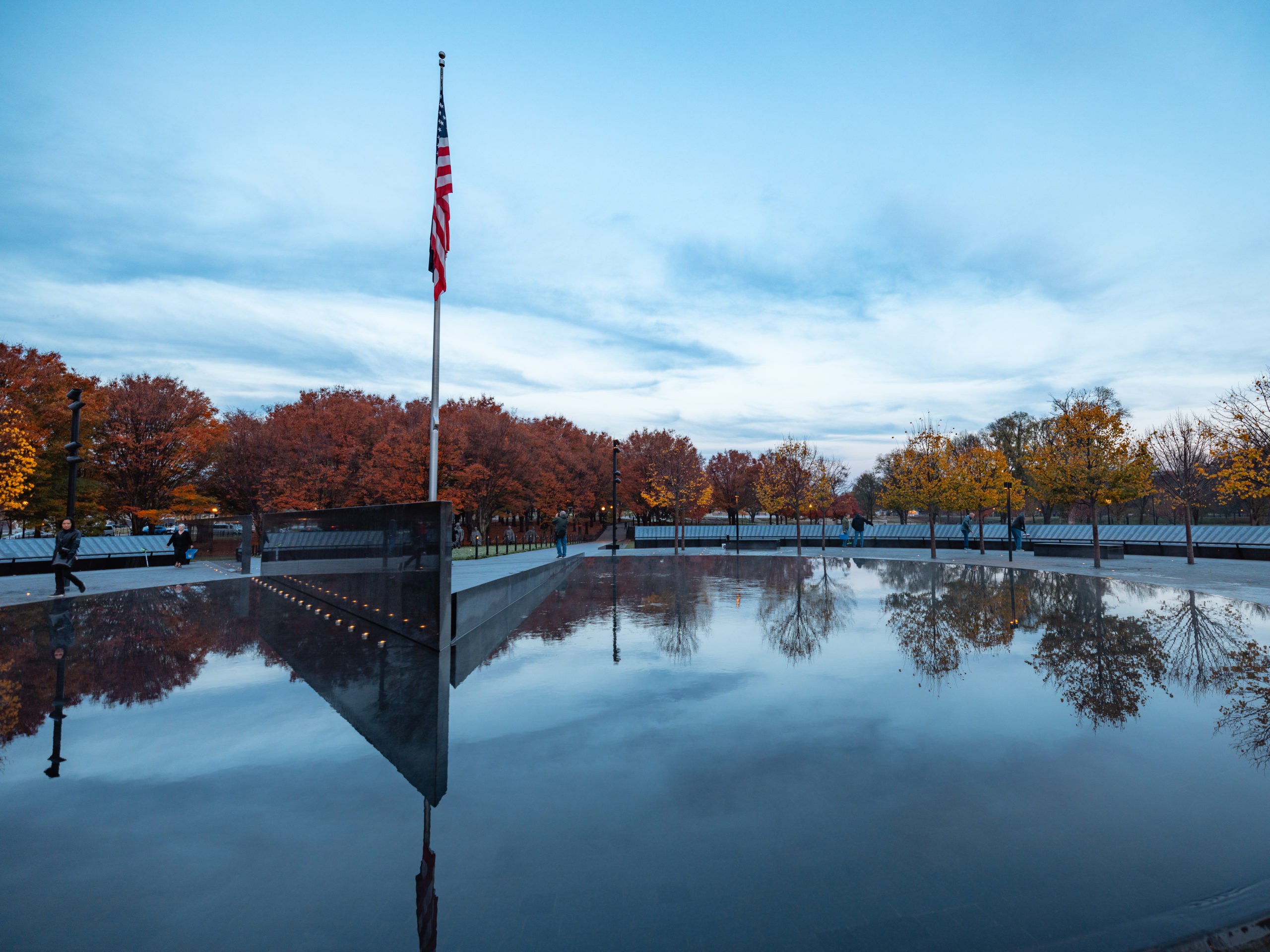
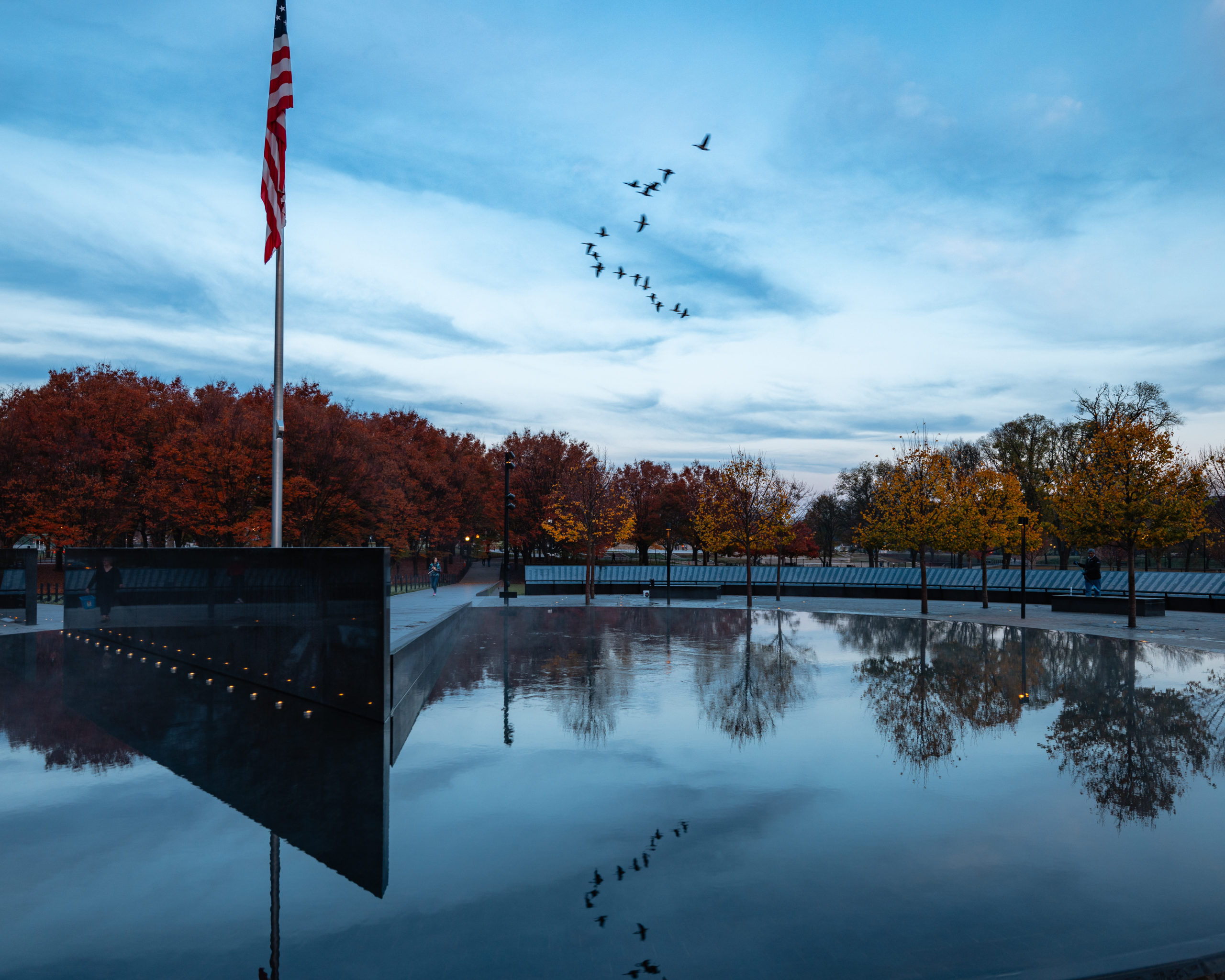
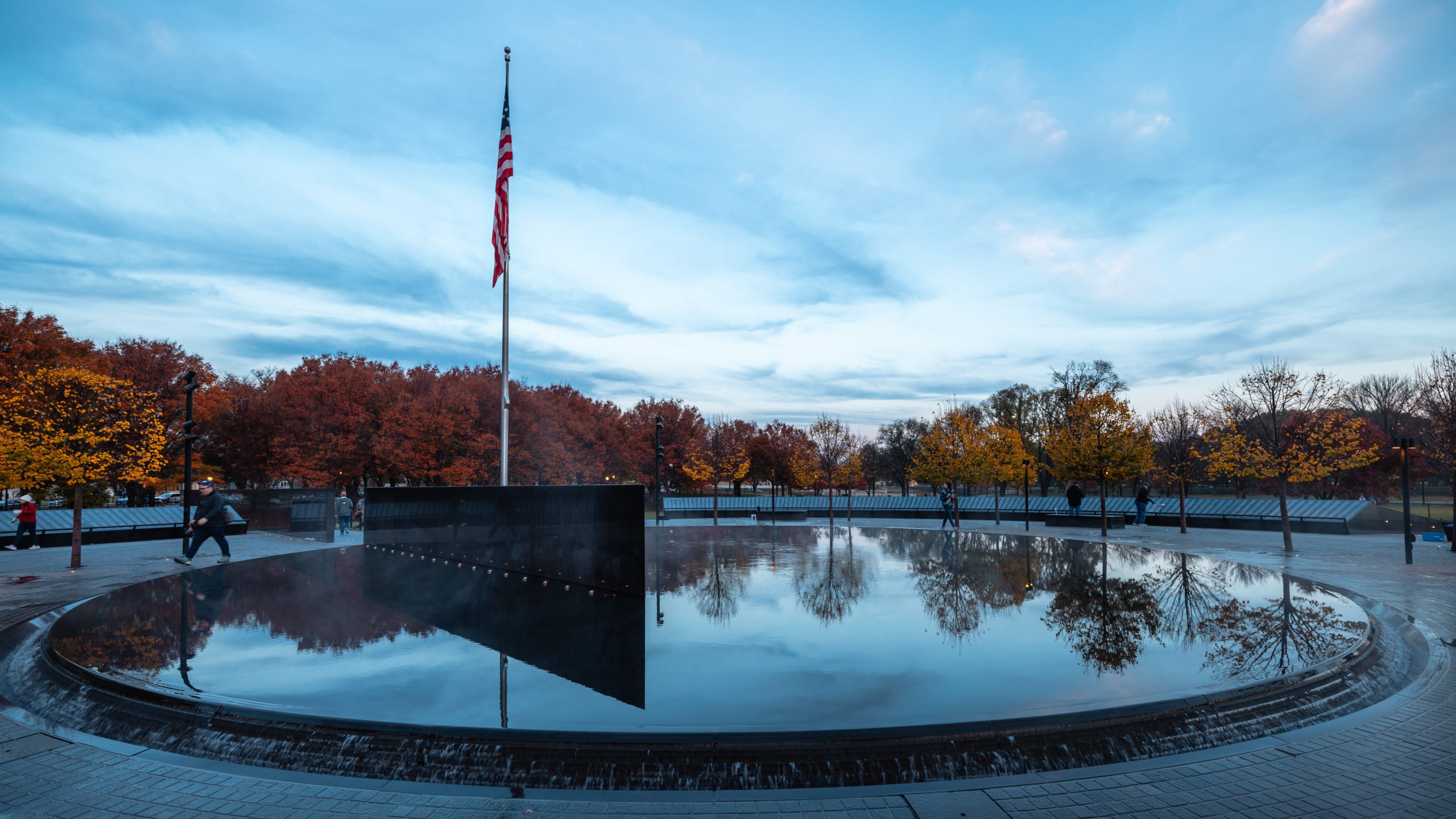
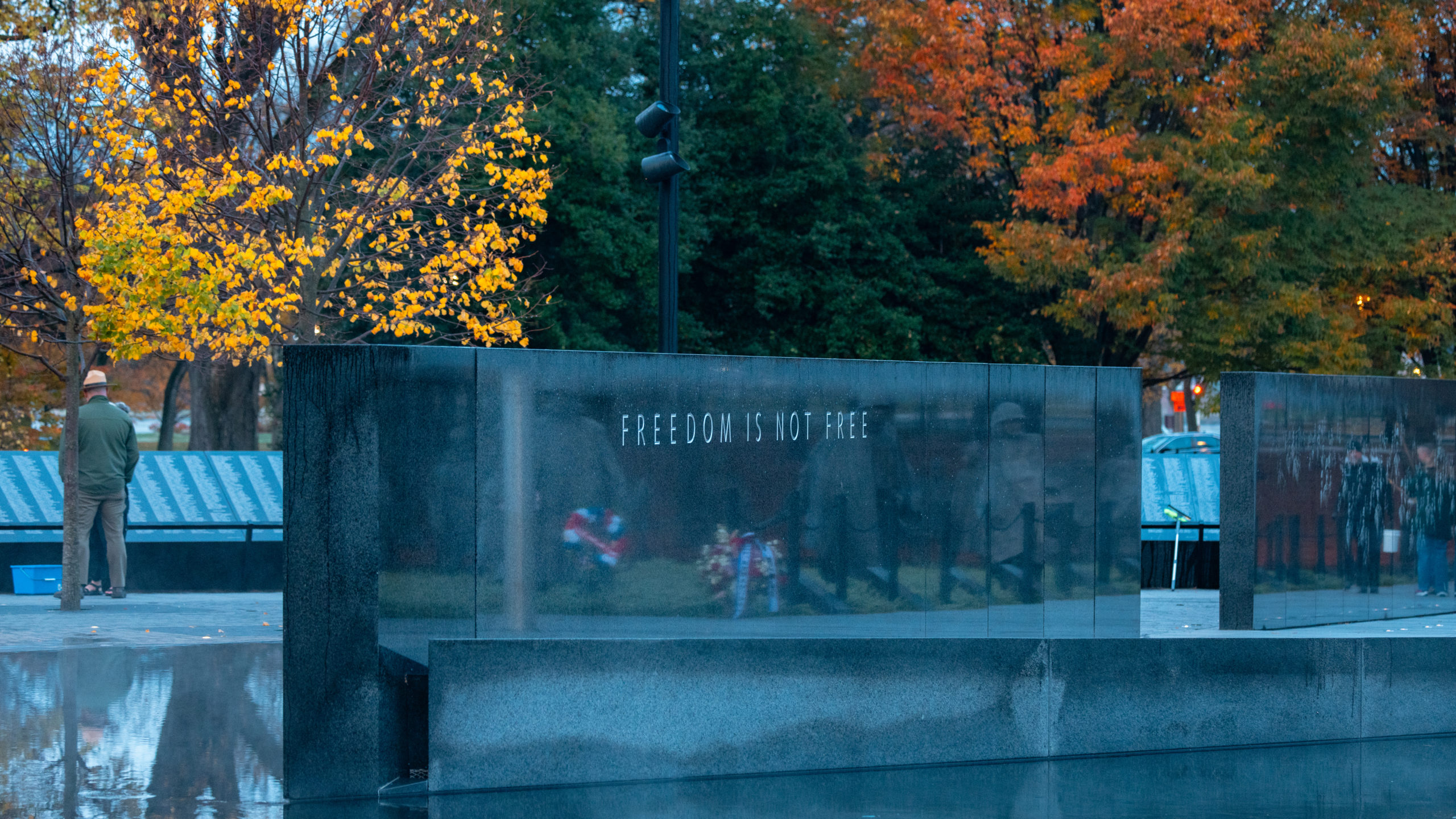
At the east end of the memorial is the Pool of Remembrance, a circular reflective basin ringed by linden trees. A nearby granite slab carries the inscription “Freedom is not free,” and a separate stone lists US and United Nations casualty totals from the war.
The official dedication inscription, carved into a granite block near the flagpole, reads: “Our nation honors her sons and daughters who answered the call to defend a country they never knew and a people they never met.” It captures the central idea of the memorial in one sentence and is often cited in service ceremonies held on the site.
The Wall of Remembrance (2022)
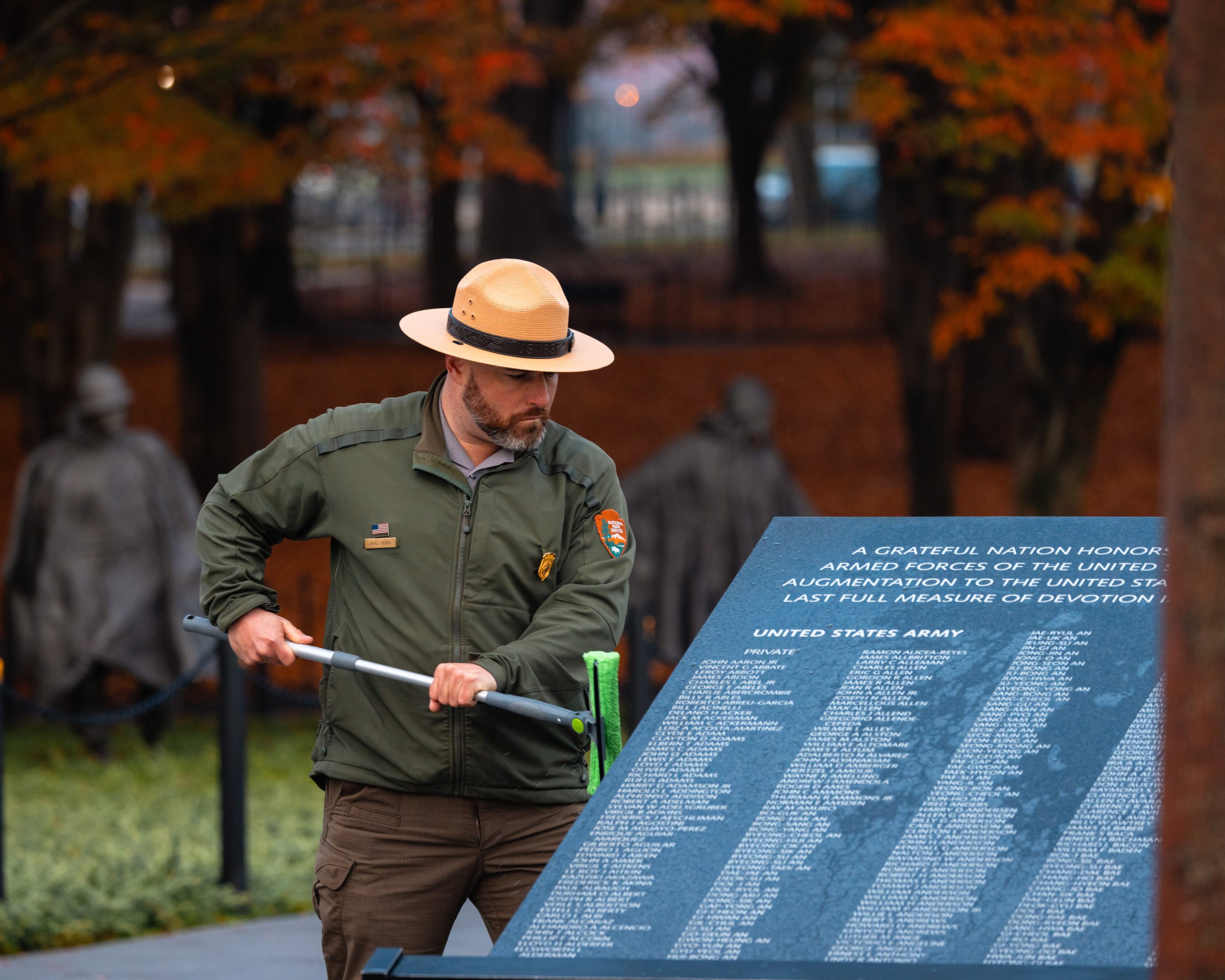
The newest feature is the Wall of Remembrance, a circular granite wall added around the Pool of Remembrance and dedicated on July 27, 2022. It is inscribed with 43,808 names: 36,634 US service members who died in the Korean War and 7,174 Korean Augmentees to the US Army (KATUSAs) who fought and died alongside them. It is the first US national memorial in Washington DC to name fallen KATUSA soldiers, and it transforms the memorial from a symbolic site into one that also functions like the Vietnam Veterans Memorial Wall a few hundred yards north.
“The Forgotten War”
The Korean War (1950–1953) is often called “The Forgotten War” because it sat between the much higher-profile conflicts of World War II and Vietnam. It started when North Korean forces crossed the 38th parallel into South Korea in June 1950, drew in the United States and a UN coalition, and ended in a 1953 armistice that left Korea divided into North and South. The demilitarized zone created by that armistice is still in place today.
The US Department of Defense lists 36,574 US combat deaths and 103,284 wounded during the war. The names on the new Wall of Remembrance round the US figure to 36,634 (the slight difference accounts for some non-combat deaths in theater). The Korean War Veterans Memorial Foundation maintains the most current source on these numbers and on the names listed.
Korean War Veterans Memorial Pictures
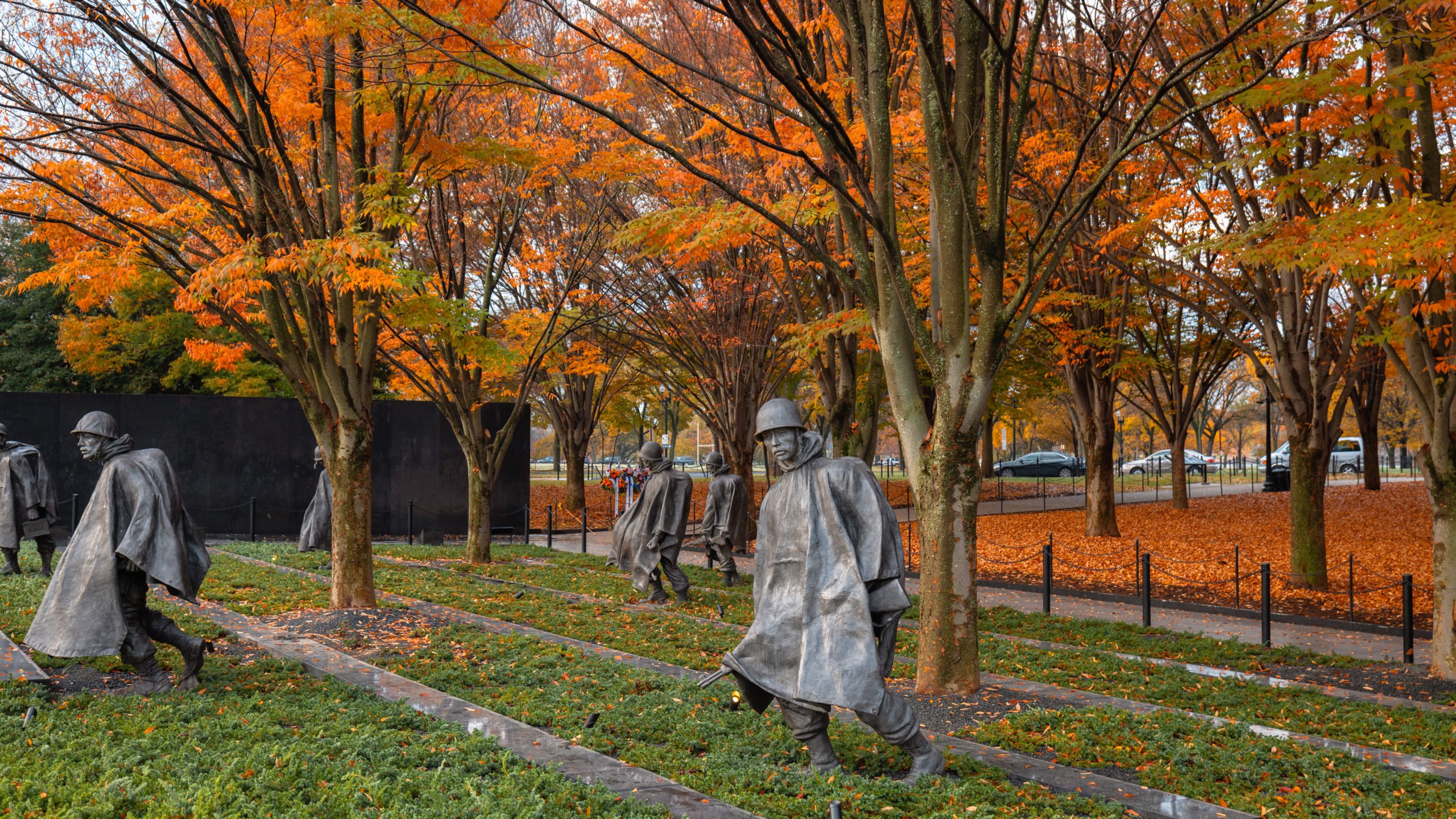
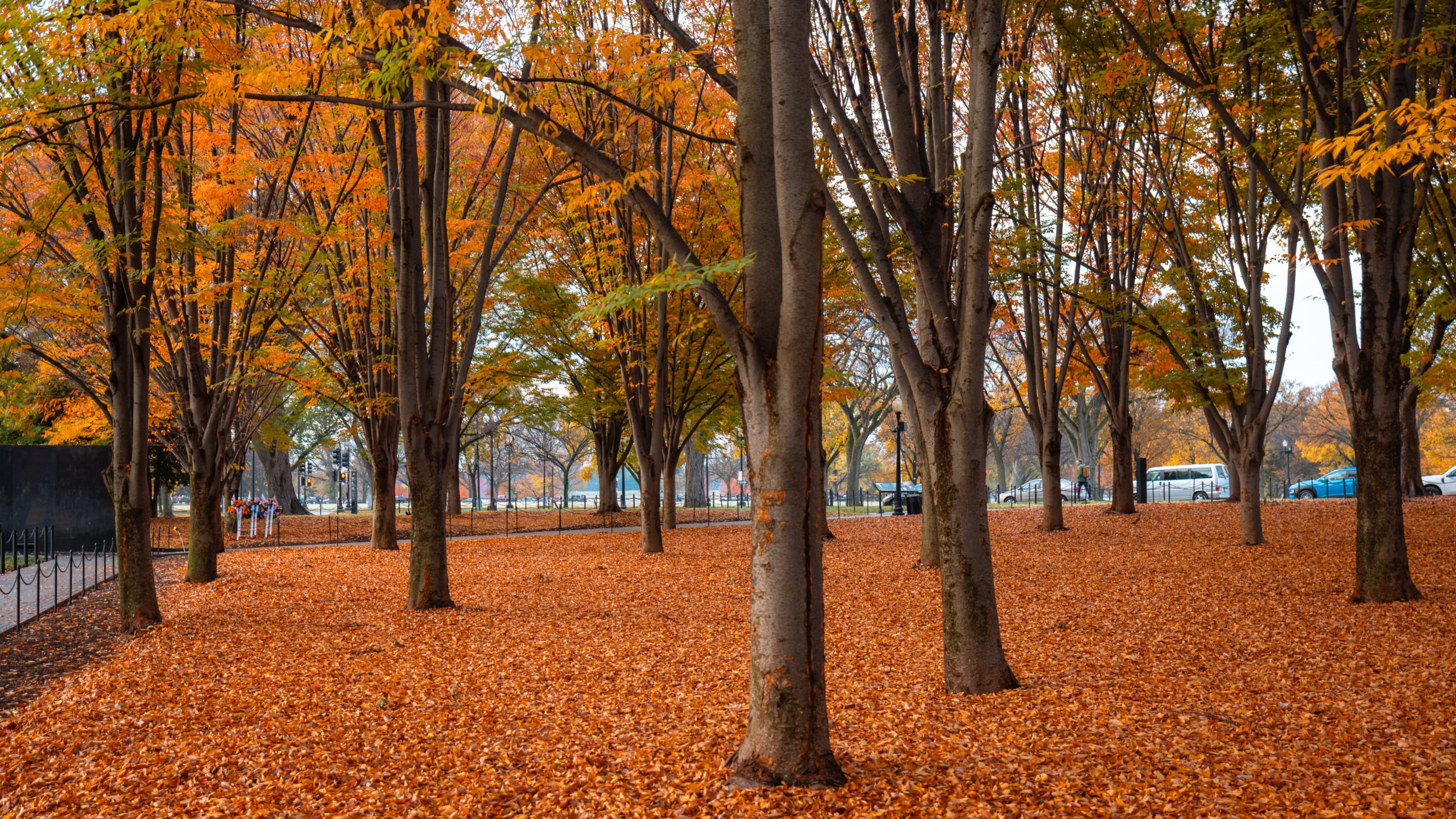
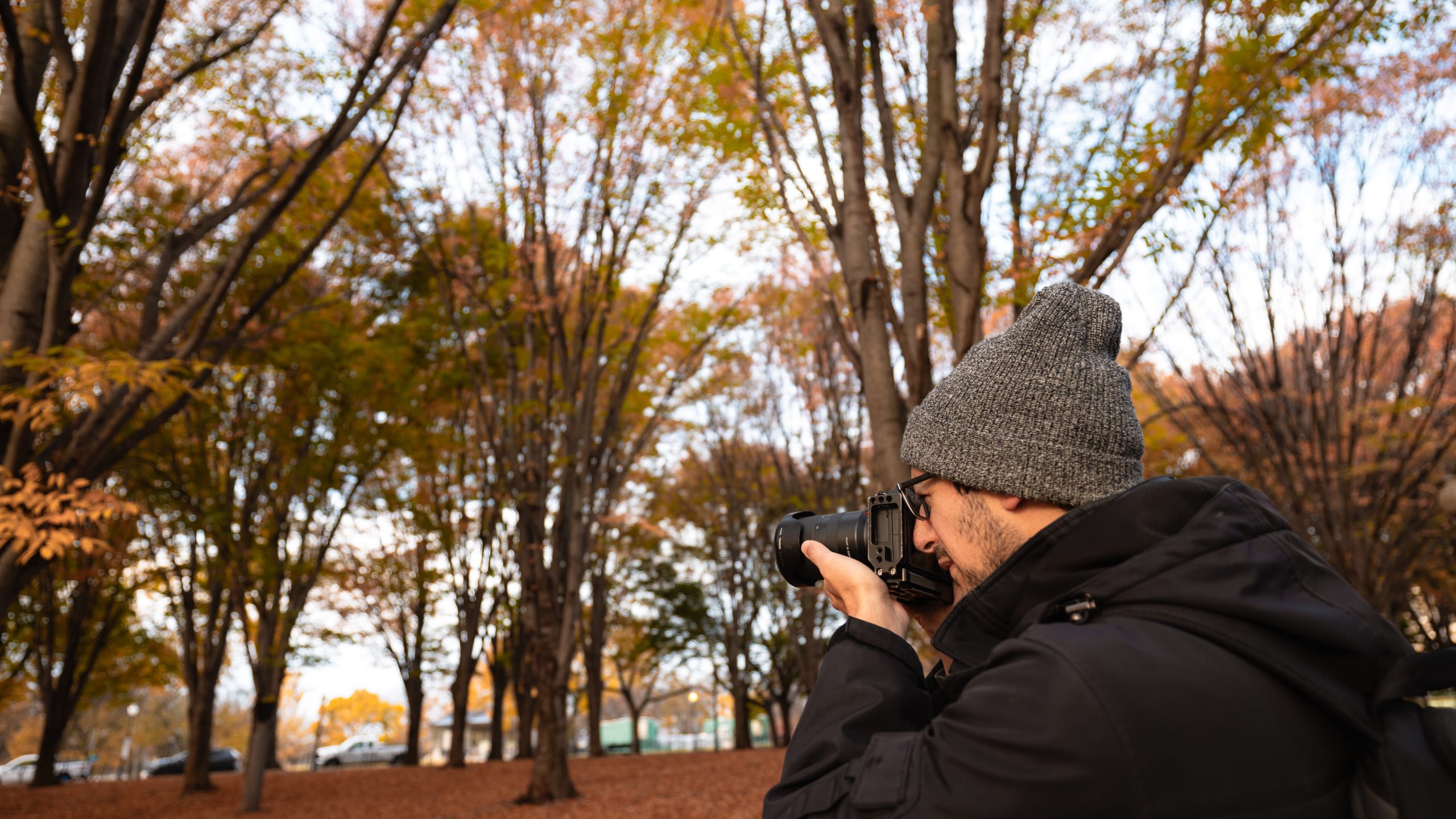
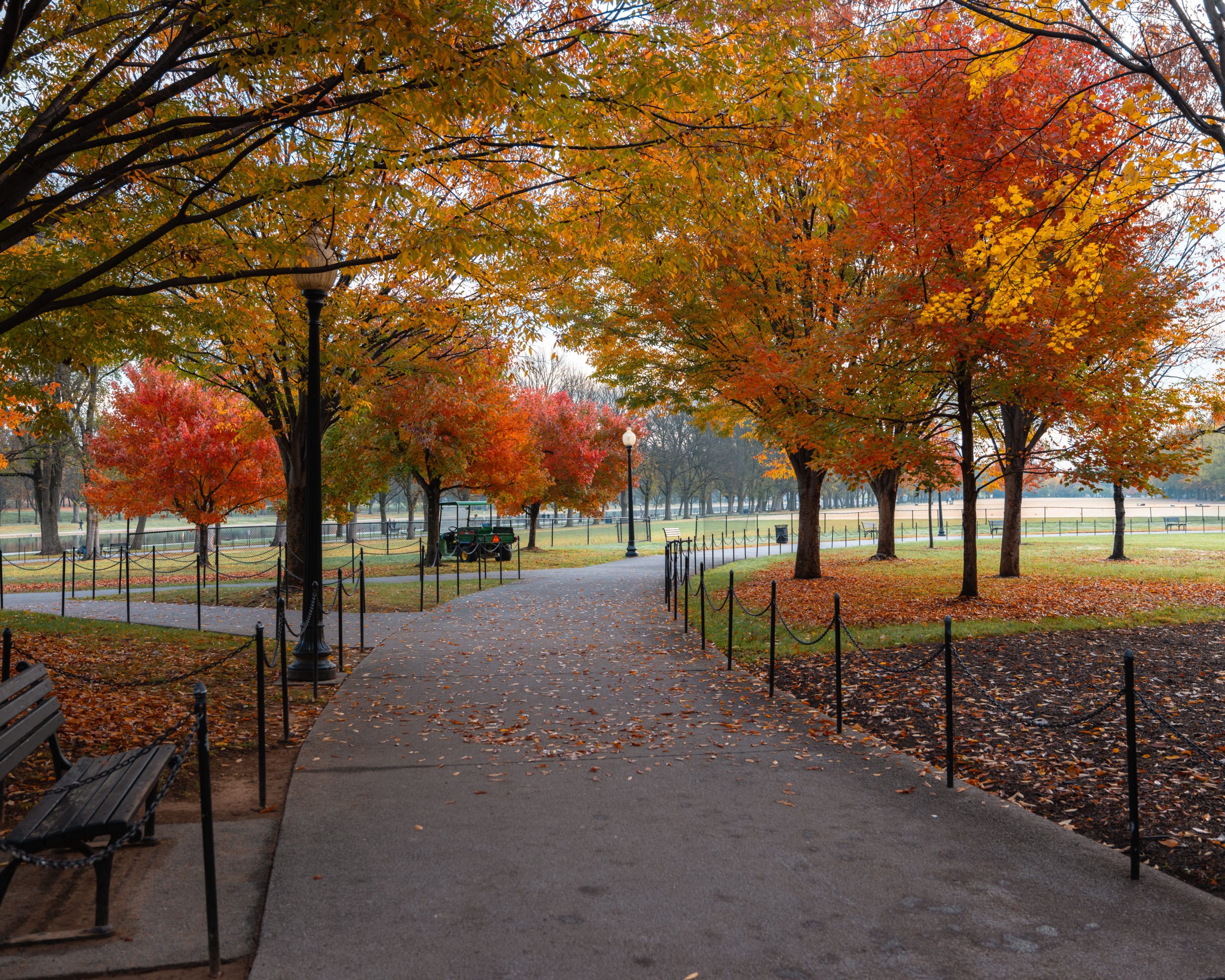
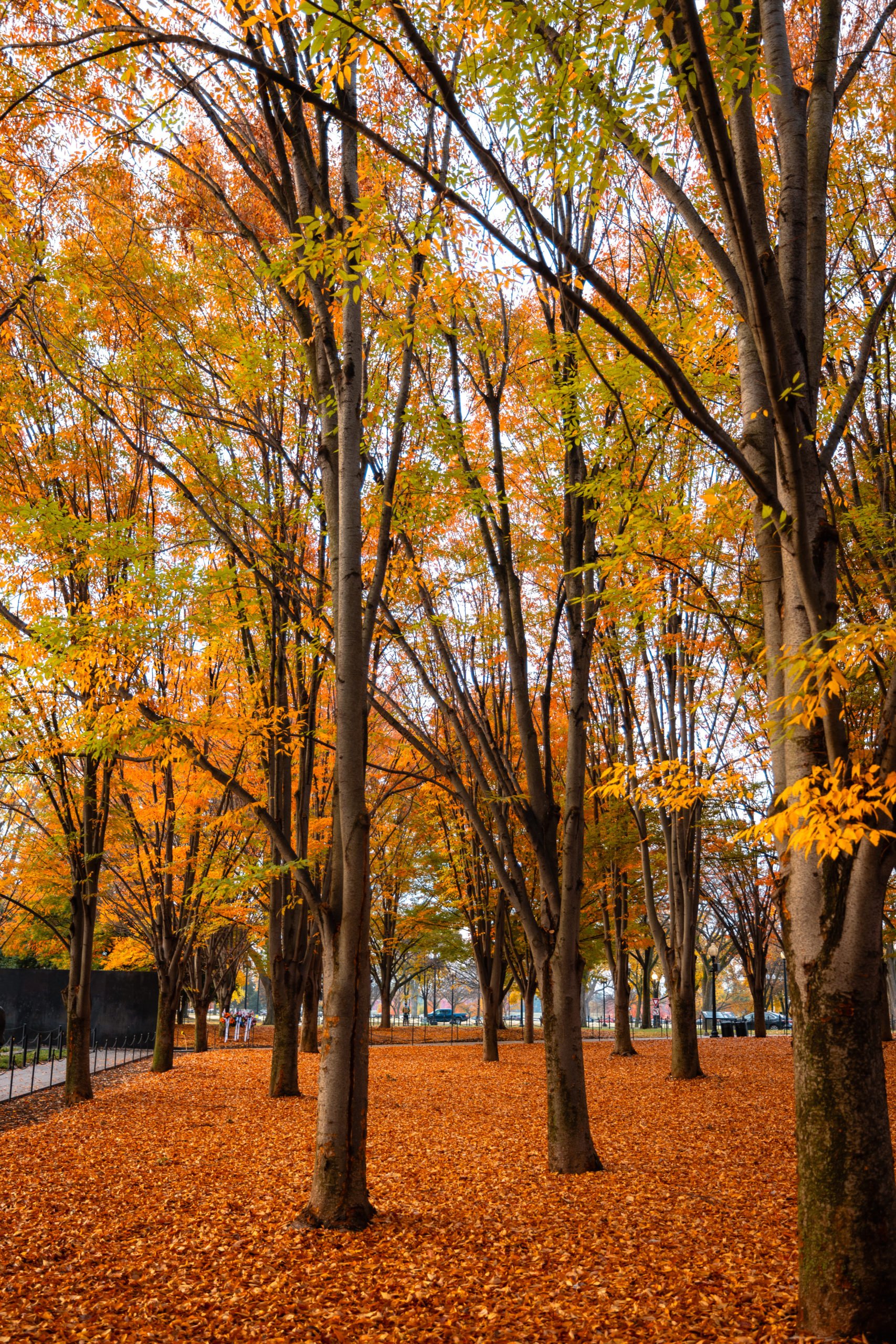
Here are pictures through the years from visiting the Korean War Veterans Memorial in Washington DC. If you are planning which camera gear to bring to the memorial, I would recommend a zoom lens, like a 24-70mm, so you can capture the statues of the soldiers, as they serve as a centerpiece to the memorial.

Korean War Veterans Memorial FAQ
Where is the Korean War Veterans Memorial?
The Korean War Veterans Memorial is on the National Mall in Washington DC, just southeast of the Lincoln Memorial near the Reflecting Pool. The nearest Metro stops are Foggy Bottom (about 0.9 miles away) and Smithsonian (about 1.2 miles).
When was the Korean War Veterans Memorial built?
The original memorial was dedicated on July 27, 1995, the 42nd anniversary of the 1953 armistice. The Wall of Remembrance was added and dedicated on July 27, 2022, the 69th anniversary of the armistice.
How many statues are at the Korean War Memorial?
19 stainless steel statues, each about seven feet tall, designed by sculptor Frank Gaylord. They depict a patrol on the move through rough terrain, representing all four branches that served in Korea (14 Army, 3 Marine, 1 Navy, 1 Air Force) and an ethnic cross-section of US service members.
Are there names on the Korean War Veterans Memorial?
Yes, on the Wall of Remembrance added in 2022. It is inscribed with 43,808 names: 36,634 US service members and 7,174 KATUSA (Korean Augmentees to the US Army) soldiers who died in the war. The original 1995 memorial did not include names; the Wall of Remembrance was a decades-long effort to add them.
Is the Korean War Memorial free to visit?
Yes. There is no admission fee, no ticket requirement, and the grounds are open 24 hours a day, year-round. Public restrooms are not on-site; the closest are under the Lincoln Memorial.
Who designed the Korean War Veterans Memorial?
The 19 statues were sculpted by Frank Gaylord (Barre, Vermont). The Mural Wall (the 164-foot polished black granite wall on the south side with the photo-etched images) was designed by Louis Nelson (New York). The original site plan came from a team at Cooper-Lecky Architects.
What does “Freedom is not free” refer to?
“Freedom is not free” is inscribed on a granite slab near the Pool of Remembrance and has become the unofficial motto of the memorial. The line refers to the cost in lives of preserving freedom abroad, and it appears in a separate stone listing the US and United Nations casualty totals from the war.
The Korean War Veterans Memorial is one of the easier stops to add to a National Mall walk. Its proximity to the Lincoln Memorial makes it a natural pairing, and the 2022 Wall of Remembrance makes it worth a second visit even if you’ve been before.