
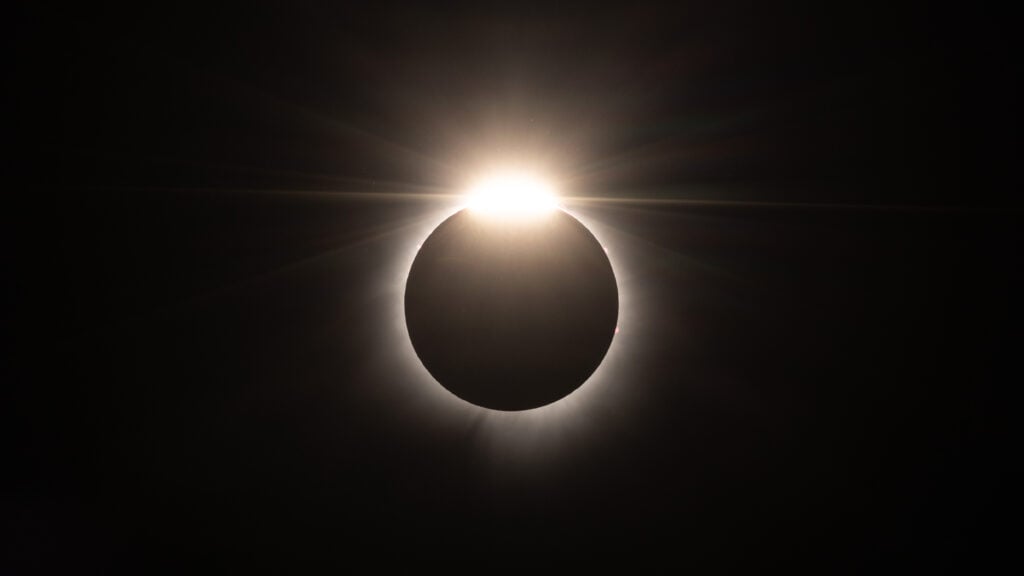
Photographing a total solar eclipse is a special experience. On April 8, 2024, my friend Kevin and I set out to capture the eclipse from Perryville Regional Airport in Missouri. This was my second time seeing a total solar eclipse, and it was even better than I expected.
Previously I had been in North Carolina and only saw a sliver of the sky from the woods. For this experience since it was at an airfield in a flat area I could see 360 degrees of sunset when the total eclipse started. The sky turned dark, the temperature dropped, and for a few brief moments, time seemed to stop.
In this post, I’ll share our journey, give important photography tips/gear, and capture the magic of this incredible event.
Table of contents
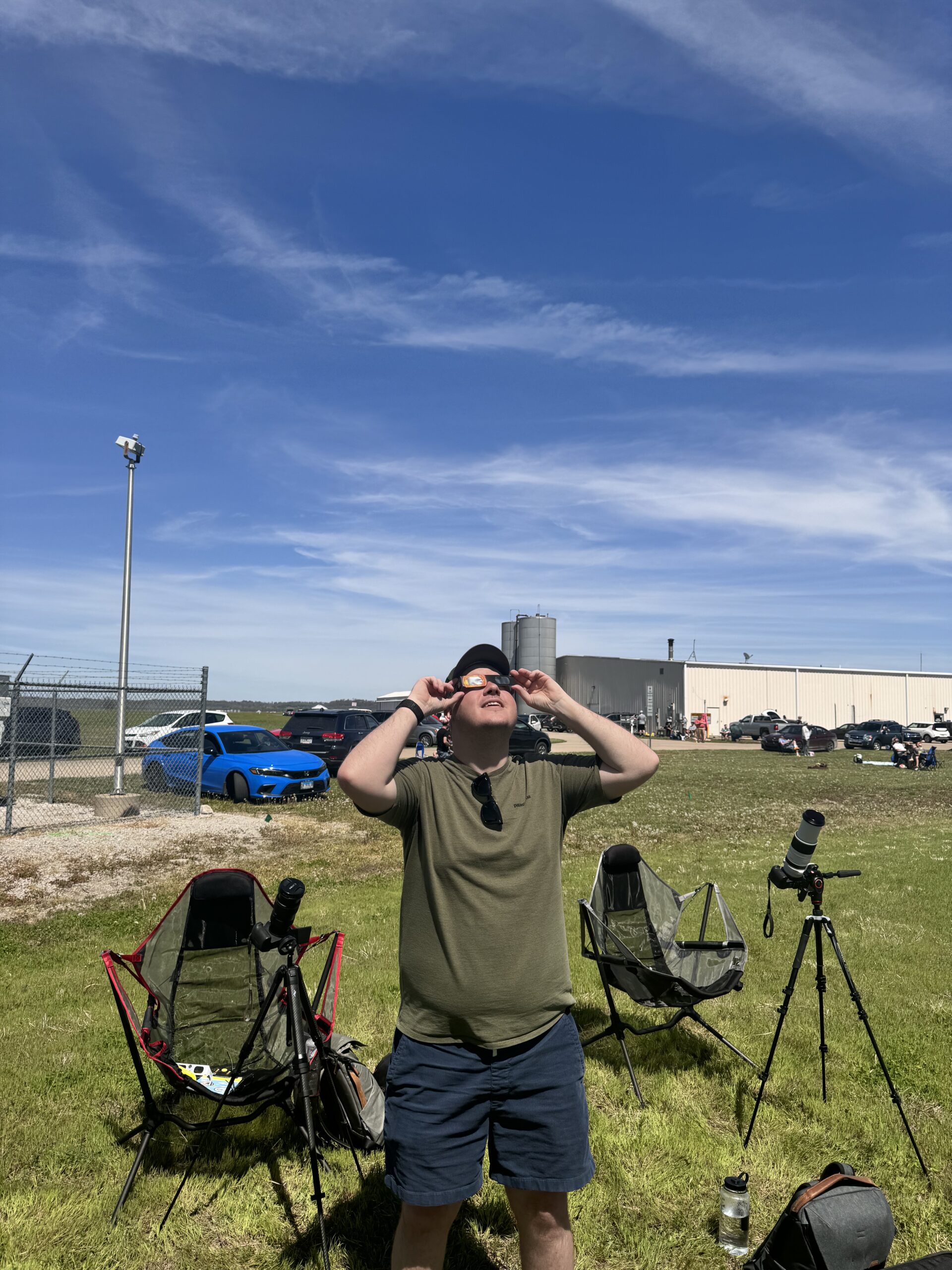
For this eclipse I was equipped with eclipse glasses from B&H Photo. If you are planning to see an eclipse make sure to get ISO 12312-2 Compliant glasses from a trusted merchant. During this eclipse I noticed many sellers later recalled their product, staring at the sun can of course damage your vision.
Eclipse glasses are essential to viewing the eclipse, before and after totality. During totality you can remove them and enjoy the view with your naked eyes.

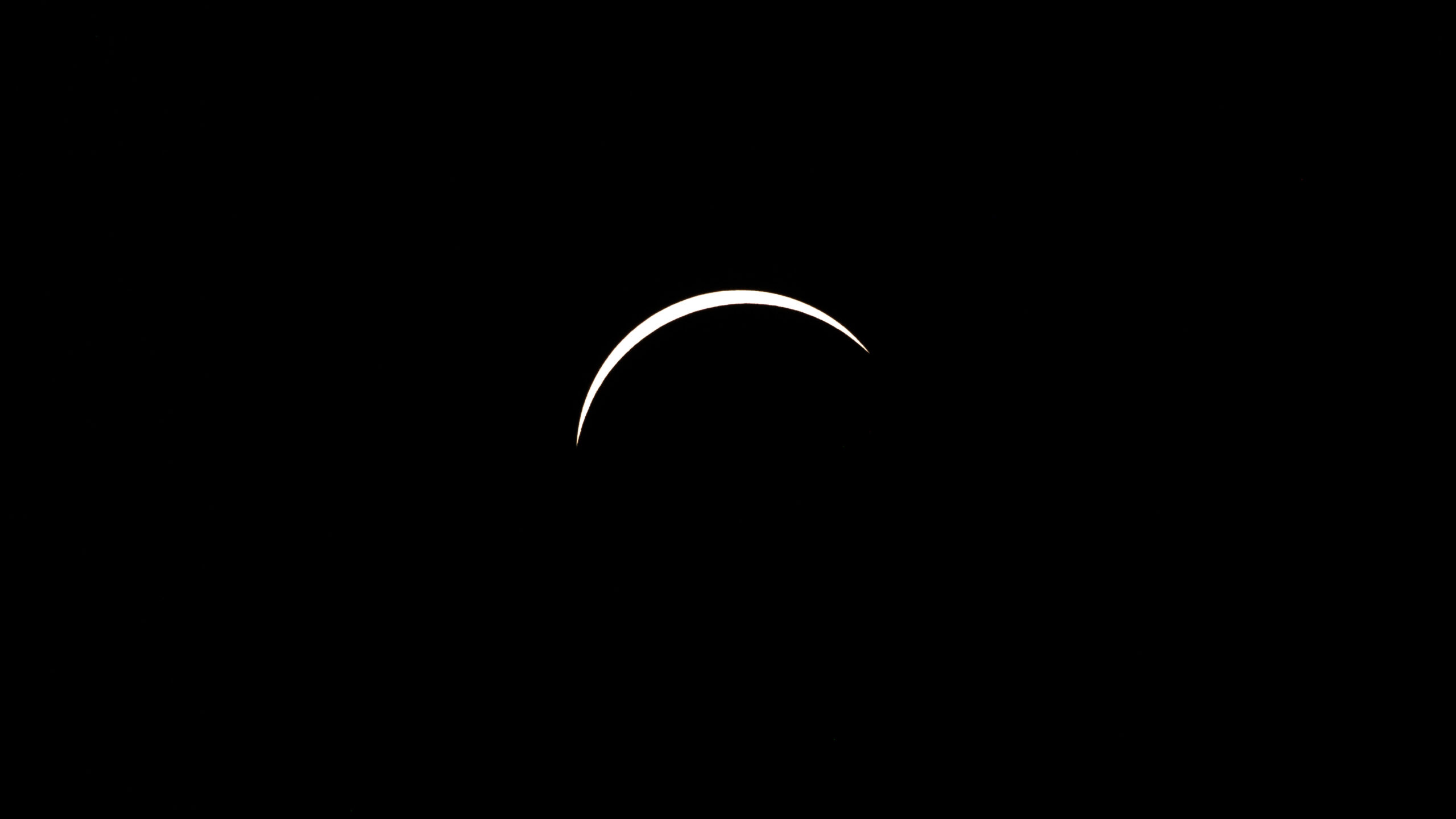
It is quite amazing to see the moon obscure the sun, even when the eclipse is just starting.
After about an hour from the start of the eclipse we got to experience totality. This is when planning becomes essential, because where you watch from affects how long totality lasts and whether you see it at all.
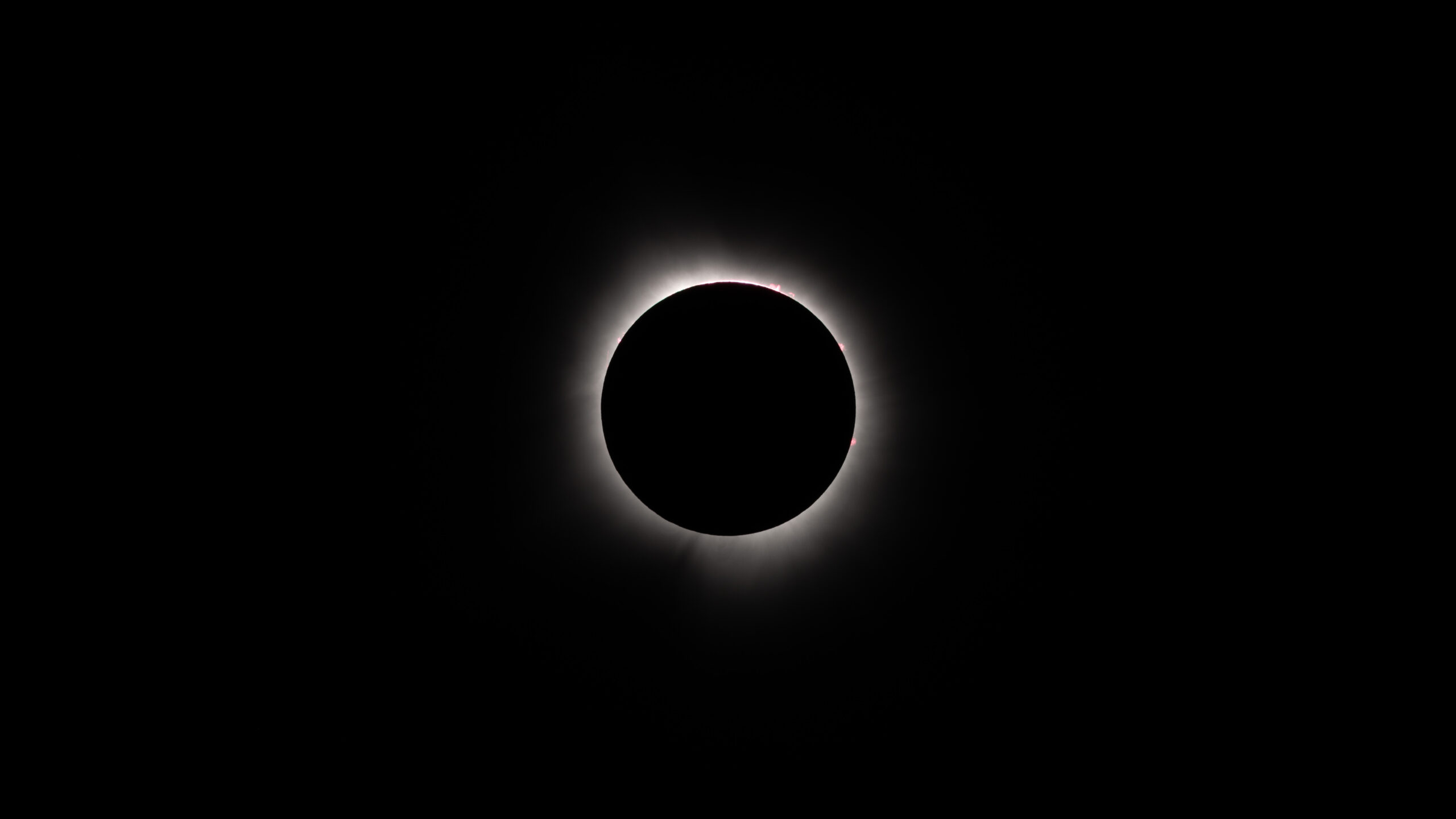
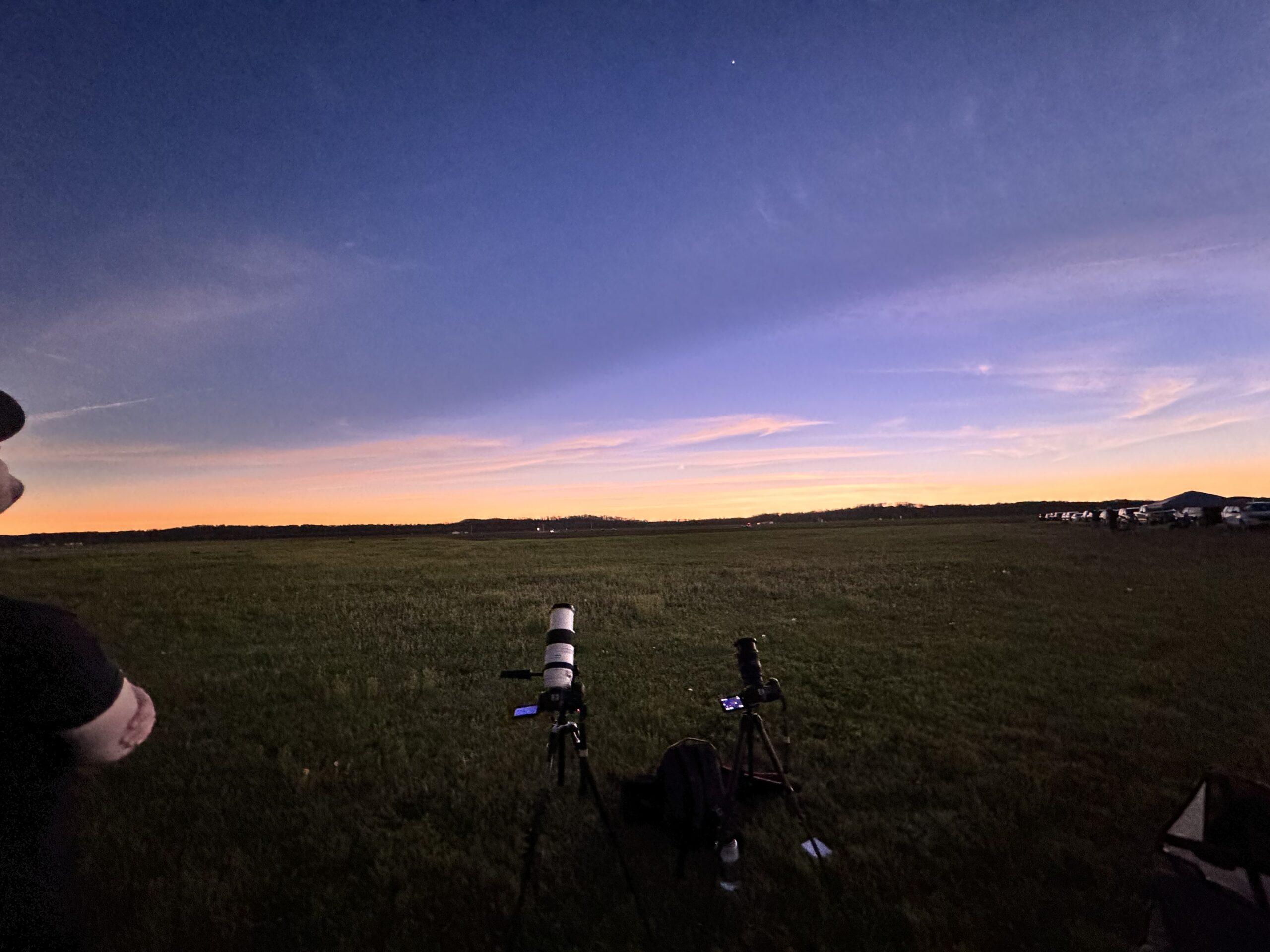
It is such an incredible feeling, you can just feel the energy in the air around you. During totality you can take off your eclipse glasses and view the moon covering the sun with your naked eye. I loved the 360 degree sunset surrounding us as I could hear insects and see street lights turning on. It’s quite the challenge to juggle cameras and experiencing it for yourself in the brief 4 minutes of totality.
Eclipse Safety and Solar Filters
Two different pieces of glass matter here, and people mix them up constantly:
- Eclipse glasses protect your eyes. They need to be ISO 12312-2 compliant and bought from a reputable seller. A lot of sellers had products recalled around the 2024 eclipse, so this is worth being picky about.
- A solar filter protects your camera. It goes on the front of your lens. Pointing an unfiltered telephoto at the sun concentrates enough heat to destroy your shutter or sensor, and it can damage your eye instantly if you are looking through an optical viewfinder.
The only time either comes off is during totality, and only if you are actually inside the path of totality. The moment the first sliver of sun returns, the filter goes back on and the glasses go back on. During a partial eclipse, they never come off at all.
Gear for Eclipse Photography
- Camera (preferably high resolution to capture as much detail as possible.)
- Lens (preferably around 200-300mm), extreme telephoto lenses are great for capture close up details of the sun but your frame will be plenty full at 300mm.
- Tripod (not required but makes the process a lot easier, especially when heavily zoomed in.)
- Solar Filter for your lens. Pointing an unfiltered camera at the sun concentrates enough heat to damage your shutter or sensor, so this is not optional. Keep in mind you’ll take this off during totality.
Camera Settings for a Solar Eclipse
An eclipse is really two different shoots with completely different settings, and the switch between them happens in a couple of seconds.
Partial phases (solar filter on)
- Shoot in manual mode so the camera cannot second-guess you.
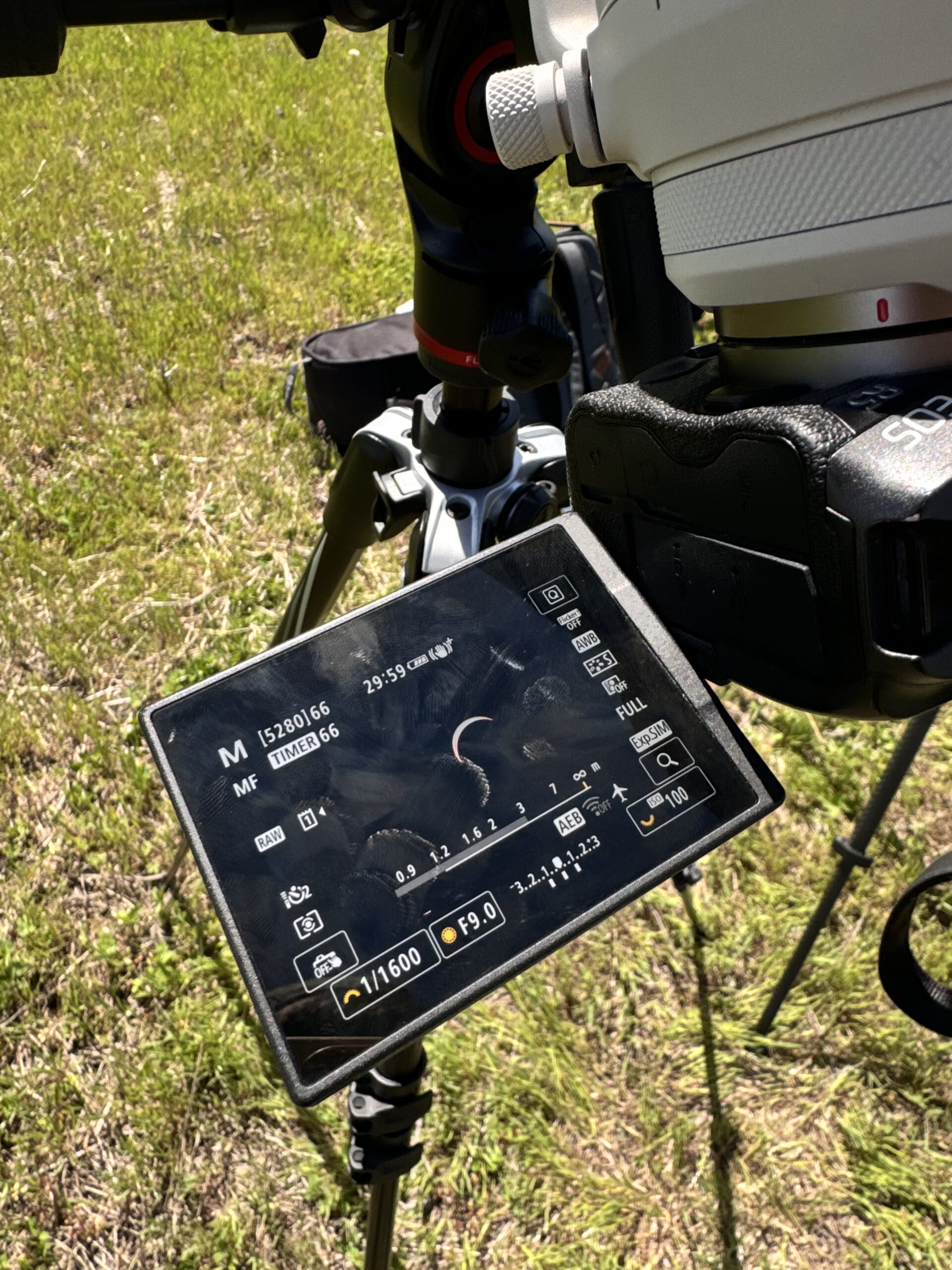
- ISO 100 and around f/8 is a good starting point.
- Start near 1/125 to 1/500 and adjust from there. The right shutter depends a lot on how dense your solar filter is, so take a test frame well before the eclipse starts and check the back of the screen.
- Focus manually on the edge of the sun, then leave it alone. Autofocus struggles on a filtered sun, and this is exactly where I slipped up.
Totality (filter off)
- Pull the filter the moment totality starts, then put it back the instant the sun reappears.
- The corona has a huge dynamic range, so bracket widely. Anywhere from about 1/1000 to a full second will each capture something different, from the bright inner corona to the faint outer streamers.
- Keep the aperture where it was and let shutter speed do the work.
Set your focus and framing before the eclipse begins and try not to touch either once it starts. Totality is short, and fiddling with the camera is the fastest way to miss it.
Photos of the 2024 Eclipse
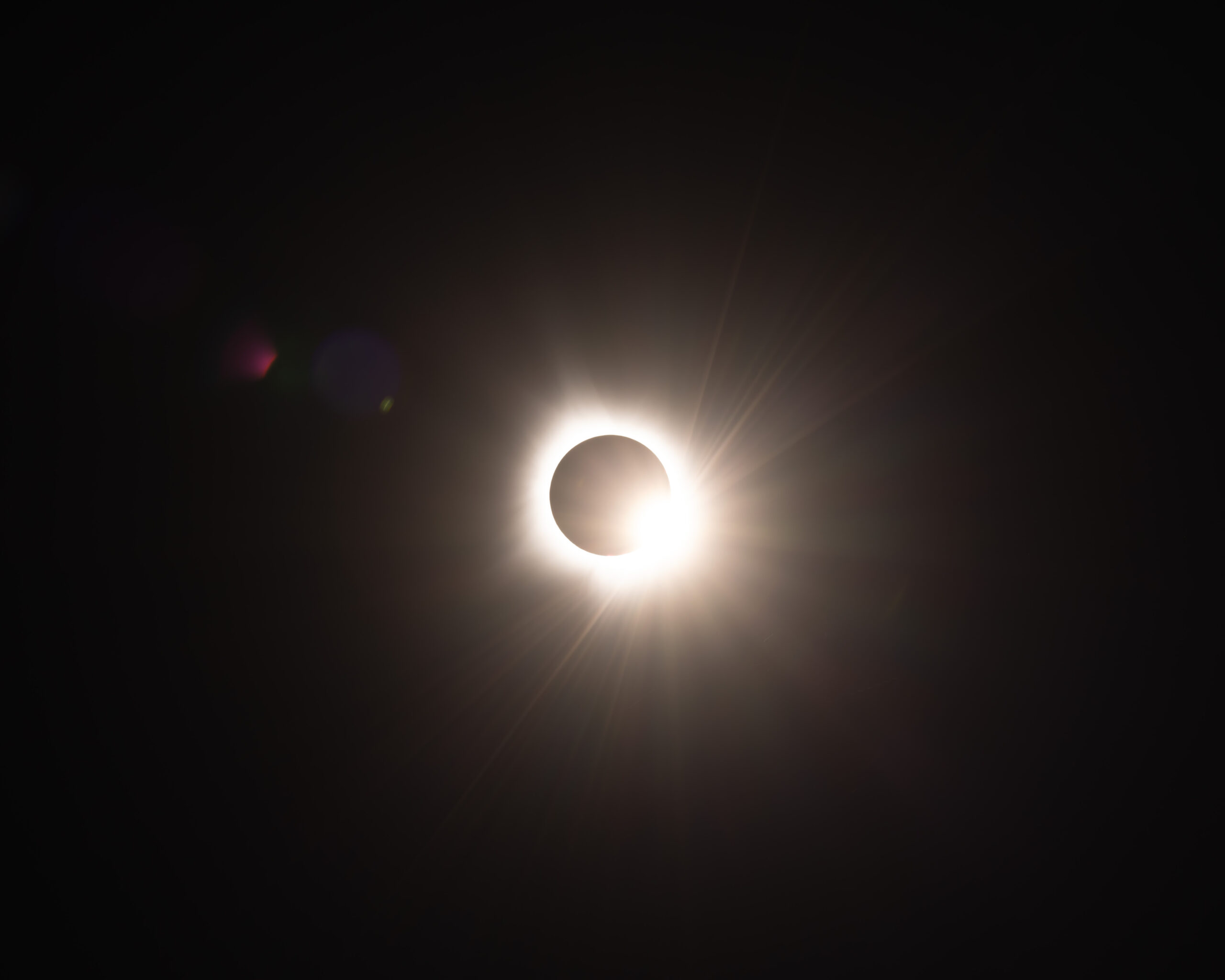
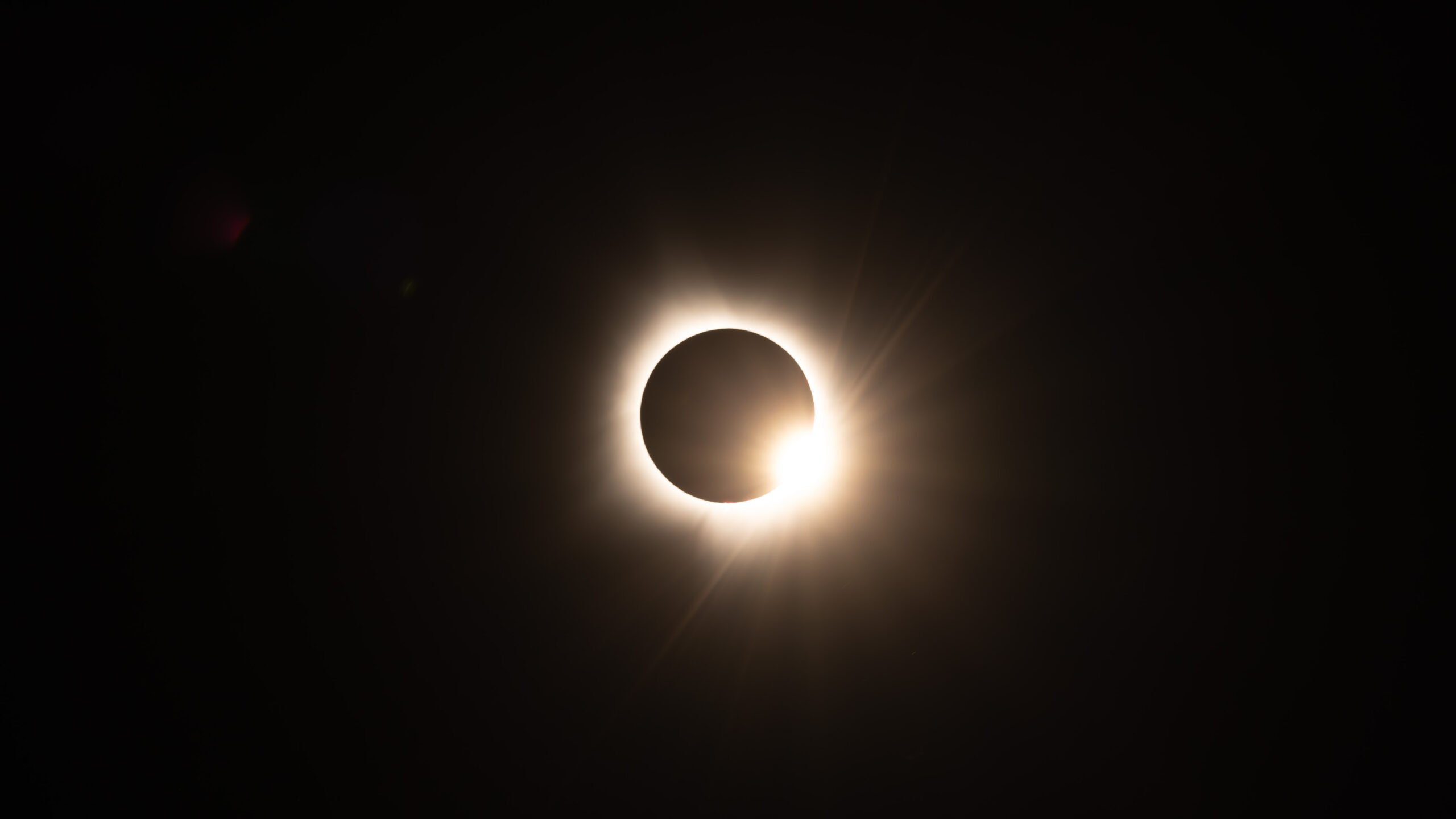
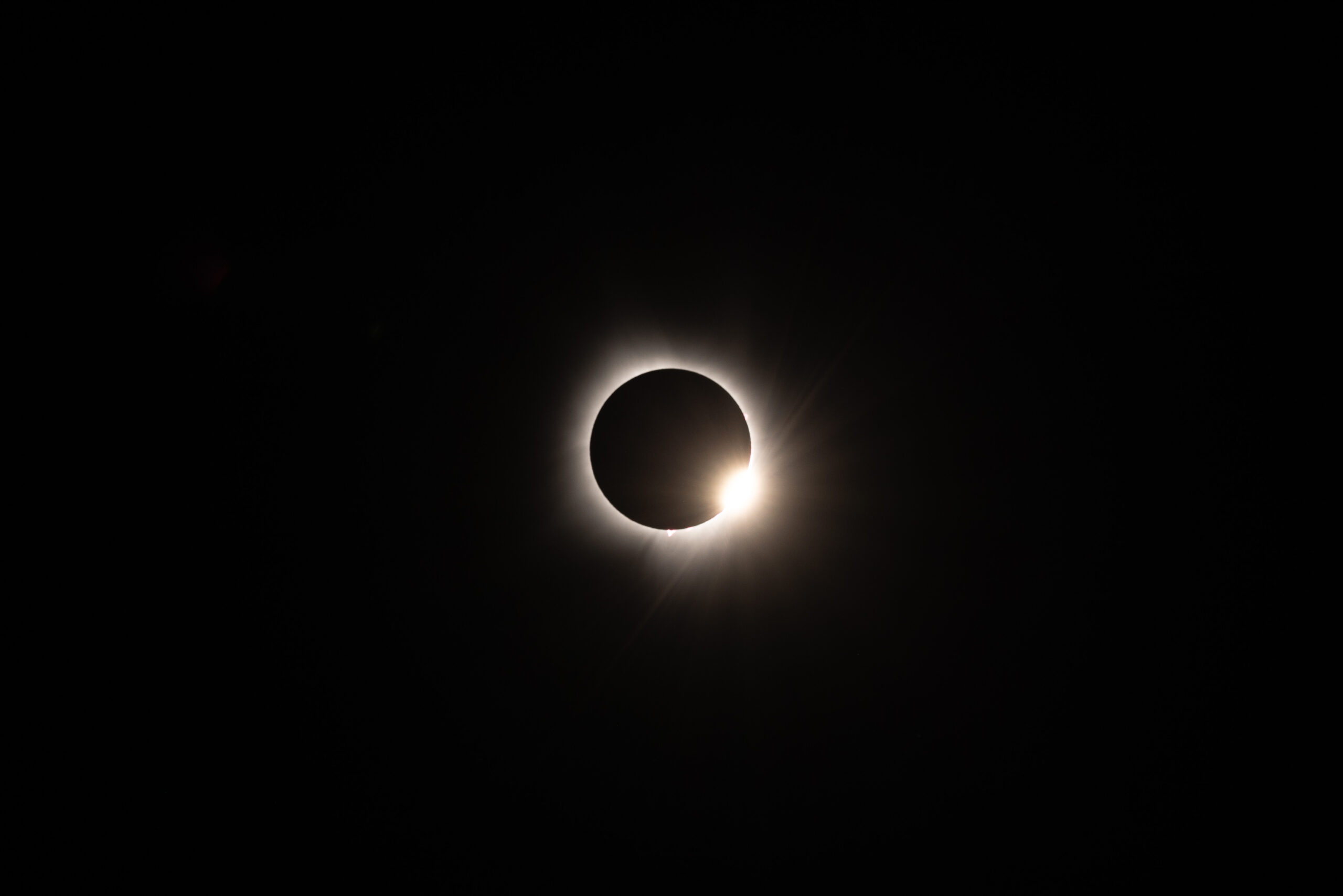
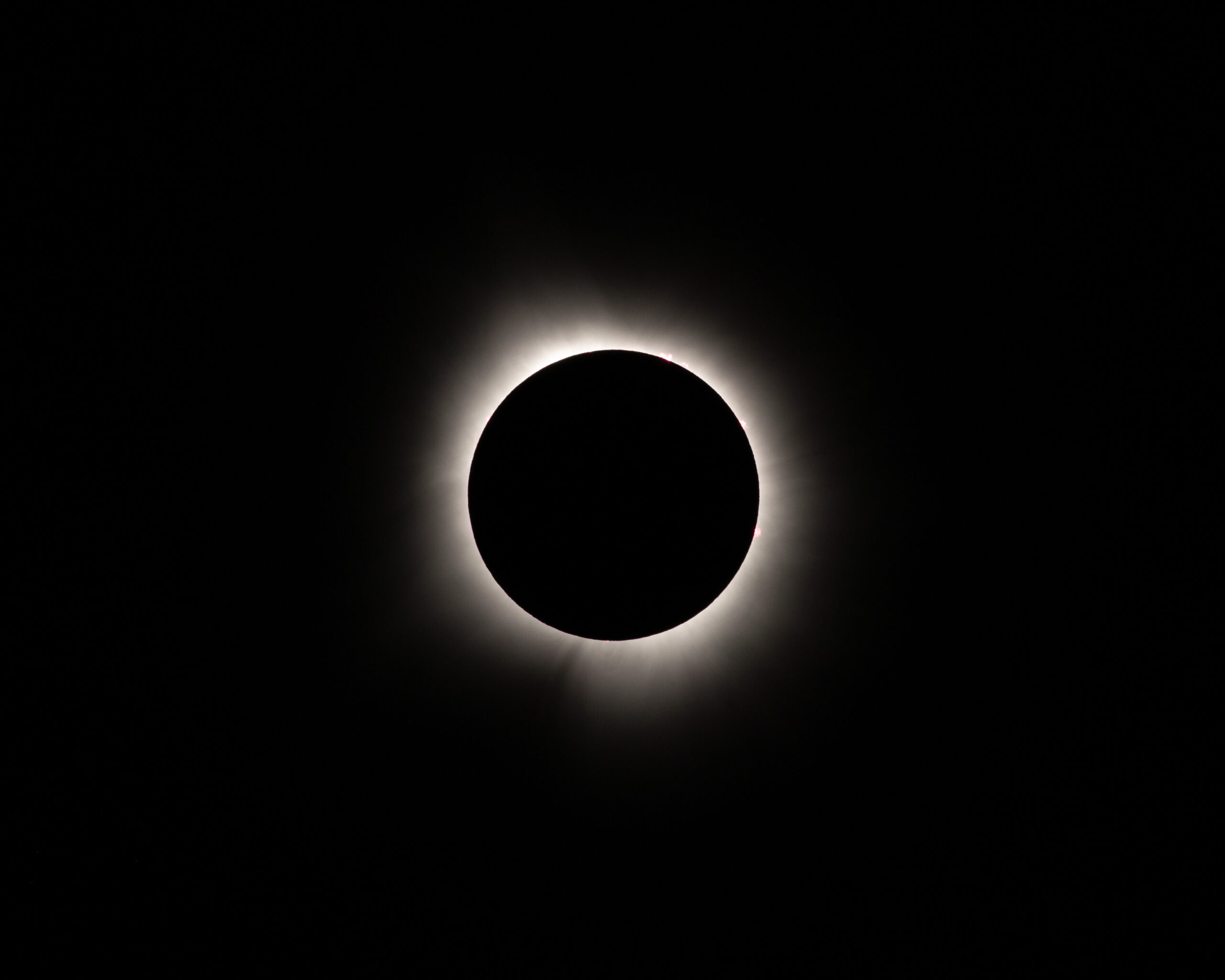
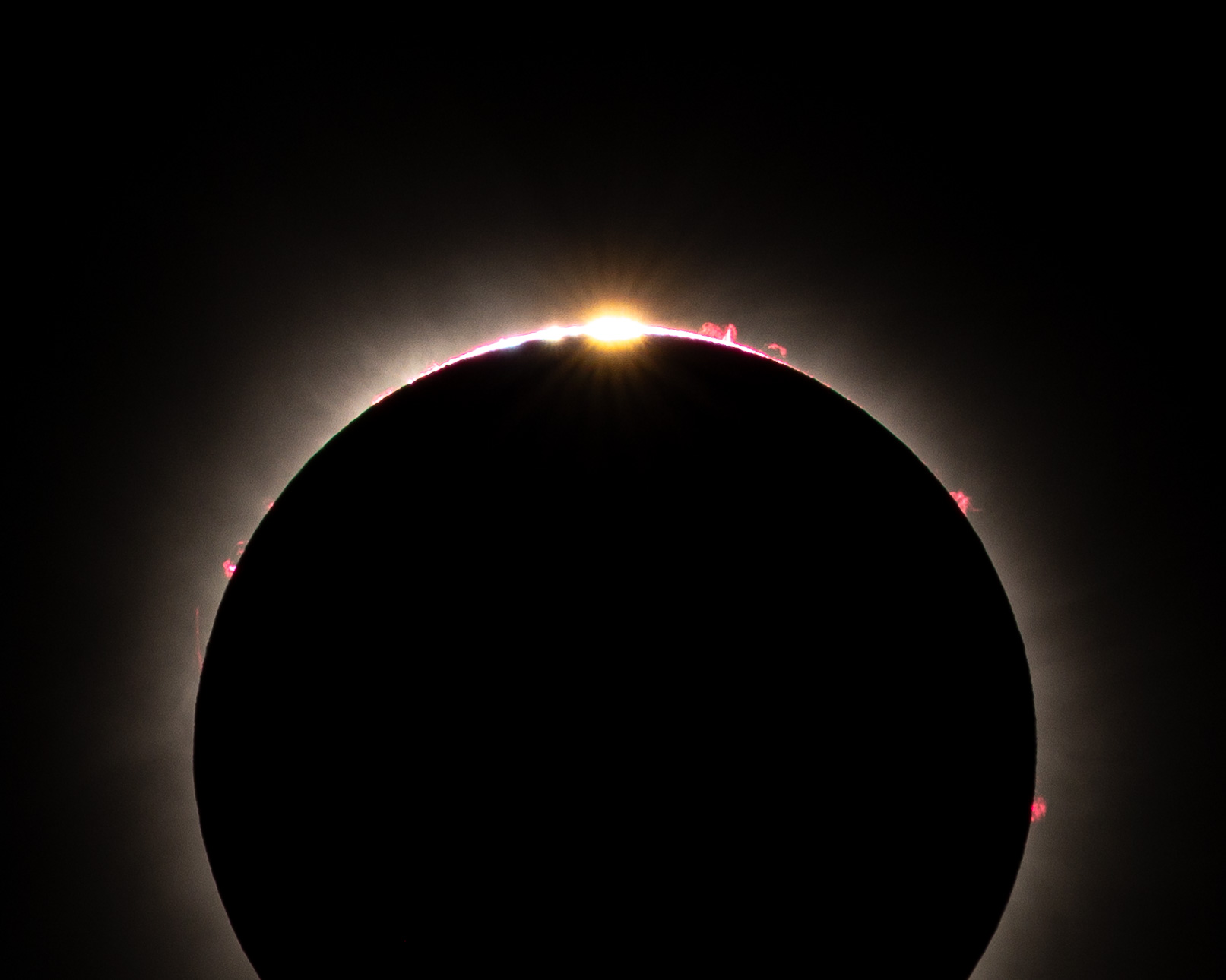
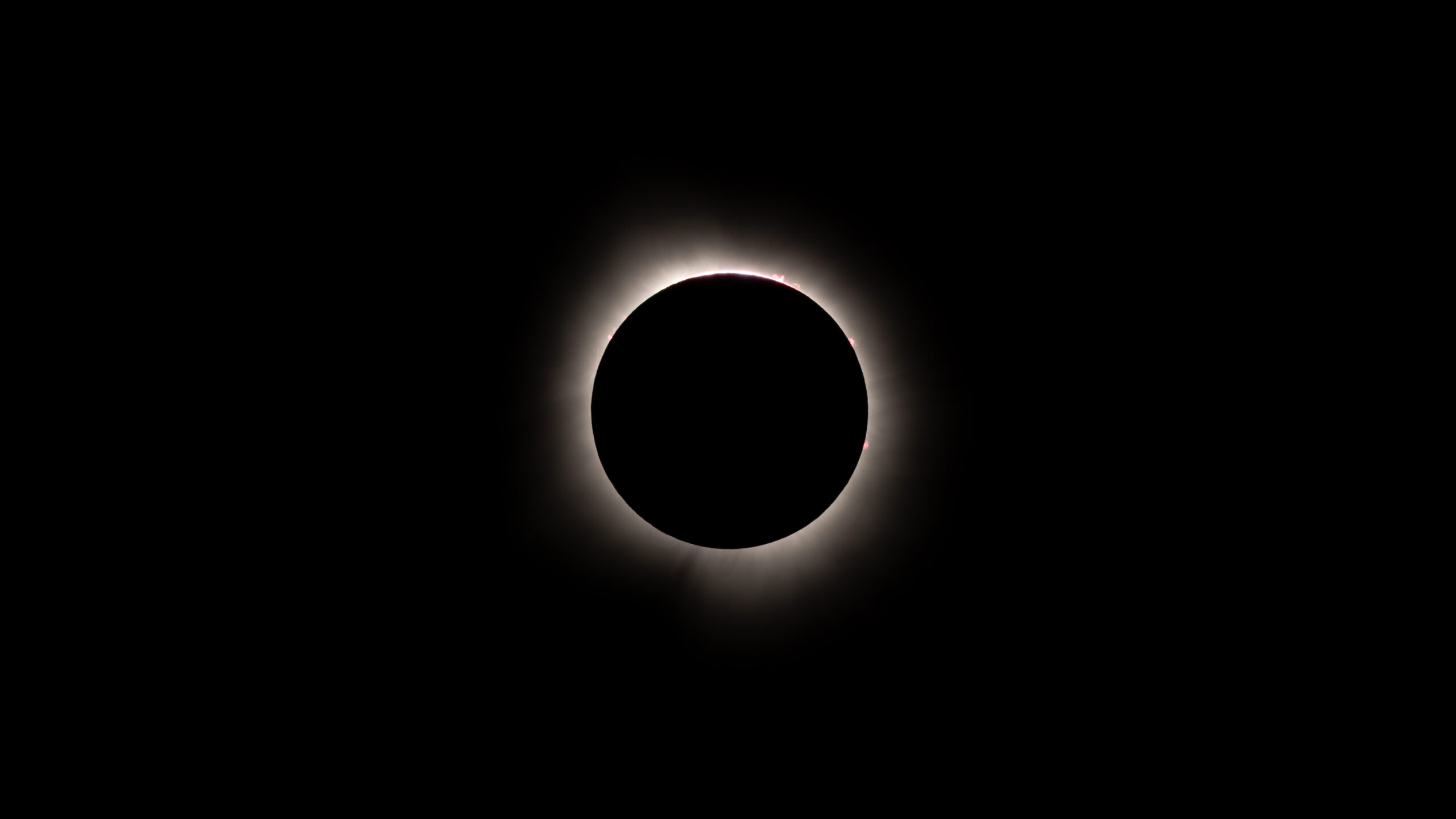
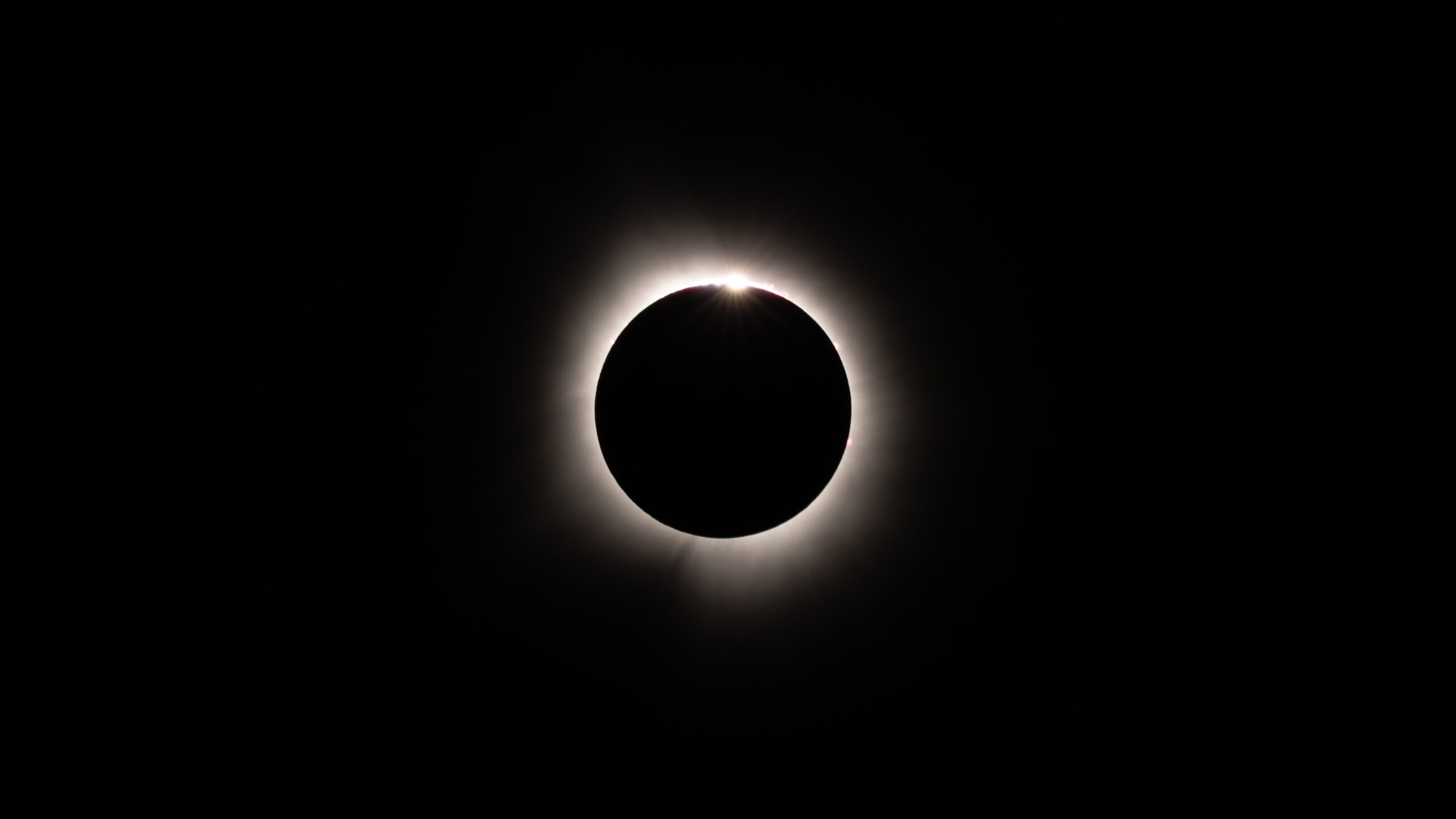
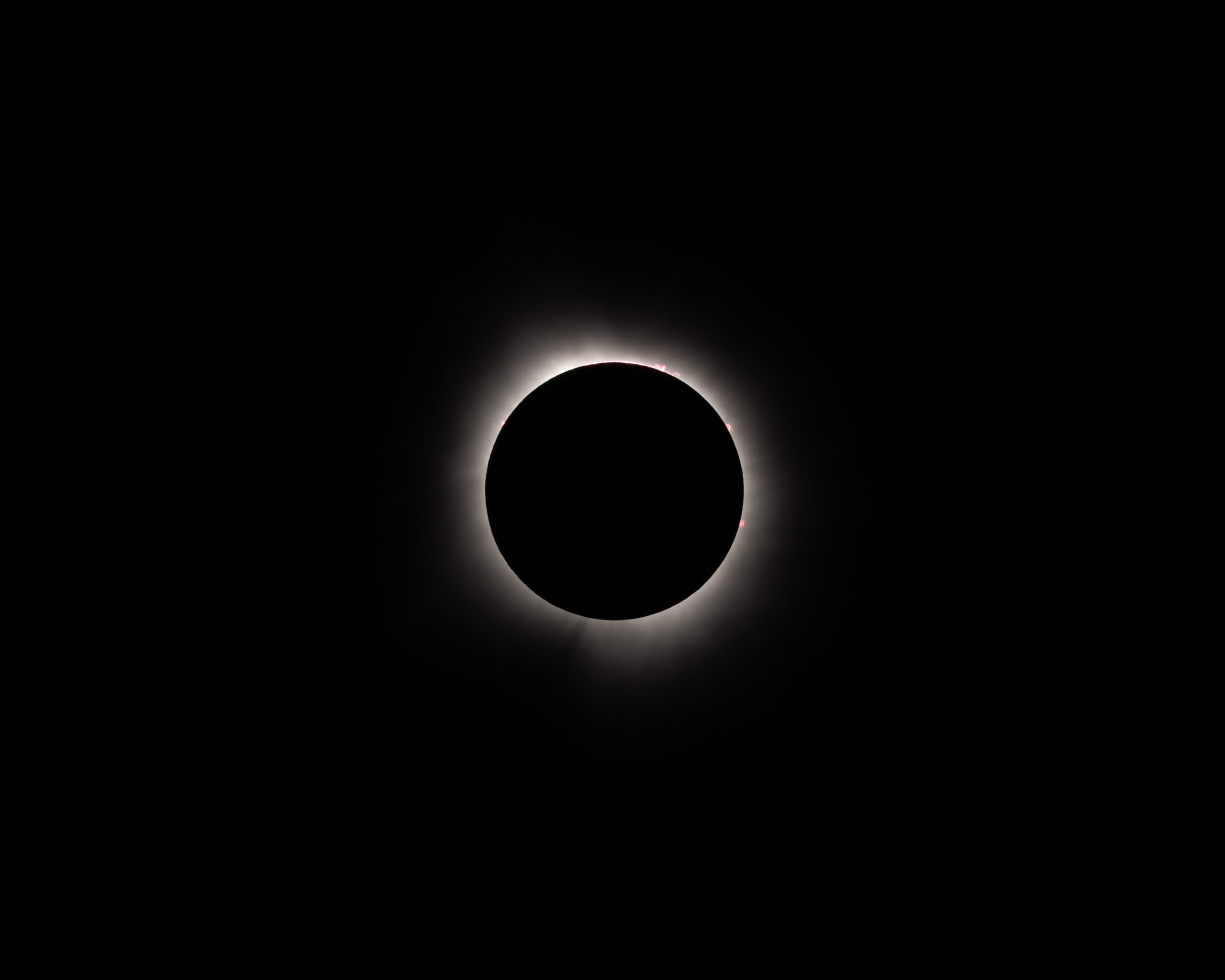
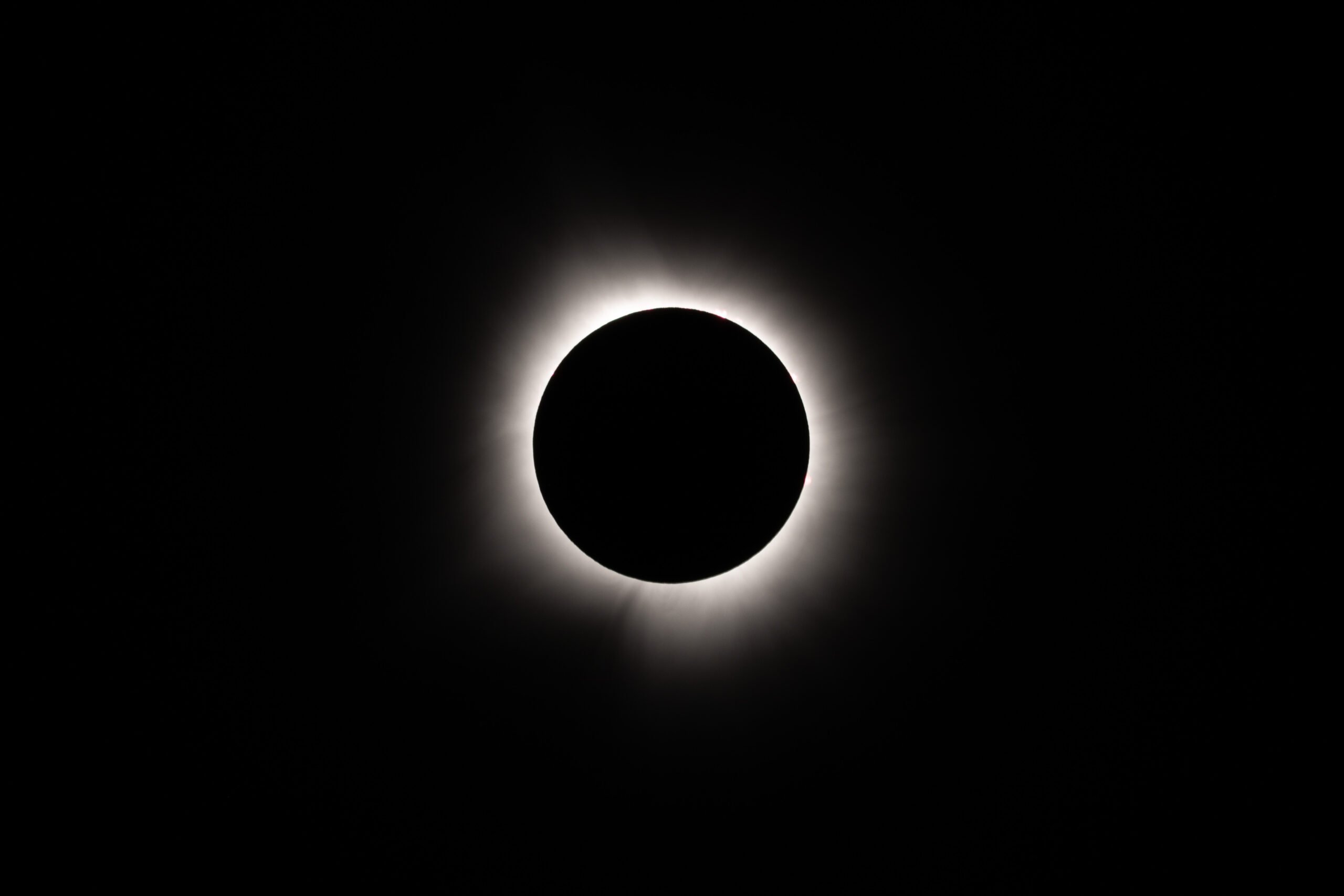
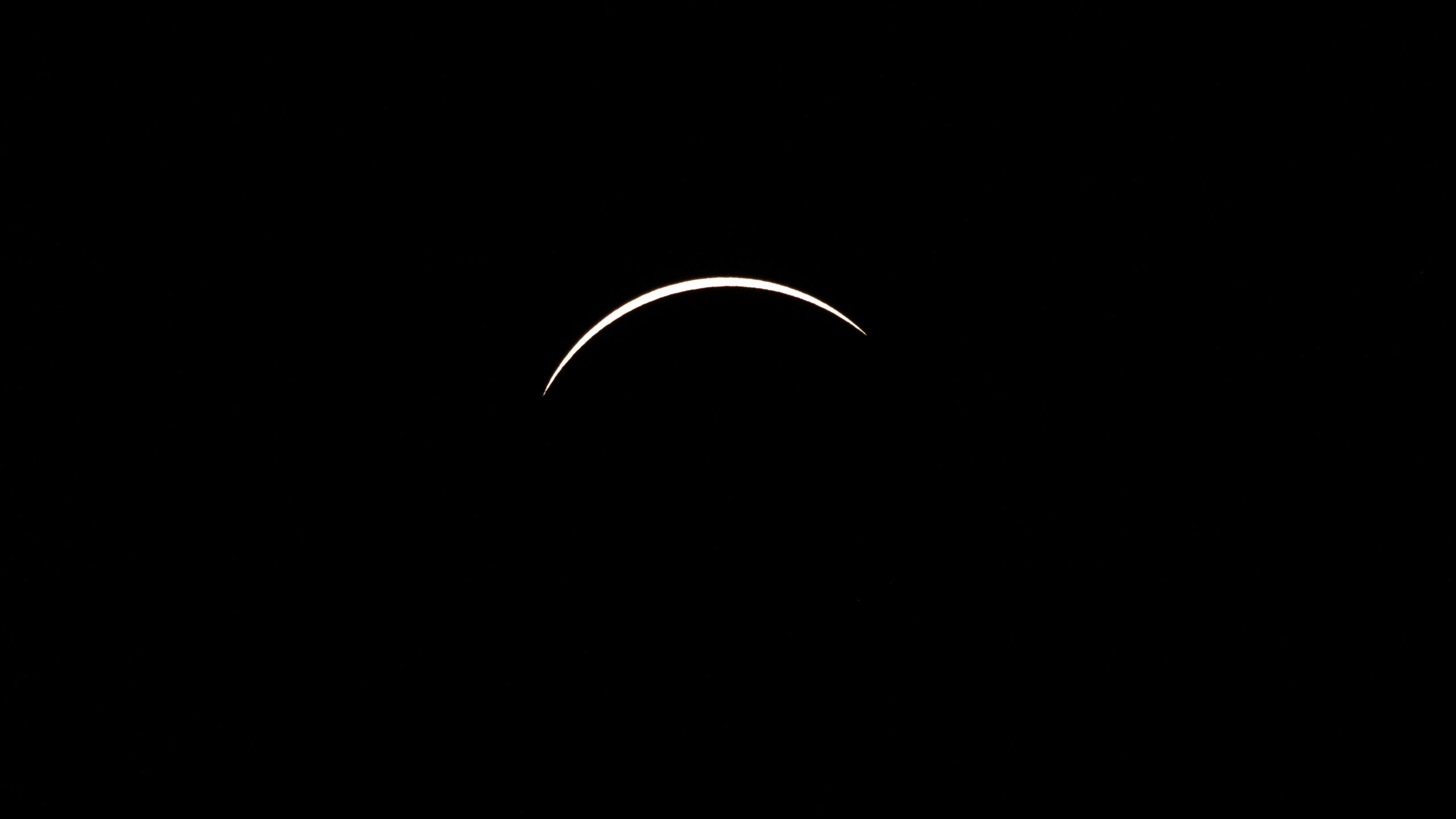
Here’s a collection of my photos from the 2024 eclipse. I shot most of these with my Canon EOS R5 and the Canon RF 100-500mm lens. The clarity and detail are breathtaking. The high resolution of the EOS R5 captured the subtleties of the eclipse perfectly. This setup allowed me to zoom in close and get those remarkable shots of the sun’s corona and the moon’s shadow.
You can even see on the close up photos of the sun Baily’s beads coming off the sides.
My only mistake while photographing the eclipse was zooming out halfway through. Since I was juggling so much with this experience I didn’t notice I lost focus (since I had manually focused the shot). Next time I photograph an eclipse I plan on keeping my focal point the same so I don’t have to worry about this aspect.

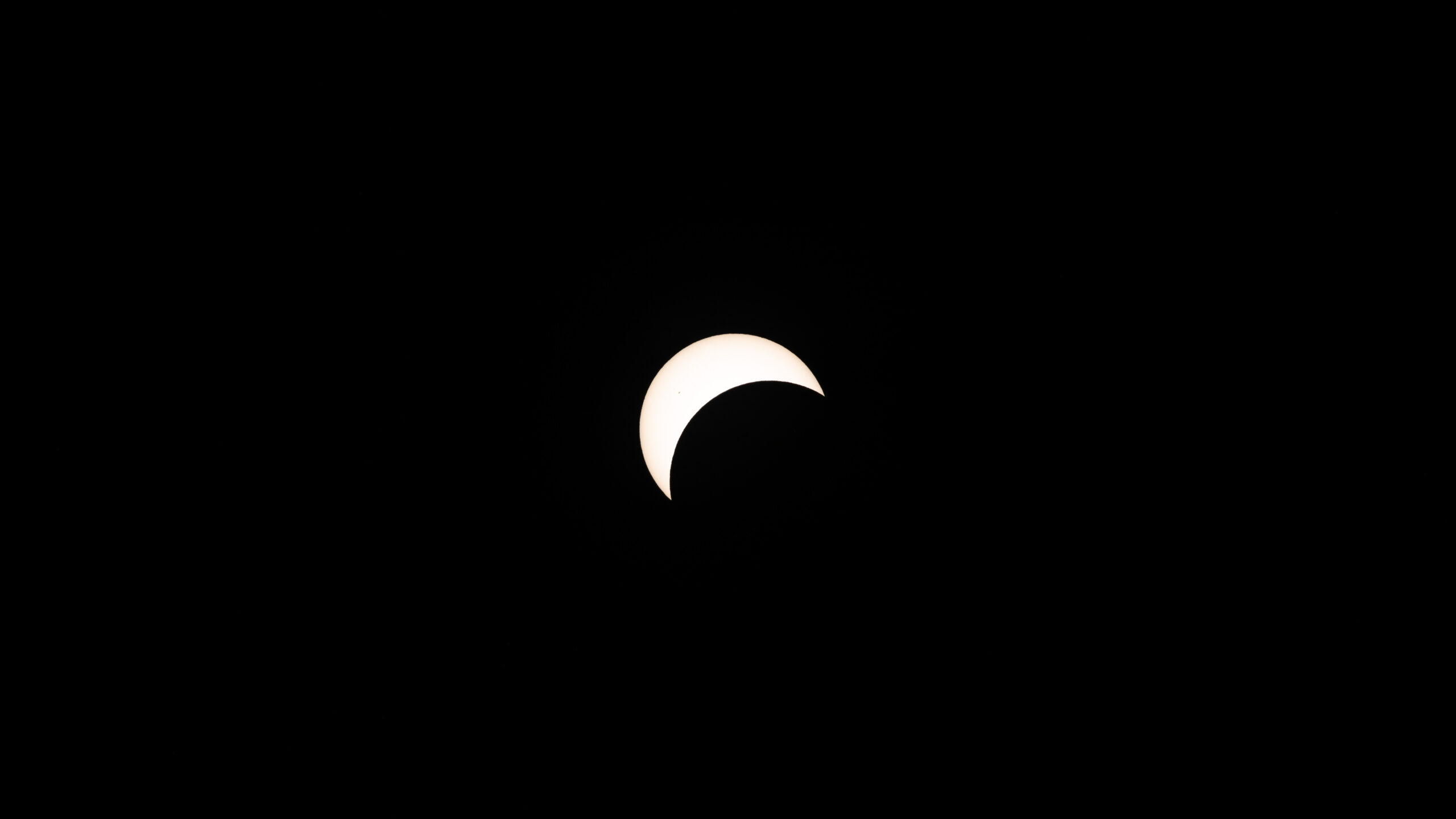
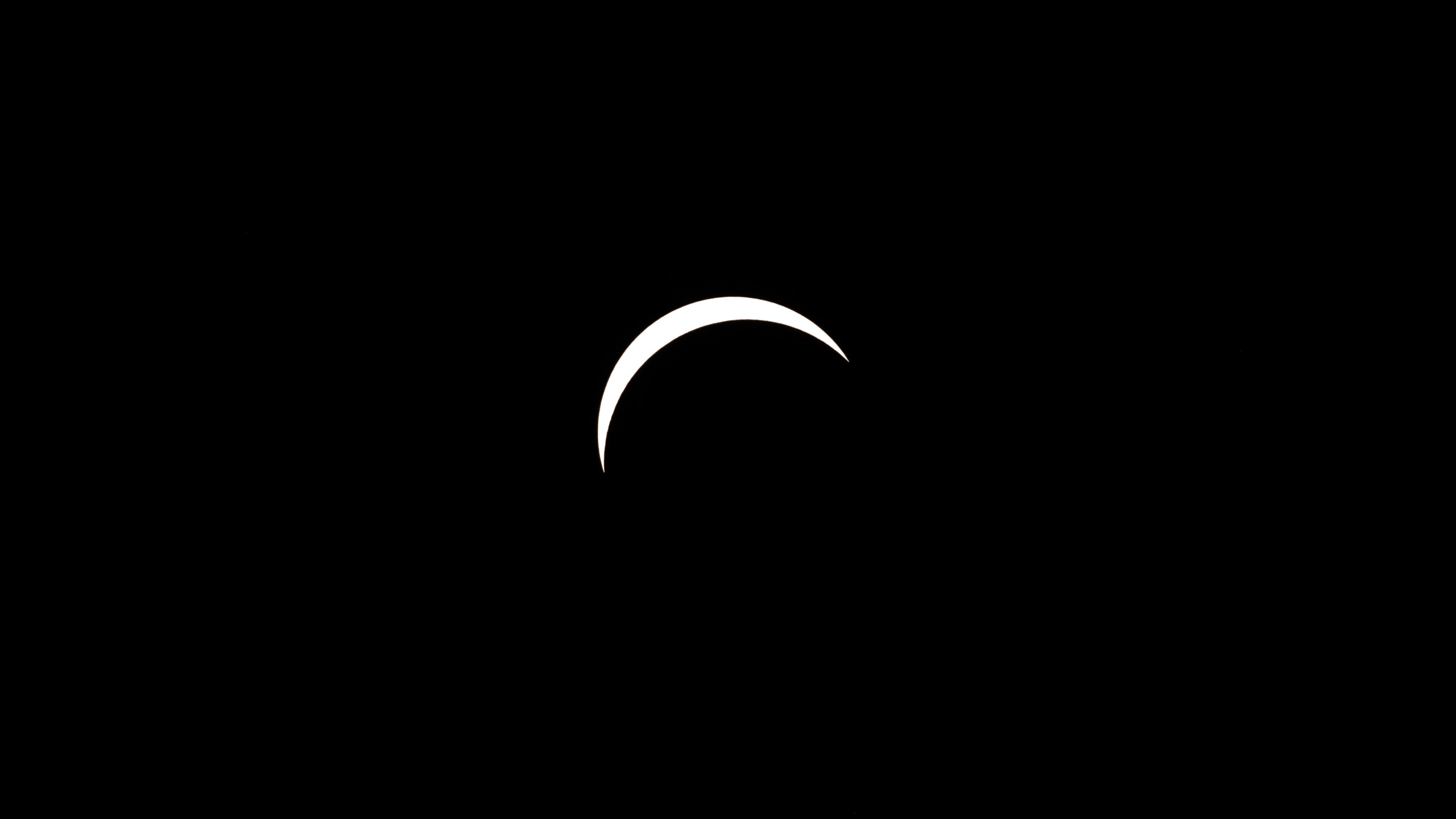
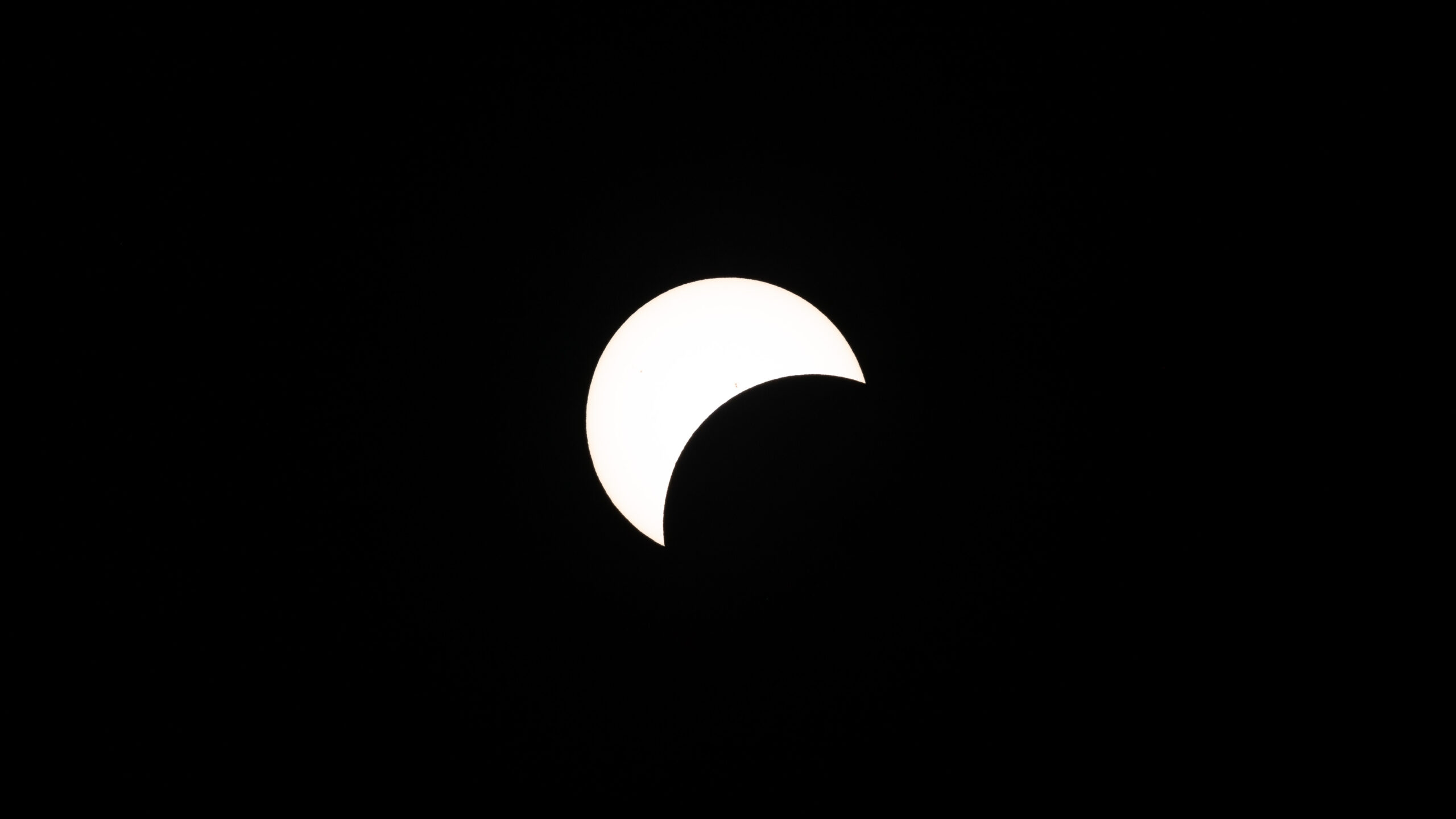
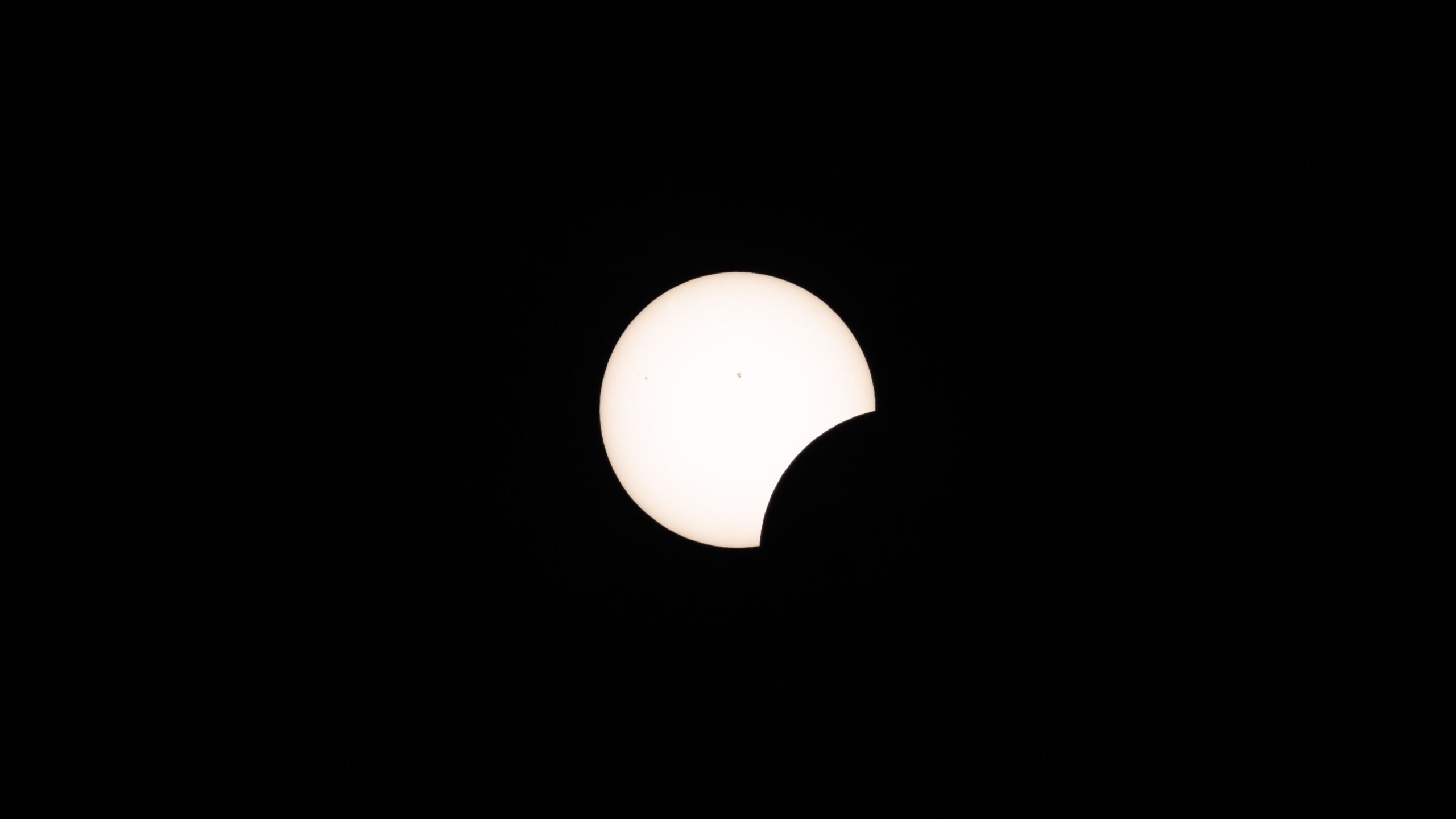
When Is the Next Solar Eclipse?
If the 2024 eclipse made you want to chase the next one, here is what is coming up. Dates and paths are from NASA.
- August 12, 2026 – total over eastern Greenland, western Iceland, northern Spain and a small piece of Portugal. North America only gets a partial, best across New England and the northeast in the afternoon, plus Alaska. Totality maxes out at about 2 minutes 18 seconds.
- February 6, 2027 – annular, across parts of South America and Africa.
- August 2, 2027 – total across southern Spain, North Africa, Saudi Arabia and Yemen. Eastern Canada and northern Maine catch a partial.
- January 26, 2028 and January 14, 2029 – partial eclipses visible from parts of the US.
- March 30, 2033 – the next total solar eclipse in the United States, but Alaska only.
- August 2044 – the next total eclipse over the lower 48, crossing Montana and the Dakotas.
- August 12, 2045 – a coast to coast total eclipse across the US, with close to 6 minutes of totality, the longest in US history.
The short version for anyone in the US: after 2024 there is a long wait for another total eclipse without getting on a plane. If you want totality before the 2040s, you are travelling for it.
Eclipse Photography FAQ
Do you need a solar filter to photograph an eclipse?
Yes, for every part of the eclipse except totality itself. Without one you risk permanently damaging your camera sensor or shutter, and your eye if you are using an optical viewfinder. The filter only comes off during totality, and only if you are inside the path of totality.
What lens do you need to photograph a solar eclipse?
Something around 200mm to 300mm is plenty for a frame-filling shot. I shot the 2024 eclipse with a Canon RF 100-500mm. Longer glass gets you more detail in the corona and prominences, but at 300mm and up the sun already fills a good part of the frame.
What camera settings should you use for a solar eclipse?
With the filter on, start at ISO 100, around f/8, and a shutter near 1/125 to 1/500, then adjust based on your filter. During totality the filter comes off and you bracket widely, roughly 1/1000 up to a full second, because the corona covers a very wide range of brightness.
Can you photograph an eclipse with a phone?
You can get a nice wide shot of the landscape and the light during totality, which is genuinely worth doing. You will not get a detailed shot of the sun itself without a telephoto, and you still need a filter over the phone lens for the partial phases.
When is the next total solar eclipse in the US?
March 30, 2033 in Alaska, and August 2044 for the lower 48 across Montana and the Dakotas. A coast to coast total eclipse follows on August 12, 2045.
What are Baily’s beads?
Right as totality begins and ends, the last of the sunlight shines through valleys on the edge of the moon and breaks into bright points of light. That is Baily’s beads, and when one bead dominates it becomes the diamond ring effect. You can see both in the close-up photos above.
Conclusion
Photographing the eclipse was an unforgettable experience that Kevin and I will cherish forever. From the eerie darkness that blanketed the sky to the rush of excitement as the eclipse unfolded, every moment was extraordinary.
If you ever get the chance to witness a total eclipse, do it! With the right preparation and a bit of patience, you can capture stunning photos and create memories that will last a lifetime.
Remember, the key to great eclipse photography is preparation. Check your gear ahead of time, plan your location carefully, and familiarize yourself with the eclipse timeline. Most importantly, enjoy the experience. Sometimes the best memories are the ones you capture with your eyes, not the camera.
I hope my journey inspires you to embark on your own eclipse adventure. Whether you’re an experienced photographer or a curious onlooker, there’s something truly magical about witnessing this celestial phenomenon.
oh you blog sometimes?
I try 😂